


Peliqan

The Peliqan blog

Your go-to resource for data-driven success. Peliqan’s blog equips you with the knowledge to optimize your data strategy.

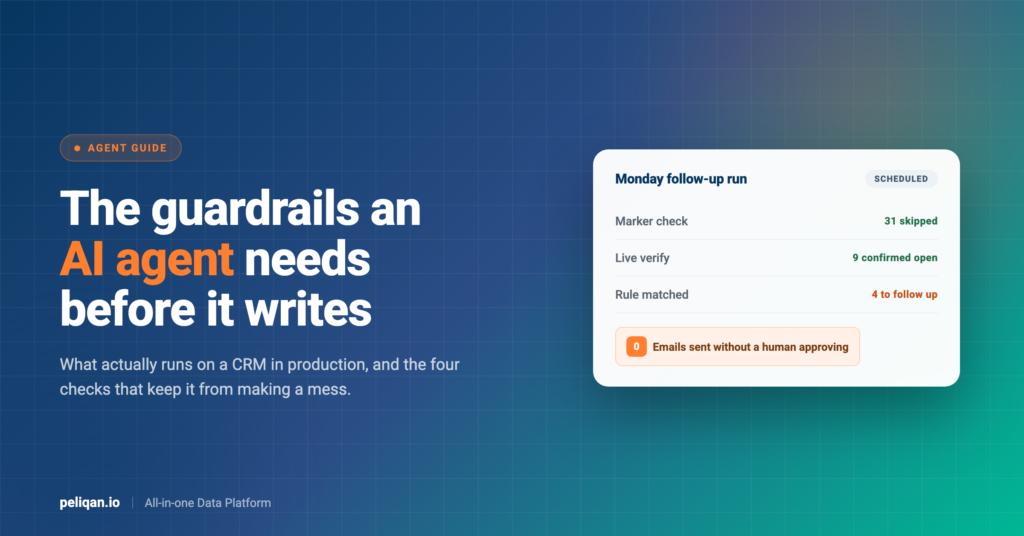
ai-agent-crm-feature-image

AI agent CRM: what runs in production and what fails

An AI agent on your CRM is a job that reads the CRM, decides what needs doing, and does it, without a person prompting each step. Most articles on the

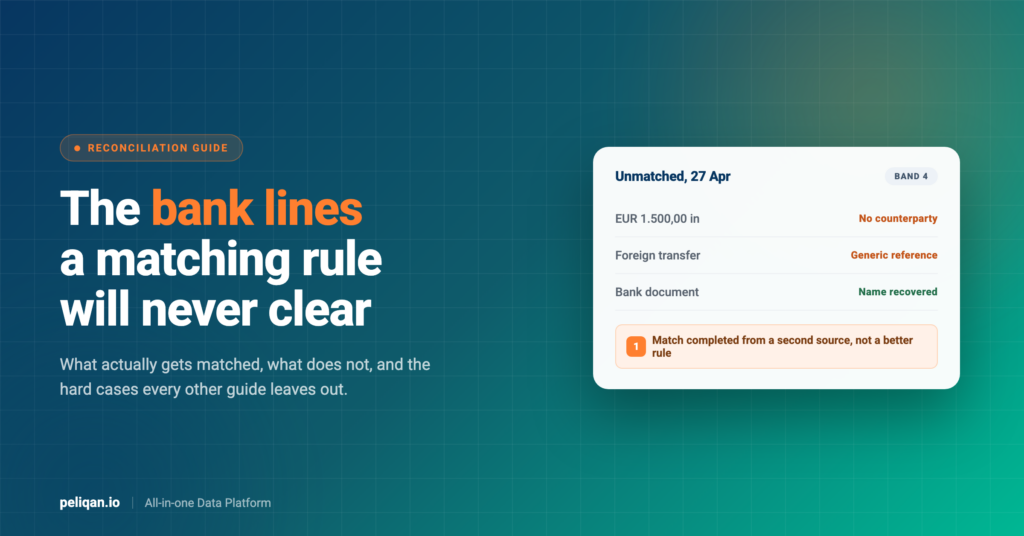
erp-automation-feature-image

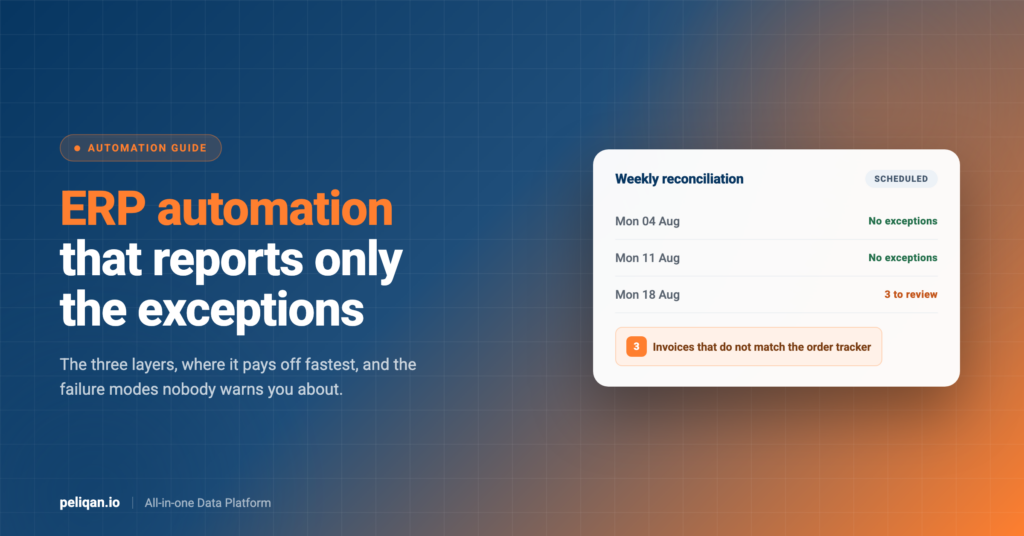
ERP automation: what to automate and where it breaks

ERP automation means letting software do the repetitive work inside your ERP instead of a person doing it by hand. Most guides stop at the workflow rules your ERP already

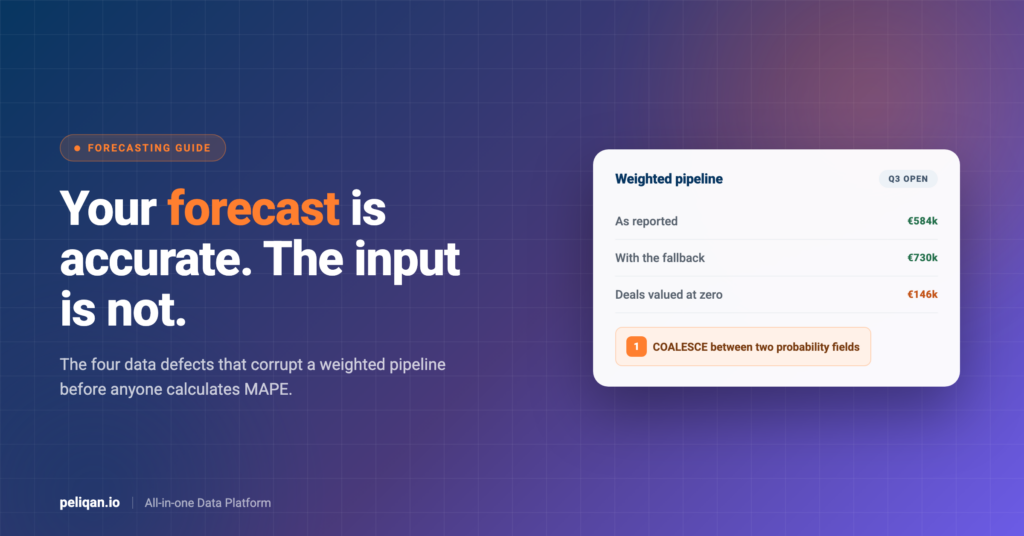
pipedrive-dashboard-feature-image

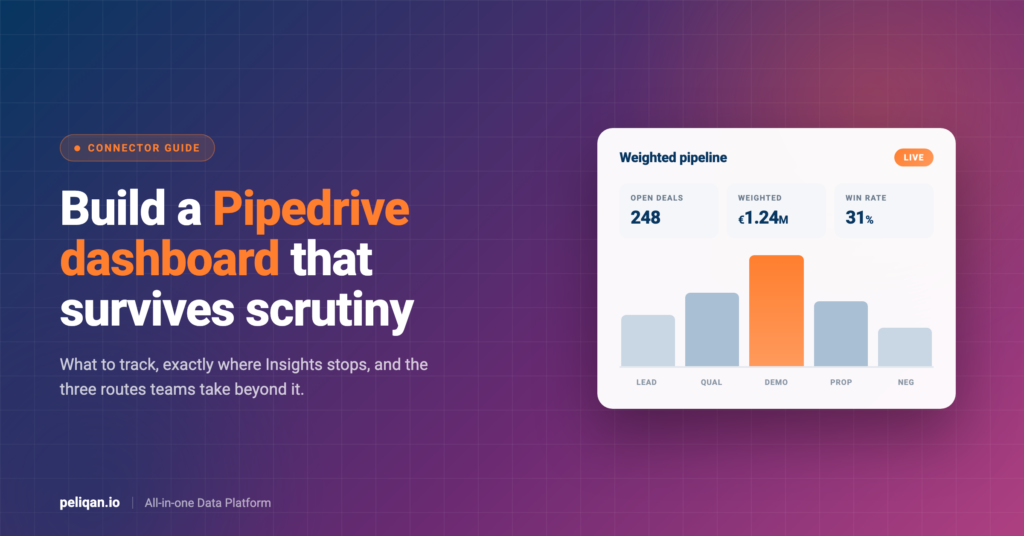
Pipedrive dashboard: what to track and where insights stops

A Pipedrive dashboard turns the deals sitting in your CRM into a picture of what is actually going to close. Pipedrive builds one for you inside Insights, and for most

What’s new in Peliqan: redesigned UI, AI & dark mode

The Peliqan summer release is here. We rebuilt the Peliqan interface from the ground up: a cleaner, modern design, an AI assistant that understands what you are working on, big

CLI vs MCP - token cost per operation, roughly 200 versus 50,000

CLI vs MCP: when a direct query beats an MCP call

CLI vs MCP is the wrong fight to pick as “which is better” – they win in different places. A direct CLI or SQL call is cheaper per operation and

API rate limits - an AI agent consuming the hourly request budget and triggering 429 errors

API rate limits: why AI agents burn through them fast

API rate limits cap how many requests you can send to a system in a given time. AI agents hit them faster than people do, because one question can trigger

history-tables-feature-image

History tables: why your warehouse only knows “now”

A history table keeps a dated record of how your data looked over time, instead of only its latest state. Without one, a status change overwrites the old value and

Semantic model - three teams define active customer three different ways

Semantic model: why business teams need one for AI now

A semantic model is a written-down layer of meaning on top of your raw data: it says what “revenue” means, how tables connect, and what each column actually holds. Without

Sync frequency by source - matching data freshness to the decision for AI agents

Sync frequency: how fresh does your AI agent need data?

Sync frequency is how often you copy data from a source into your warehouse. Set it too low and your AI agent answers from stale data; set it too high

MCP security - the production checklist for AI agents on business data

MCP security: what to actually configure in production

MCP security means five practical things: give the AI a limited key you can switch off, control what it can see at the database level, assume it might read a

Entity resolution - four system IDs resolved into one golden record

Entity resolution: one customer, four IDs, how to fix it

Entity resolution is the work of recognizing that a CRM account, an accounting debtor, a support organization and a billing customer are the same real-world company – and giving that

Multi-client reporting - one practice cockpit consolidating 50 client books

Multi-client reporting: one cockpit for 50 client books

Multi-client reporting is how accounting and ERP practices answer one question across every client book at once – overdue receivables, VAT filings at risk, declining margins – without logging into

Trusted by leading companies to turn data into decisions

Peliqan is the platform of choice for enterprises, Professional Services teams in SaaS companies, consultancy companies, ISV’s and accounting practices.

ziggu
200+
hours saved per integration implementation.
120

SaaS sources connected

Streamlined complex ERP migrations and transformations. 
60%

increase in online booking

300

hours saved per month

Predicting shipment arrival time with machine learning based on enriched data.

Peliqan Overview

Ready to get instant access to
all your company data ?