
Financial close automation: what can actually be automated
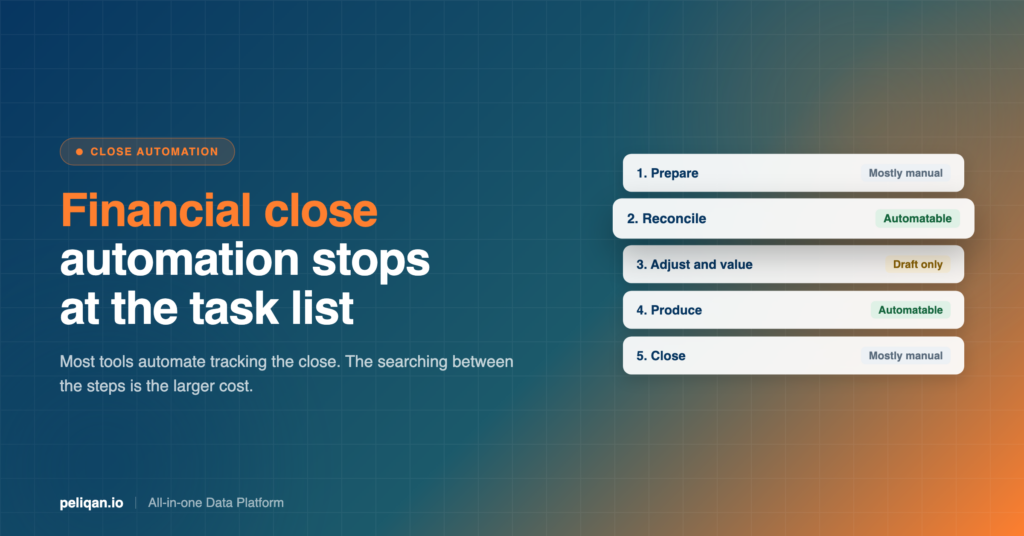
Financial close automation is usually sold as workflow software: task lists, sign-offs, status dashboards. Useful, and not where the time actually goes. This covers what can genuinely be automated in a close today, what still cannot, and the data conditions that decide which of those you get. Most financial close automation tools automate the tracking […]
Exact Online API: divisions, rate limits and what breaks
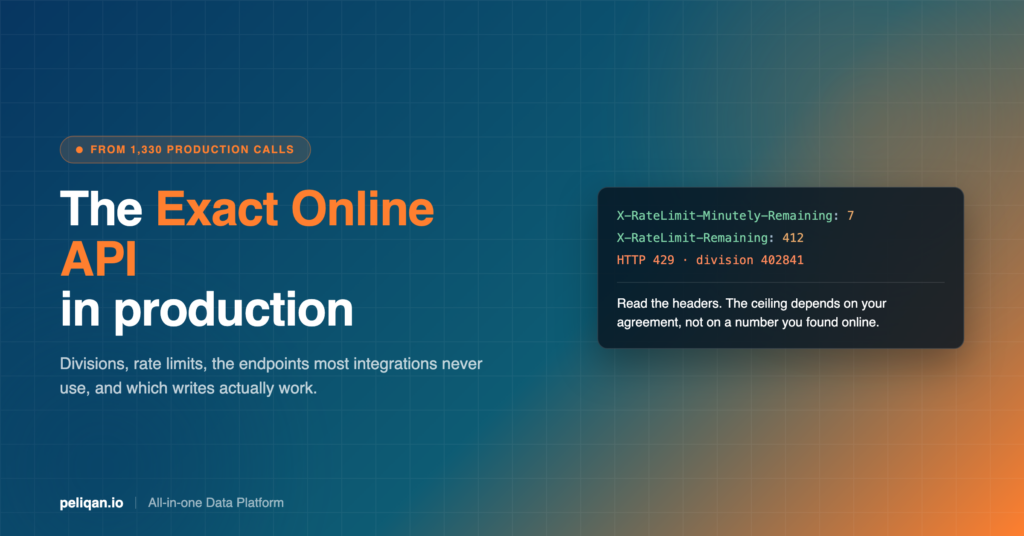
The Exact Online API is well documented and still catches people out, because the things that break in production are not the things the reference pages cover. This guide is written from production usage rather than from the reference pages: how the division model works, what the rate limits mean day to day, which writes […]
AI for accountants: what it does and what it fails at
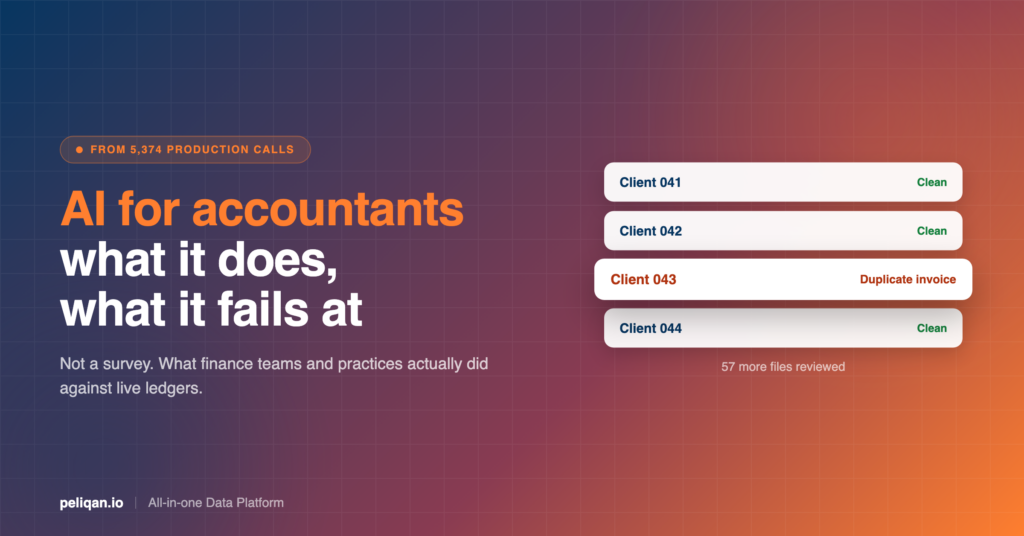
Most writing about AI for accountants is survey data and vendor promises. This one is built from more than 5,000 production tool calls made by real finance teams and accounting firms against real ledgers over two weeks, which means it can say what AI is genuinely used for, and what it still fails at. Ask […]
Sales forecast accuracy: fix the input, not the formula
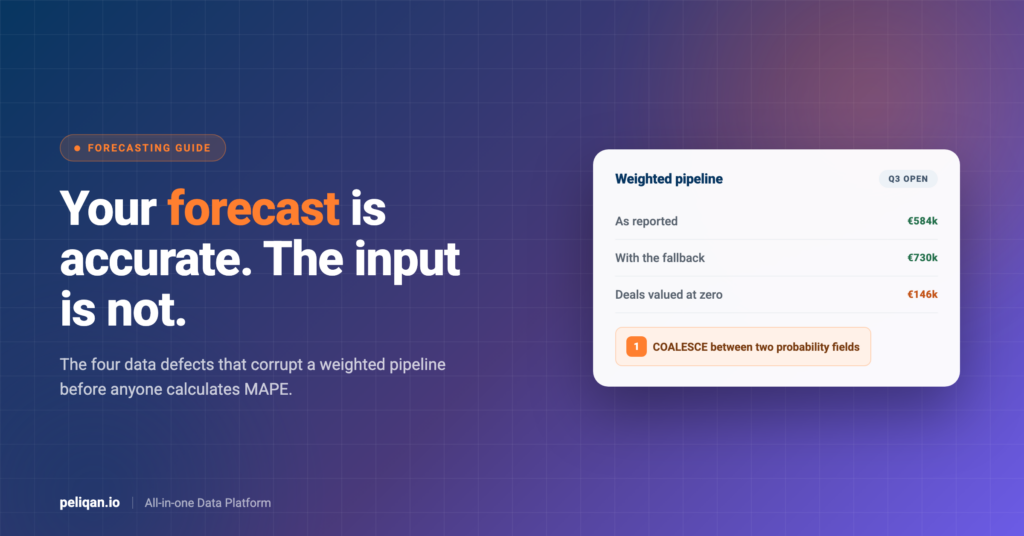
Sales forecast accuracy measures how close your forecast lands to what actually closed, usually expressing it as MAPE. The formula is the easy part. In Peliqan’s production data, where AI agents audit real CRMs, the bigger problem is that the number being measured is already wrong: null probability fields, placeholder deals and duplicate organisations quietly […]
Bank reconciliation automation: the hard cases
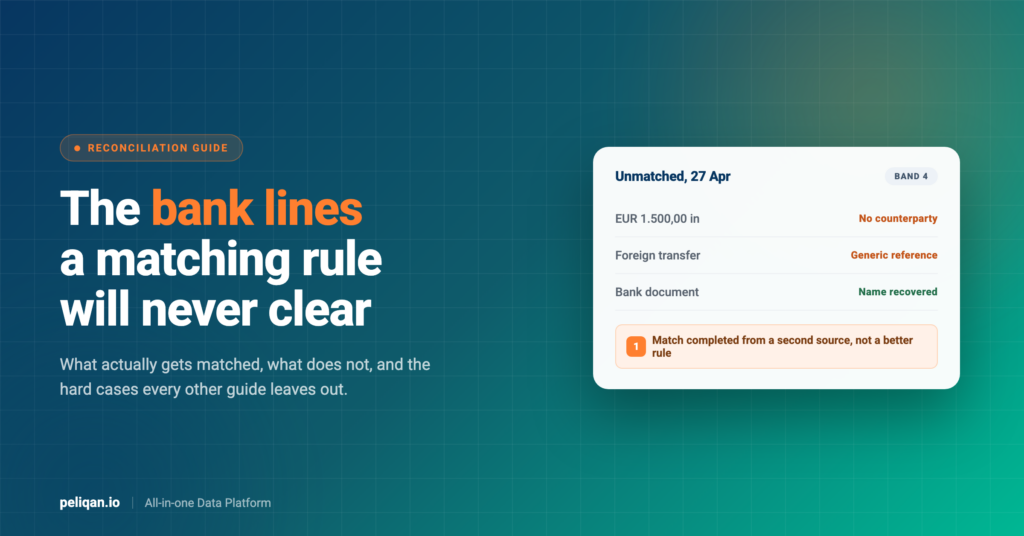
Bank reconciliation automation matches the lines on your bank statement to the entries in your ledger without a person doing it by hand. Rules handle the easy majority. AI has moved the line on the rest, because the hard cases are hard for a reason that rules cannot fix: the information needed to identify a […]
Month-end close automation: what to automate first
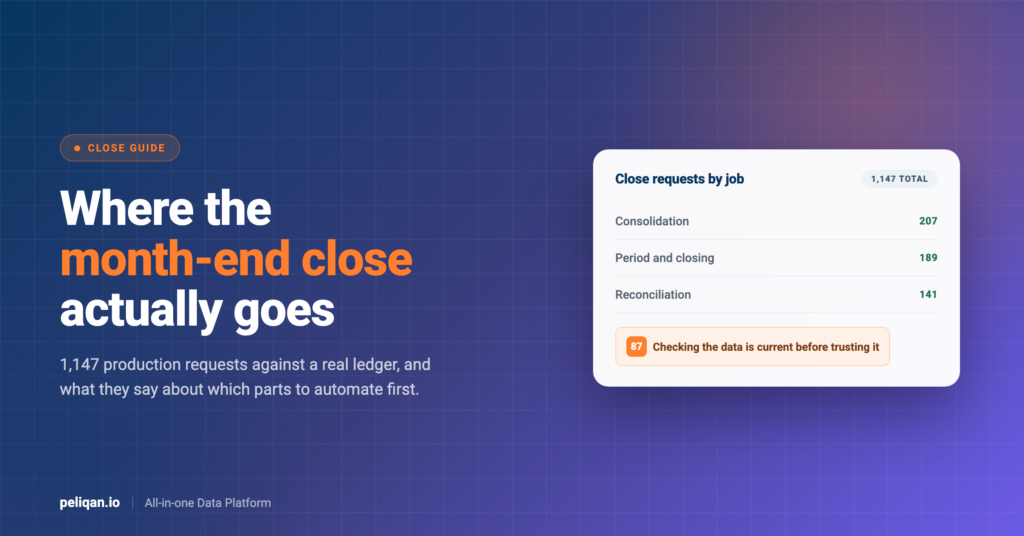
Month-end close automation means the repetitive parts of closing the books happen without a person driving each step. AI has changed which parts those are: reconciliation and variance work that used to need judgement can now be handled by an assistant querying your own ledger. This guide covers what actually gets automated, drawn from 1,147 […]
AI agent CRM: what runs in production and what fails
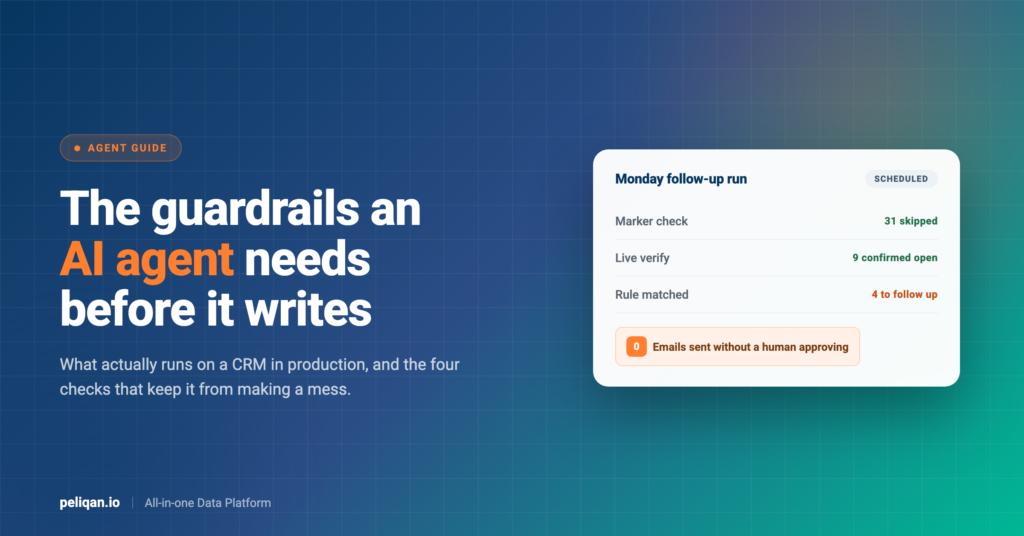
An AI agent on your CRM is a job that reads the CRM, decides what needs doing, and does it, without a person prompting each step. Most articles on the subject describe the promise. This one describes what is actually running in production: the four guardrails that keep scheduled agents from making a mess, the […]
ERP automation: what to automate and where it breaks
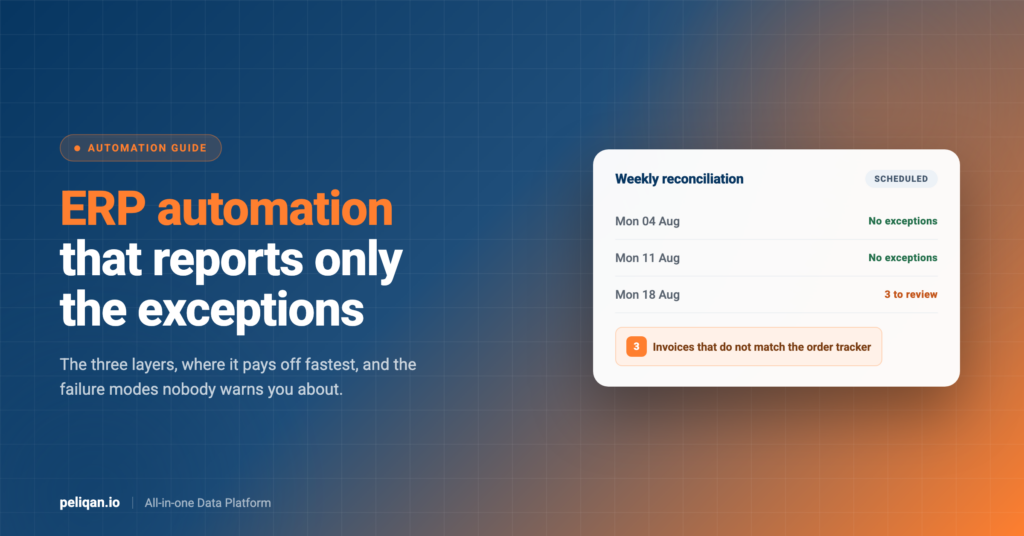
ERP automation means letting software do the repetitive work inside your ERP instead of a person doing it by hand. Most guides stop at the workflow rules your ERP already ships with. This one covers those, the integration layer above them, and the newer layer that runs on a schedule and reports back only the […]
Pipedrive dashboard: what to track and where insights stops
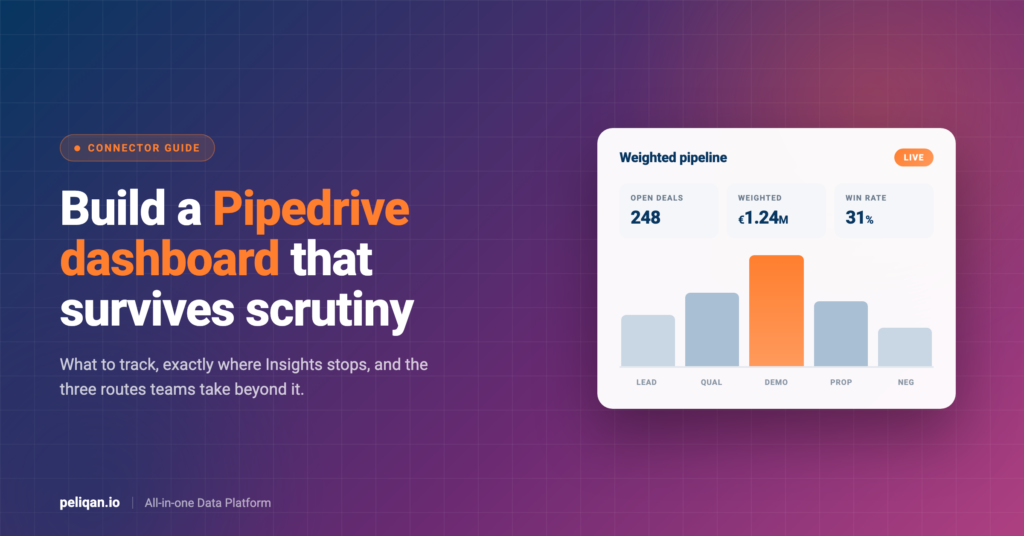
A Pipedrive dashboard turns the deals sitting in your CRM into a picture of what is actually going to close. Pipedrive builds one for you inside Insights, and for most sales teams that is enough. This guide covers what to put on a Pipedrive dashboard, how to build one, exactly where the native reporting stops, […]
What’s new in Peliqan: redesigned UI, AI & dark mode
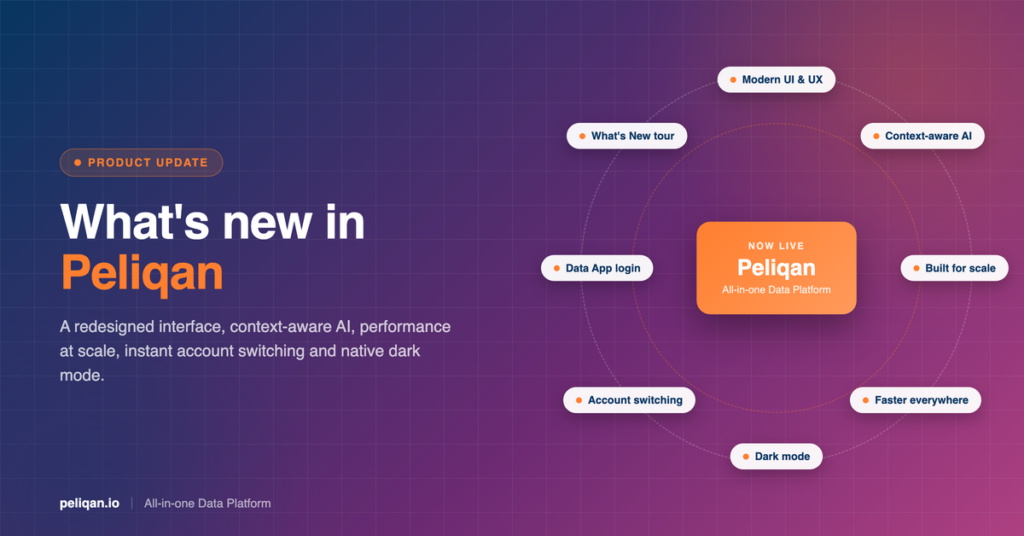
The Peliqan summer release is here. We rebuilt the Peliqan interface from the ground up: a cleaner, modern design, an AI assistant that understands what you are working on, big performance gains on large datasets, instant account switching, a smoother Data App login, and – yes, finally – dark mode. Here is a tour of […]