Apache Airflow Alternatives: Top 11 for 2026
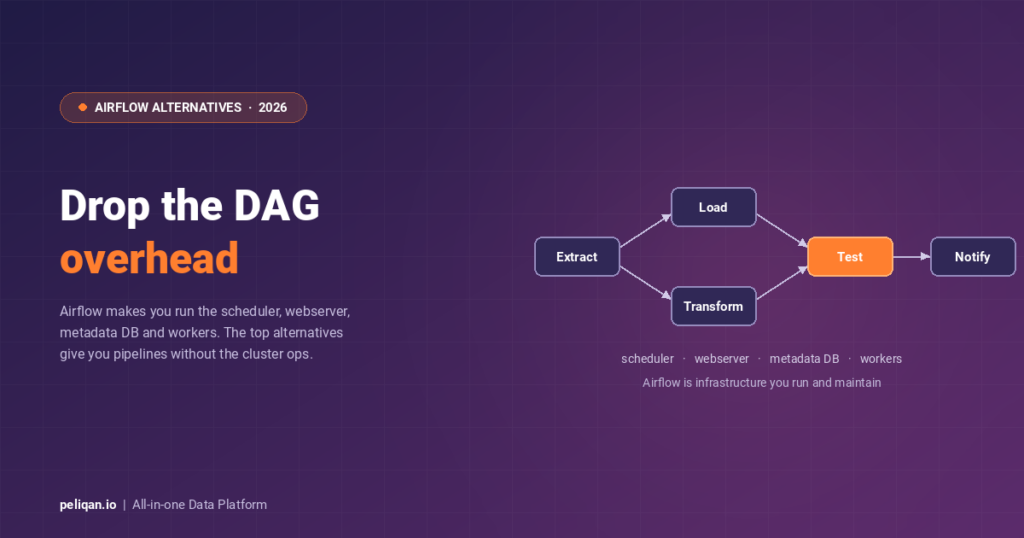
Apache Airflow has been the default data orchestrator since 2014 – but DAG complexity, infrastructure overhead, the Airflow 3.0 breaking changes, and the end-of-life clock ticking on Airflow 2 are pushing teams to evaluate Airflow alternatives. Here is a complete comparison of the top Apache Airflow alternatives and competitors for 2026. Airflow is the most […]
Top 11 Windsor.ai alternatives & competitors
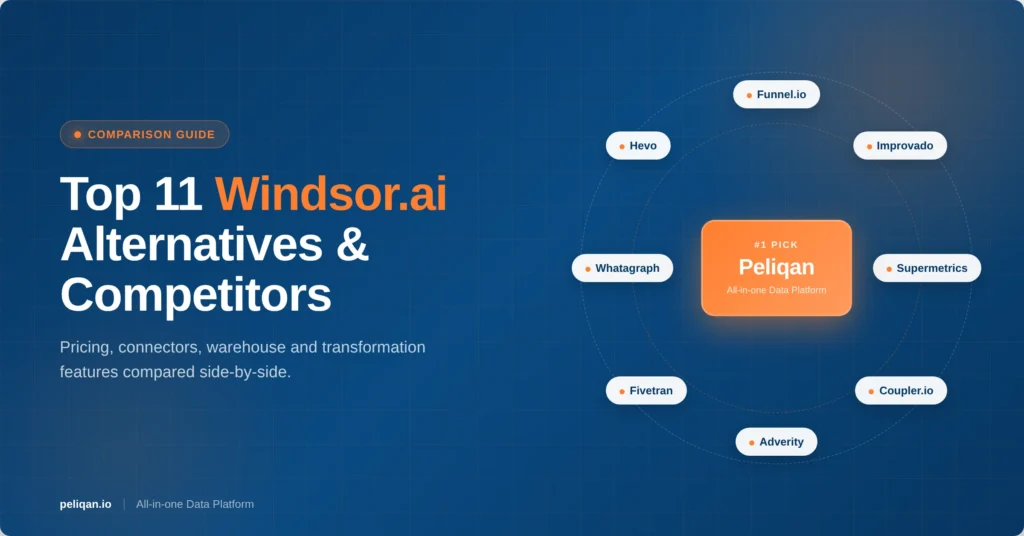
Windsor.ai built its reputation on transparent pricing for marketing data connectors – but tier jumps that triple your bill, billing surprises at renewal, and the missing data warehouse layer are pushing teams toward better Windsor.ai alternatives. Here is a complete comparison of the top Windsor.ai alternatives and competitors for 2026. Windsor.ai is a no-code ELT/ETL […]
SAP Datasphere Alternatives & Competitors: Top 10 (2026)

SAP Datasphere alternatives have become a serious conversation for any data leader weighing whether to consolidate everything inside SAP Business Data Cloud or step outside to a more flexible, multi-platform stack. This guide compares 10 platforms – including cloud warehouses, lakehouses, data fabrics, and integrated data platforms – and shows where each one wins for […]
The dbt Labs and Fivetran merger
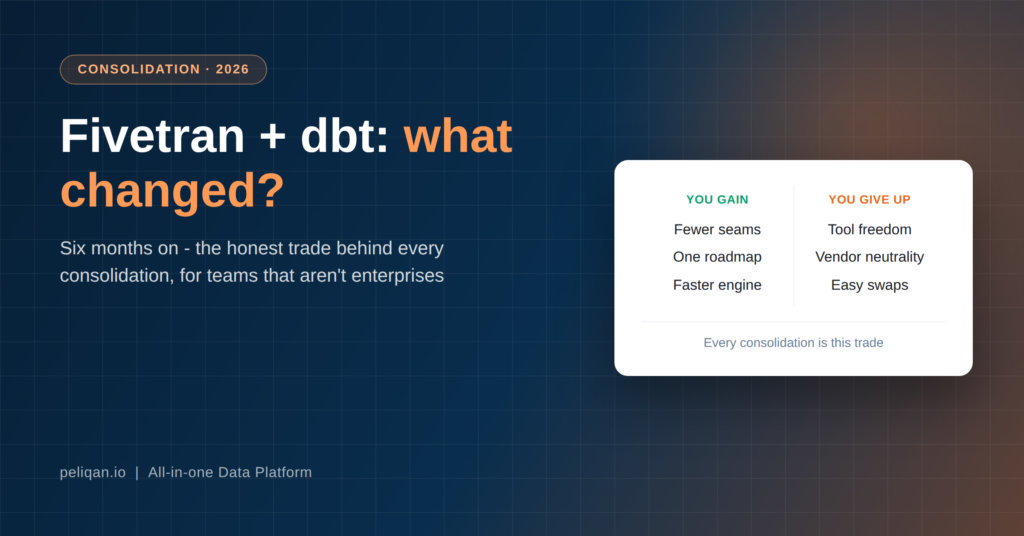
The Fivetran dbt merger completed on June 1, 2026, putting data ingestion and transformation under one company. This post is a plain, balanced read on what actually changed, what stayed the same, and what it means if you are a mid-market team rather than a large enterprise – including the parts worth watching. When two […]
Peliqan vs. Fabric
Peliqan vs Fabric: fixed pricing, no Azure lock–in Microsoft Fabric is a powerful analytics platform – but it comes with capacity-based billing, per-user licenses and a steep Azure learning curve. Peliqan delivers the full modern data stack in one platform – ELT/ETL, built-in warehouse, transformations, reverse ETL and data activation – with fixed monthly pricing […]
Top DBT Alternatives & Competitors in 2026
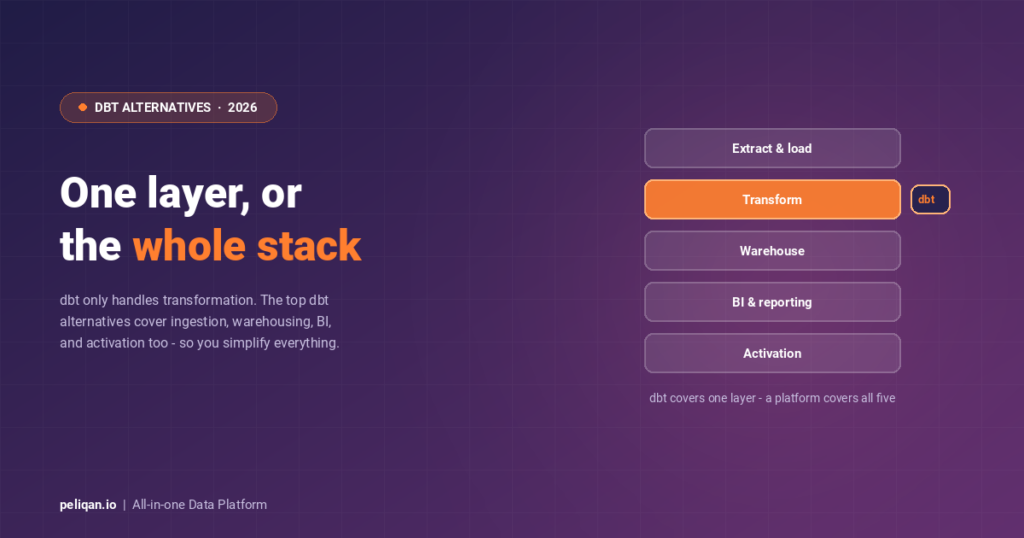
dbt (data build tool) defined SQL-based transformation for the modern data stack. But with the Fivetran-dbt Labs merger now complete as of June 2026, consumption-based pricing that has caught teams off guard, and growing lock-in concerns, many teams are weighing dbt alternatives. Here is a current, honest comparison of the top dbt alternatives and competitors […]
ELT, Transform & Activate in one place
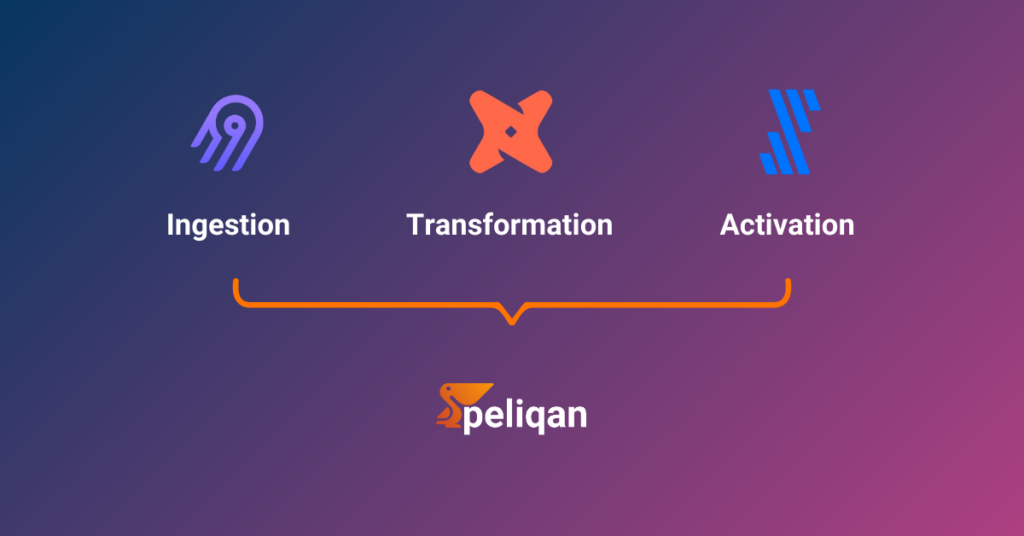
The modern data stack promised simplicity. Instead, most data teams ended up with three separate tools – Airbyte for ingestion, dbt for transformation, and Census for activation – each with its own pricing model, YAML configs, deployment lifecycle, and failure modes. Here’s how Peliqan collapses all three into a single platform without sacrificing the flexibility […]
Top Supermetrics Alternatives & Competitors in 2026
Supermetrics has been a go-to marketing data connector for years – but escalating costs, limited transformation capabilities, and fragmented pricing are pushing teams toward better alternatives. Here’s a complete comparison of the top Supermetrics alternatives for 2026. Supermetrics is a marketing intelligence platform that automates the extraction of data from 150+ marketing and sales platforms […]
5x.co alternatives & its competitors in 2026
5X (5x.co) promises to unify your entire data stack under one roof – but is it the right fit for your team? Here’s a comprehensive comparison of the top 5X alternatives and competitors for 2026. 5X is an all-in-one data platform that bundles open-source tools like Meltano, Apache Superset, and Cube into a single managed […]
Top Matia Alternatives & Competitors in 2026
Matia has emerged as a rising star in the unified DataOps platform market – but is it the right choice for your data stack? Here’s a complete comparison of the top alternatives for 2026. Matia aims to help enterprises consolidate data management, reduce tool sprawl, and enable AI-driven automation. Its $21M Series A funding in […]