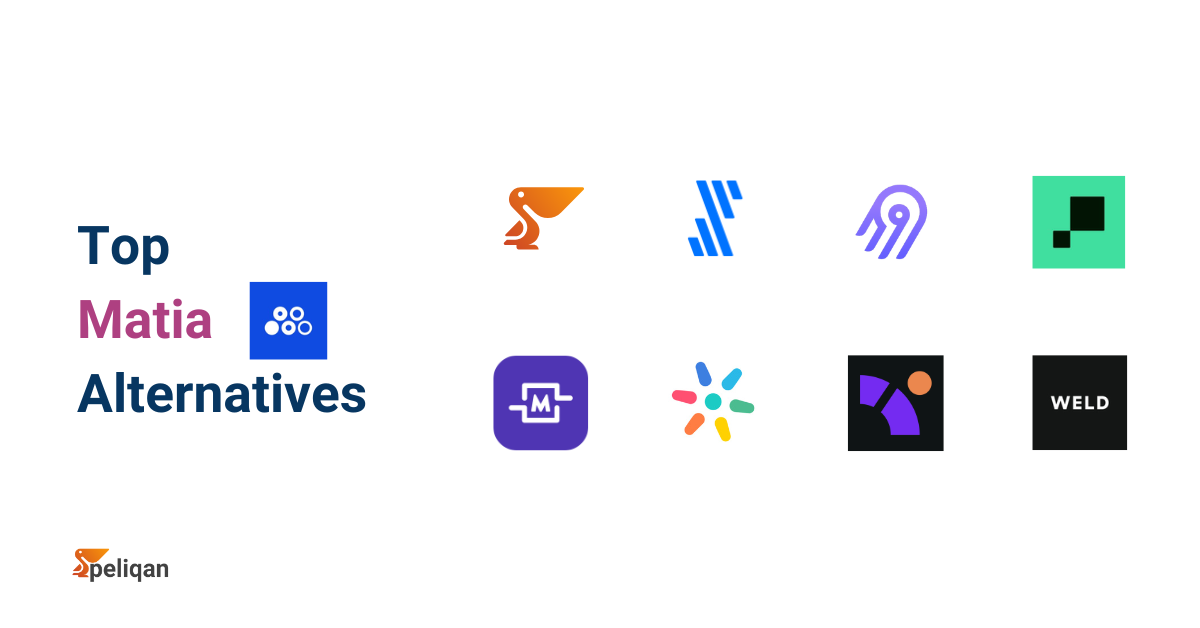





Matia has emerged as a rising star in the unified DataOps platform market – but is it the right choice for your data stack? Here’s a complete comparison of the top alternatives for 2026.
Matia aims to help enterprises consolidate data management, reduce tool sprawl, and enable AI-driven automation. Its $21M Series A funding in February 2026 highlighted growing demand for platforms that unify ETL, reverse ETL, observability, and data catalog capabilities under one roof, promising better governance, lower costs, and faster time-to-insight for modern data teams.
However, as the DataOps landscape matures, organizations are increasingly evaluating alternatives to Matia – seeking platforms with broader connector ecosystems, more transparent pricing, advanced security, or deeper enterprise experience. This blog provides a deep-dive comparison of Matia and its leading competitors, including Peliqan, Fivetran, Airbyte, Hevo Data, Y42, Weld, and Mozart Data, so you can make the best choice for your unified data stack.
Matia: Platform Overview and Competitive Positioning
Matia is a unified DataOps platform designed to eliminate the need for multiple point solutions by offering a single interface for ETL, reverse ETL, data observability, and catalog. Its key features include over 100 connectors for SaaS, databases, and warehouses; built-in data quality monitoring and anomaly detection; AI-driven pipeline creation and remediation; and a data catalog with lineage and governance tools.
Matia’s architecture is cloud-native, with a focus on real-time data movement and proactive alerts. The platform’s positioning is centered on reducing total cost of ownership and enabling AI-ready data operations for enterprise teams.
Matia’s pricing is not fully transparent and typically requires direct engagement for enterprise quotes. Its connector catalog, while growing, is newer than many established competitors, and some organizations may require deeper open-source extensibility or integration with legacy systems.
Why Consider Matia Alternatives?
While Matia’s all-in-one approach is appealing for teams seeking consolidation, there are several reasons organizations evaluate alternatives:
- Connector Breadth: Some competing platforms offer 250+ or even 350+ connectors, covering a wider range of SaaS, databases, and cloud services.
- Pricing Transparency: Platforms like Peliqan and Hevo Data provide fixed or event-based pricing, making budgeting easier for enterprises.
- Enterprise Security: SOC 2, GDPR, and advanced access controls are table stakes for many large organizations, and some platforms offer deeper compliance certifications and governance tooling.
- Open-Source and Customization: Teams with engineering resources may prefer open-source or hybrid platforms that allow custom connector development and deep extensibility.
- Deployment Flexibility: Some alternatives support both cloud and on-premises deployments, or hybrid models, to meet regulatory or data residency needs.
The Top Matia Alternatives for Unified DataOps
1. Peliqan: All-in-One Data Platform for Modern Teams
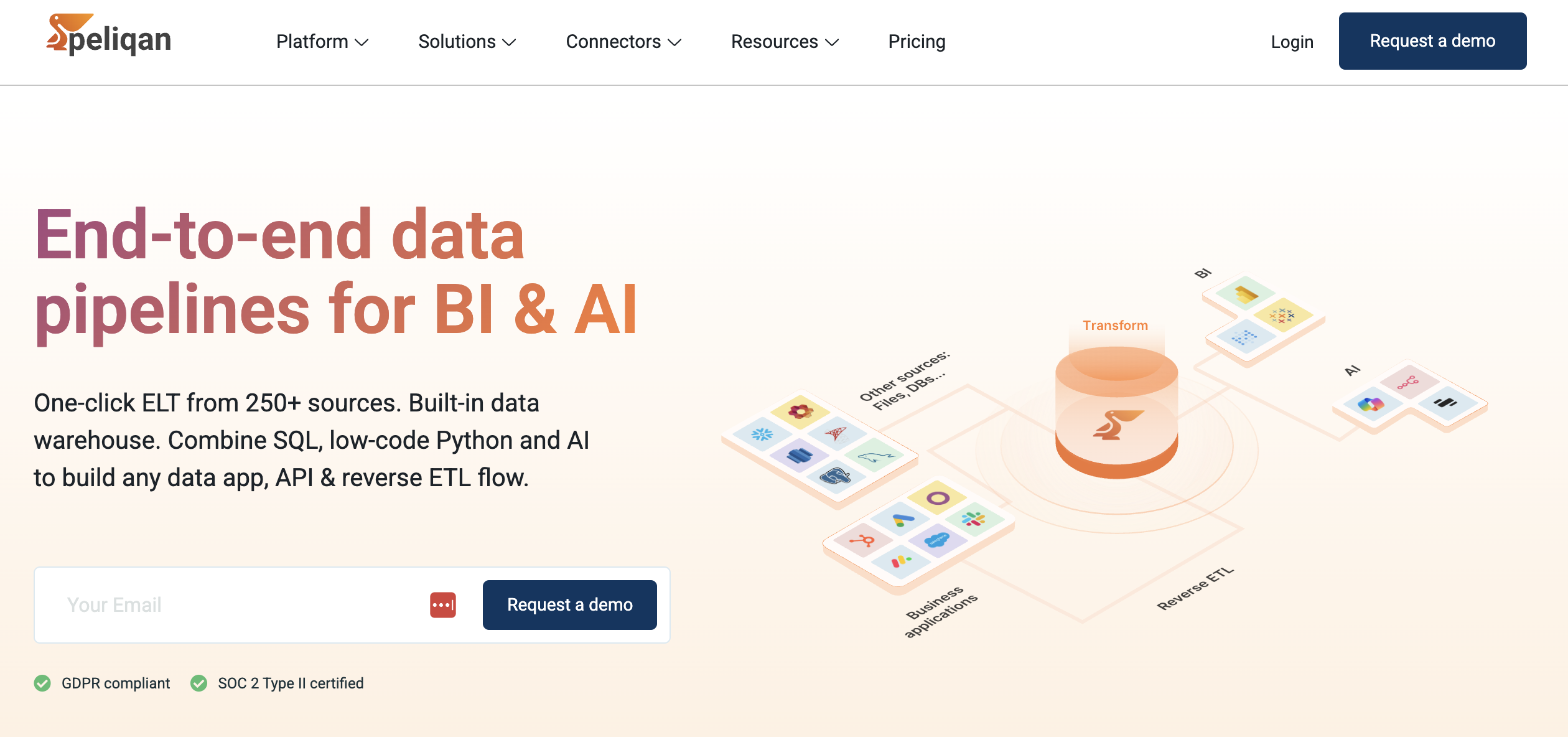
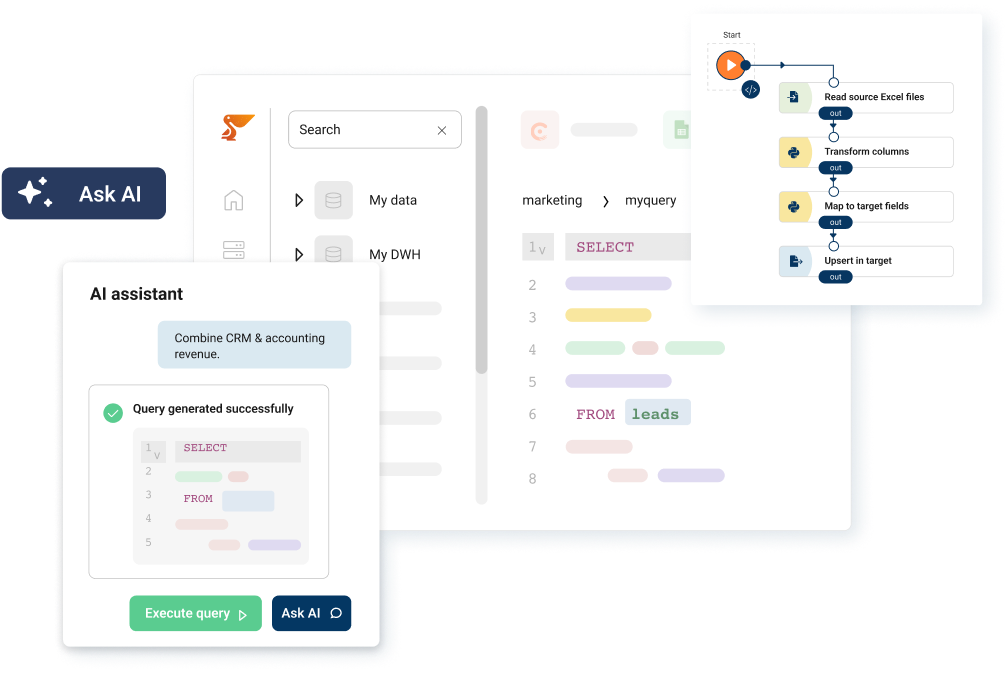
Peliqan is a unified data platform that brings together ETL, reverse ETL, a built-in data warehouse, observability, and a comprehensive data catalog. It supports over 250 connectors, enabling integration with a wide range of SaaS, databases, and warehouses. Peliqan offers a spreadsheet-like UI for data exploration, supports both SQL and low-code Python for pipeline development, and provides federated queries via Trino. Its observability suite includes real-time data quality monitoring, anomaly detection, and lineage tracking, while its catalog enables granular search, metadata management, and governance.
Enterprise security is a core focus: Peliqan is SOC 2 Type II compliant, GDPR-ready, and supports advanced access controls and audit logging. Pricing is transparent, with fixed monthly plans that scale for enterprise deployments, removing the unpredictability of usage-based billing. Peliqan is designed for organizations seeking rapid deployment, predictable costs, and strong security without sacrificing flexibility or depth.
Key Features:
- 250+ connectors (SaaS, DBs, warehouses)
- Built-in data warehouse (Postgres/Trino) and federated queries
- ETL and reverse ETL with low-code and SQL/Python
- Real-time data observability, anomaly detection, and lineage
- Transparent, fixed pricing; enterprise plans available
Best For: Enterprises, SaaS companies, and consultants who want a single platform for all data operations, with security and governance at the forefront.
2. Fivetran: Automated ELT and Data Activation at Scale

Fivetran is the industry leader in managed ELT, offering over 300 connectors and automated schema management. It is known for its reliability, scalability, and ease of use. Fivetran’s acquisition of Census in 2025 added mature reverse ETL capabilities, allowing teams to not only ingest but also activate data in operational systems. Fivetran’s observability features include automated monitoring, error tracking, and alerting, although its catalog and lineage features are less unified than those of some newer platforms.
Security is enterprise-grade, with SOC 2, GDPR, and HIPAA compliance, plus advanced access controls and audit trails. Fivetran’s pricing is usage-based, calculated on monthly active rows, with enterprise agreements available for large organizations seeking predictable spend.
Key Features:
- 300+ connectors (databases, SaaS, warehouses)
- Automated schema management and ELT pipelines
- Reverse ETL via Census integration
Best For: Enterprises prioritizing hands-off automation, reliability, and a mature connector ecosystem.
3. Airbyte: Open-Source Data Integration and Extensibility
Airbyte is the leading open-source data integration platform, with over 350 connectors and a strong developer community. Airbyte offers both cloud and self-hosted (open-source) deployment options, making it highly flexible for organizations with custom needs. It supports custom connector development, integrates with open-source observability and catalog tools, and provides robust monitoring and alerting features.
Airbyte’s observability includes job-level monitoring, logging, and error tracking, and it is evolving toward deeper data quality and lineage capabilities. Pricing for Airbyte Cloud is usage-based, while self-hosted deployments are free, making it attractive for engineering-heavy teams or those with complex, custom requirements.
Key Features:
- 350+ connectors; custom connector builder
- Cloud and open-source/self-hosted deployment
- ETL and partial reverse ETL (community-driven)
Best For: Teams needing maximum flexibility, open-source extensibility, or custom connector development.
4. Hightouch: The Reverse ETL and Data Activation Leader

Hightouch is the market leader in reverse ETL and data activation, recently valued at $1.2B after raising $80M in funding. The platform specializes in syncing data from warehouses and data lakes back to operational tools like CRMs, marketing platforms, and customer success systems. Hightouch supports 200+ destinations and integrates natively with major warehouses including Snowflake, BigQuery, Databricks, and Redshift.
Hightouch’s Composable CDP (Customer Data Platform) capabilities allow teams to build audience segments, orchestrate customer journeys, and personalize experiences – all powered by warehouse data. Hightouch’s pricing is based on synced records and destinations, with custom enterprise agreements available. While Hightouch excels at data activation, it does not offer native ETL/ELT capabilities, so teams typically pair it with an ingestion tool like Fivetran or Airbyte.
Key Features:
- 200+ destinations for reverse ETL and data activation
- Native warehouse integrations (Snowflake, BigQuery, Databricks, Redshift)
- Composable CDP with audience building and journey orchestration
Best For: Organizations focused on data activation, marketing automation, and building a composable CDP on top of their existing warehouse.
5. Hevo Data: Real-Time, No-Code Data Pipelines and Observability
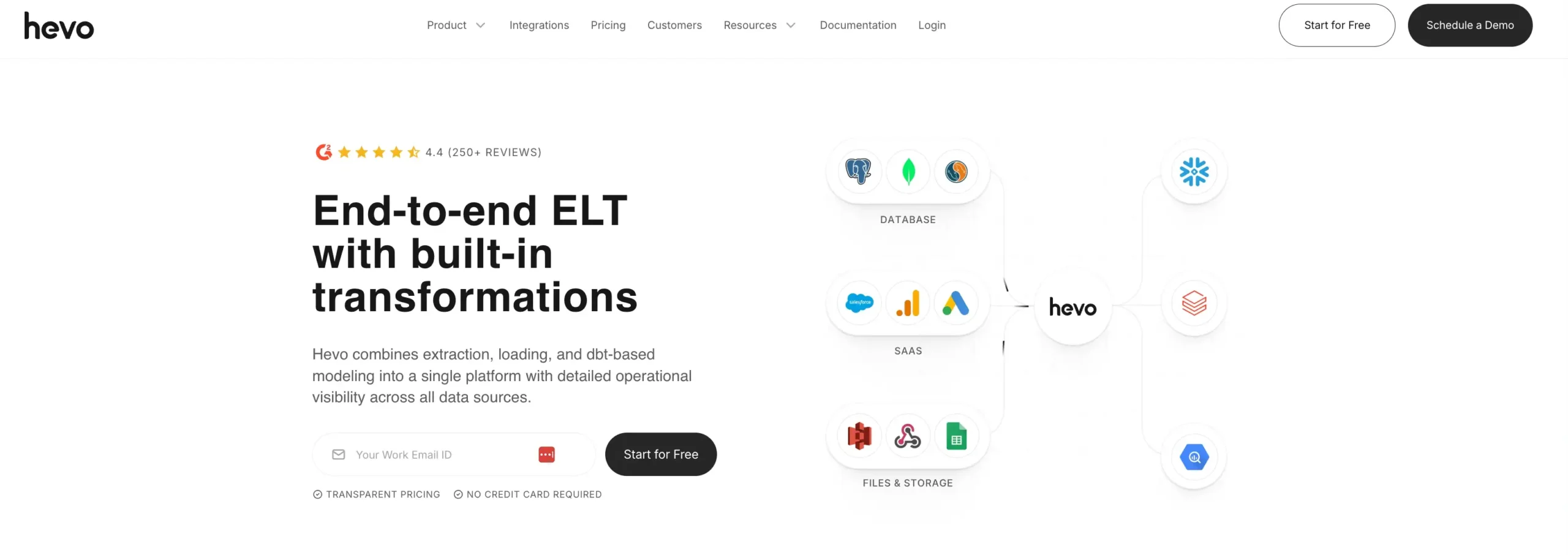
Hevo Data is a cloud-native platform focused on real-time ETL and reverse ETL, with over 150 connectors and a no-code interface. Hevo’s observability suite includes real-time monitoring, data quality checks, anomaly detection, and proactive alerting. Its data catalog is evolving, with features for metadata management and search.
Pricing is event-based, with a free tier for smaller teams and scalable plans for enterprises, making it easy to predict costs as data volumes grow. Hevo is SOC 2 compliant and supports GDPR and other enterprise security requirements.
Key Features:
- 150+ connectors; no-code and low-code pipelines
- Real-time ETL and reverse ETL
- Data observability, quality checks, and alerting
Best For: Organizations seeking real-time data movement, strong observability, and transparent pricing without heavy engineering overhead.
6. Y42: Modern DataOps Cloud for Enterprise Pipelines
Y42 is a fully managed Modern DataOps Cloud, designed for production-ready pipelines on top of BigQuery and Snowflake. It integrates ETL, reverse ETL, orchestration, observability, and a comprehensive data catalog in a single UI. Y42 features pipeline automation, data contracts, RBAC (role-based access control), and deep version control for governance.
Y42’s catalog and observability modules include lineage, metadata search, and error tracking, supporting collaboration and compliance. The platform is highly scalable and tailored to enterprise deployments, with pricing that is modular and customized per customer. Y42 has raised significant funding from investors including Atomico and Insight Partners, underlining its position as a top choice for large organizations.
Key Features:
- 150+ connectors; 1-click integrations
- ETL, reverse ETL, orchestration, and automation
- Data catalog, lineage, and data contracts
Best For: Large organizations needing end-to-end pipeline management, advanced governance, and collaboration.
7. Weld: Unified Data Activation for SaaS and Scale-Ups
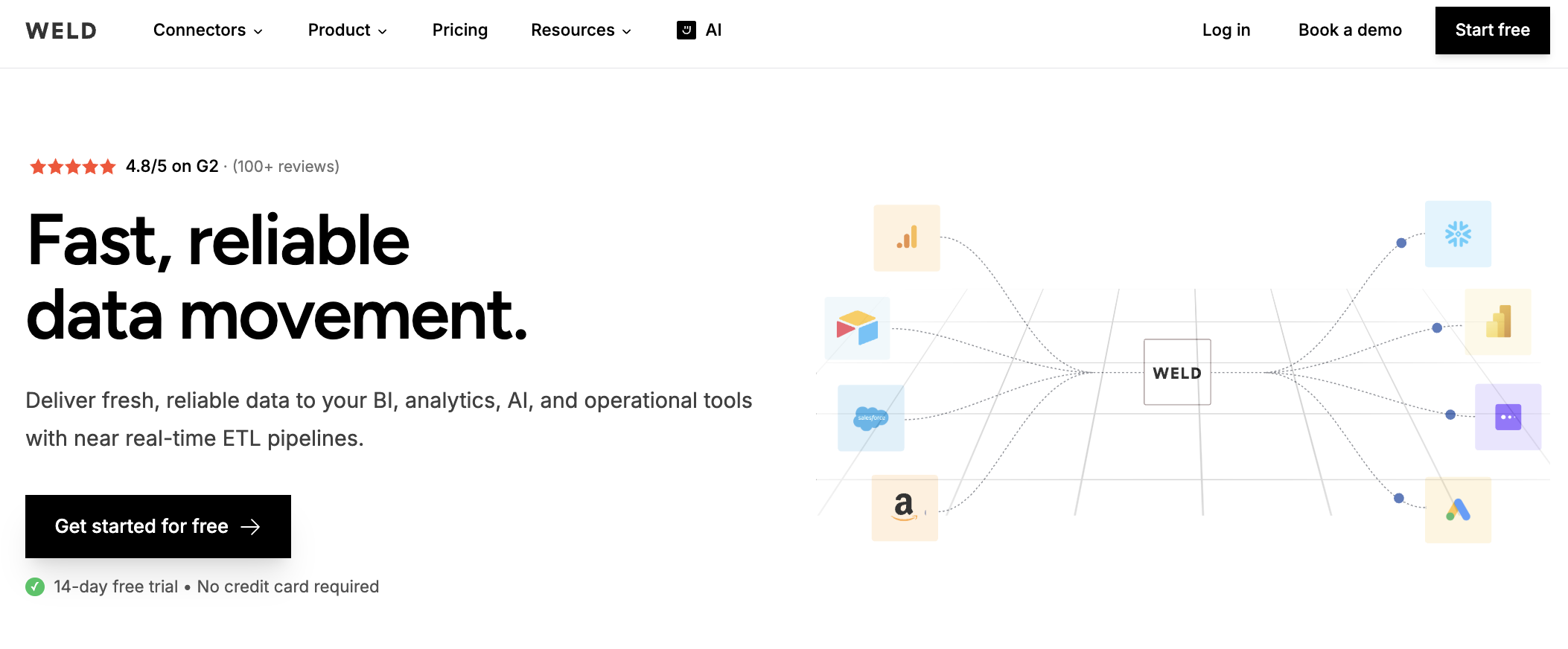
Weld is a unified data platform targeting SaaS companies and fast-growing businesses, offering ETL, reverse ETL, and data activation in one solution. Weld’s visual pipeline designer, 100+ connectors, and strong observability (including monitoring and alerting) make it easy for teams to accelerate analytics and operationalize data.
Weld’s data catalog supports lineage and metadata management, and its pricing is transparent and designed for scale-ups and mid-market teams. The platform is best for companies looking to consolidate their data stack and enable self-service analytics.
Key Features:
- 100+ connectors; visual pipeline design
- ETL, reverse ETL, and data activation
- Data observability, monitoring, and alerting
Best For: SaaS businesses and scale-ups seeking a unified, easy-to-use platform for analytics and data activation.
8. Mozart Data: Managed Modern Data Stack for Mid-Market
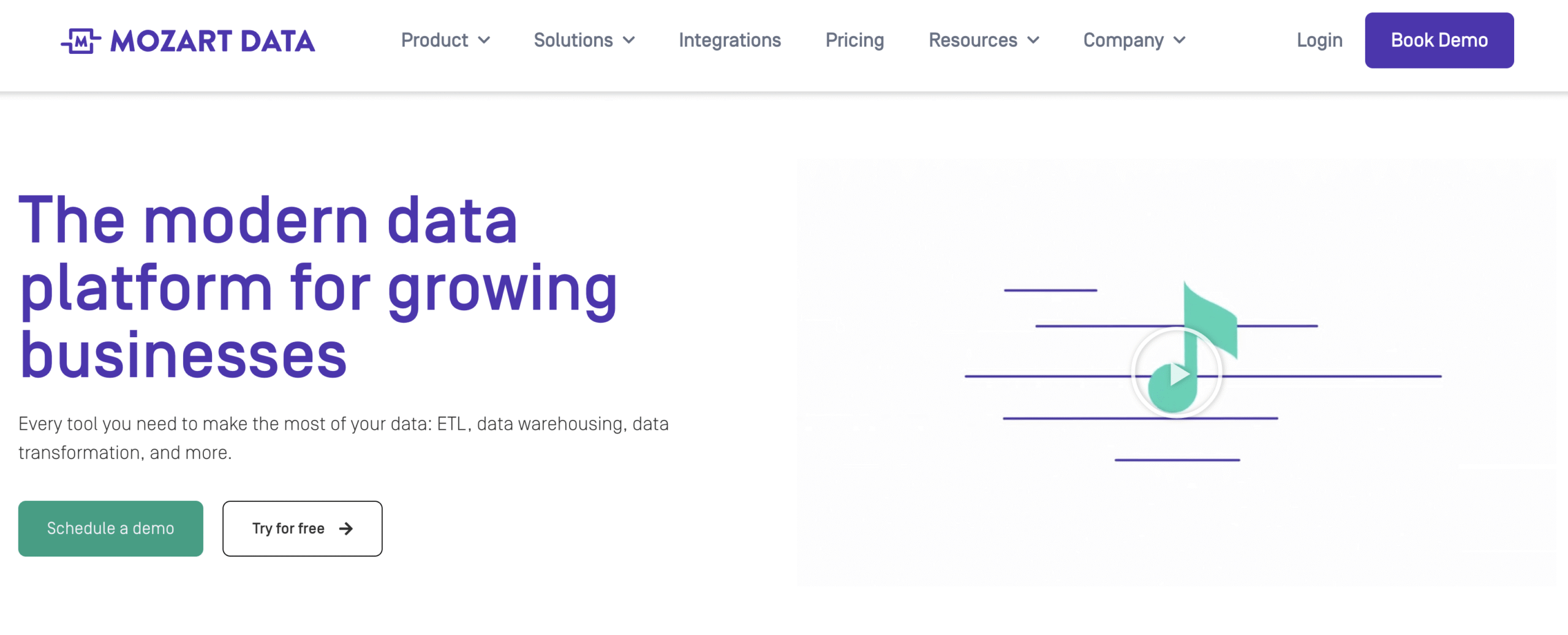
Mozart Data provides a managed modern data stack, combining ELT, a data warehouse, transformation, observability, and a data catalog. The platform is focused on simplicity and rapid deployment, with a no-code UI and support for 50+ connectors. Mozart’s observability features include monitoring, error tracking, and lineage, while its catalog supports metadata management and search.
Pricing is transparent and scalable, making Mozart Data attractive for mid-market teams and startups that want a turnkey solution without managing multiple vendors. The platform is SOC 2 compliant and designed to support growing data teams.
Key Features:
- 50+ connectors; no-code ELT and transformation
- Managed data warehouse and pipeline orchestration
- Observability, monitoring, and lineage
Best For: Startups and mid-market companies seeking a turnkey, managed data stack with rapid onboarding.
Feature Comparison Table
| Platform | ETL / ELT | Reverse ETL | Best For | Key Differentiator |
|---|---|---|---|---|
| Matia | Yes | Yes | Large enterprises needing AI-driven DataOps | AI-driven DataOps platform for enterprise workflows |
| Peliqan | Yes | Yes | Enterprises, SaaS, consultants | Developer-focused Python scripting & custom data pipelines |
| Fivetran | Yes | Yes (via Census) | Automation, reliability, scale | Fully managed, highly reliable connectors at scale |
| Airbyte | Yes | Partial | Custom, open-source, flexibility | Open-source ecosystem with self-host flexibility |
| Hightouch | No | Yes | Data activation, Composable CDP | Reverse ETL & data activation specialist |
| Hevo Data | Yes | Yes | Real-time, no-code, transparency | Real-time replication with no-code interface |
| Y42 | Yes | Yes | Enterprise, governance | Integrated analytics with governance controls |
| Weld | Yes | Yes | SaaS, scale-ups, activation | Activation-focused data platform for scale-ups |
| Mozart Data | Yes | Partial | Mid-market, managed stack | Managed modern data stack with clear positioning |
Enterprise Security and Compliance
Security and compliance are critical for unified DataOps platforms. Most leading platforms – including Peliqan, Fivetran, Hevo Data, Y42, Weld, and Mozart Data – offer SOC 2 compliance, GDPR readiness, and advanced access controls. These features ensure data is encrypted in transit and at rest, and that organizations can meet regulatory requirements for privacy and governance. Peliqan, for example, provides ISO 27001 certification and supports granular RBAC, audit logging, and enterprise authentication.
Market Trends and Funding
The unified DataOps and data platform market is experiencing rapid growth, with significant funding rounds for both established and emerging vendors. Matia’s $21M Series A in 2026 signals investor confidence in the consolidation of data management tools. Y42, Weld, and Mozart Data have also attracted major investments, while Hightouch (reverse ETL) recently raised $80M at a $1.2B valuation, demonstrating the appetite for platforms that bridge data ingestion, activation, and governance.
Conclusion
Matia’s unified DataOps platform is a strong contender for enterprises seeking to consolidate ETL, reverse ETL, observability, and catalog in a single solution. However, the competitive landscape is rich with alternatives that offer broader connector ecosystems, transparent pricing, enterprise-grade security, and flexible deployment.
Peliqan stands out for its all-in-one approach, fixed pricing, and robust security. Fivetran leads in managed ELT and reliability, Airbyte is the top choice for open-source extensibility, and Hevo Data, Y42, Weld, and Mozart Data each offer unique strengths for specific segments and use cases.
When evaluating Matia alternatives, consider your integration needs, security requirements, budget predictability, and desired level of customization. The best unified DataOps platform will align with your organization’s scale, governance standards, and future roadmap.
Ready to explore a unified data platform with transparent pricing and enterprise-grade security? Try Peliqan free or request a demo today.