




Agent-ready data is data an AI agent can answer from correctly without guessing: fresh enough for the question, joined in one queryable place, resolved to real-world entities, permission-aware, and governed by written definitions. This post is a self-check for all five – with a test you can run for each one this week.
Fivetran’s 2026 benchmark report put a number on something most data teams already suspected: 85% of enterprises are running agentic AI on a data foundation that isn’t ready for it.
The instinct is to read that as a tooling gap. It usually isn’t. In most companies the pipelines run fine, the warehouse is fine, the dashboards are fine – for humans. Humans compensate. They know which table to trust, which rows to ignore, which “revenue” is the real one.
An agent compensates for nothing. It answers from exactly what the data says, which is why data that was good enough for BI quietly fails for AI – and why Snowflake measured agents at roughly 25% accuracy on business questions.
We covered the why in the context layer post. This one is the practical follow-up.
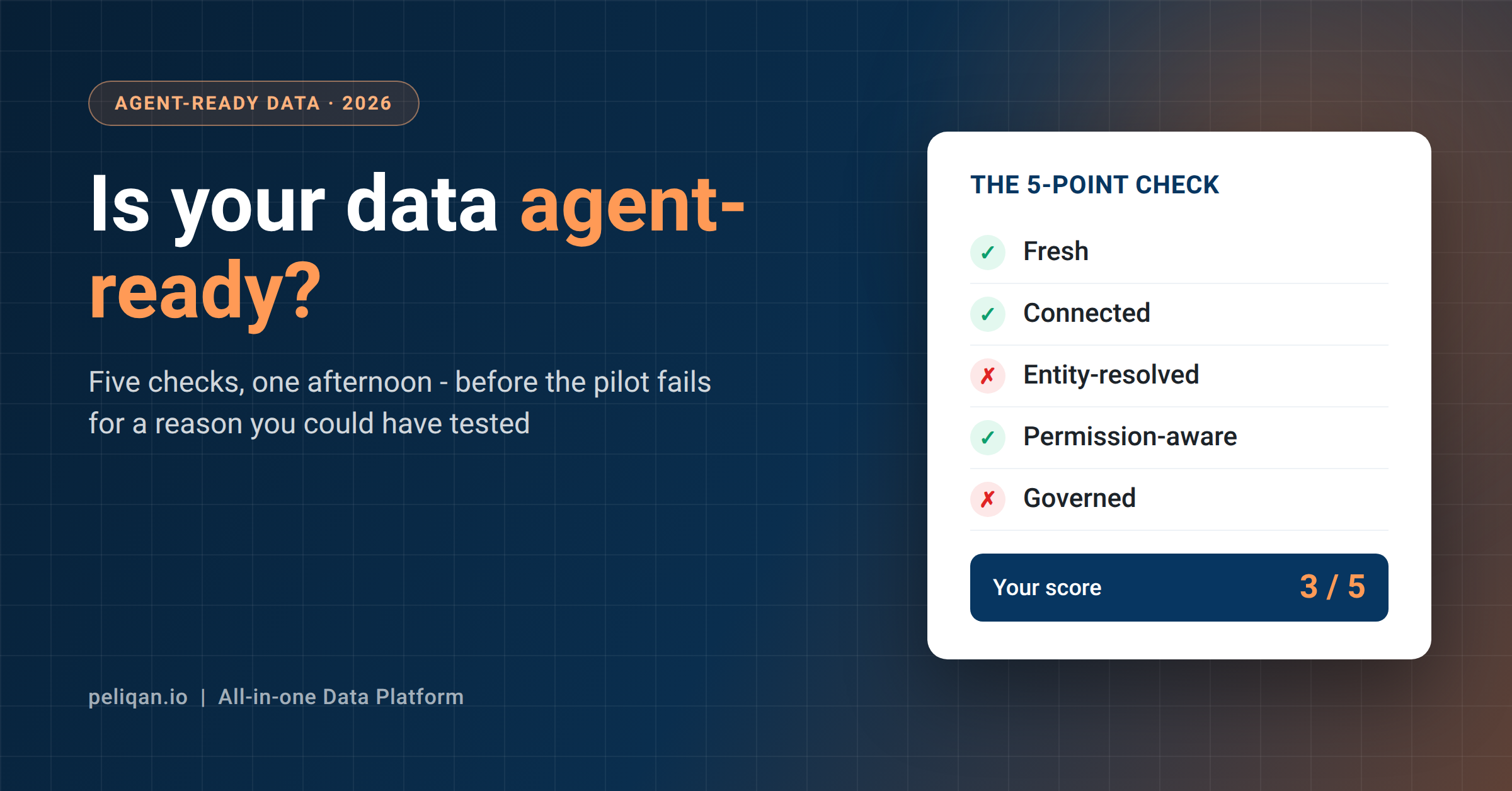
So here is the checklist version: five properties of agent-ready data, each with a concrete test. Score yourself honestly. Most teams land at 1 or 2 out of 5, and that is a normal starting point, not a failure.
Check 1: Fresh enough for the question
Not “real-time everywhere” – that’s expensive and mostly unnecessary. Agent-ready means the freshness of each source matches the questions asked of it. Support tickets that drive same-day action need near-live data; a customer’s founding year can be a month old.
The failure mode is silent: an agent answering “which invoices are overdue?” from yesterday’s sync will confidently include the three that were paid this morning. Nobody sees a sync error. Someone just sends a wrong reminder.
The test: pick your five most common business questions. For each, write down how stale the answer can be before it causes a wrong action. Then check your actual sync schedules against those numbers. Any gap is a finding.
Check 2: Connected in one queryable place
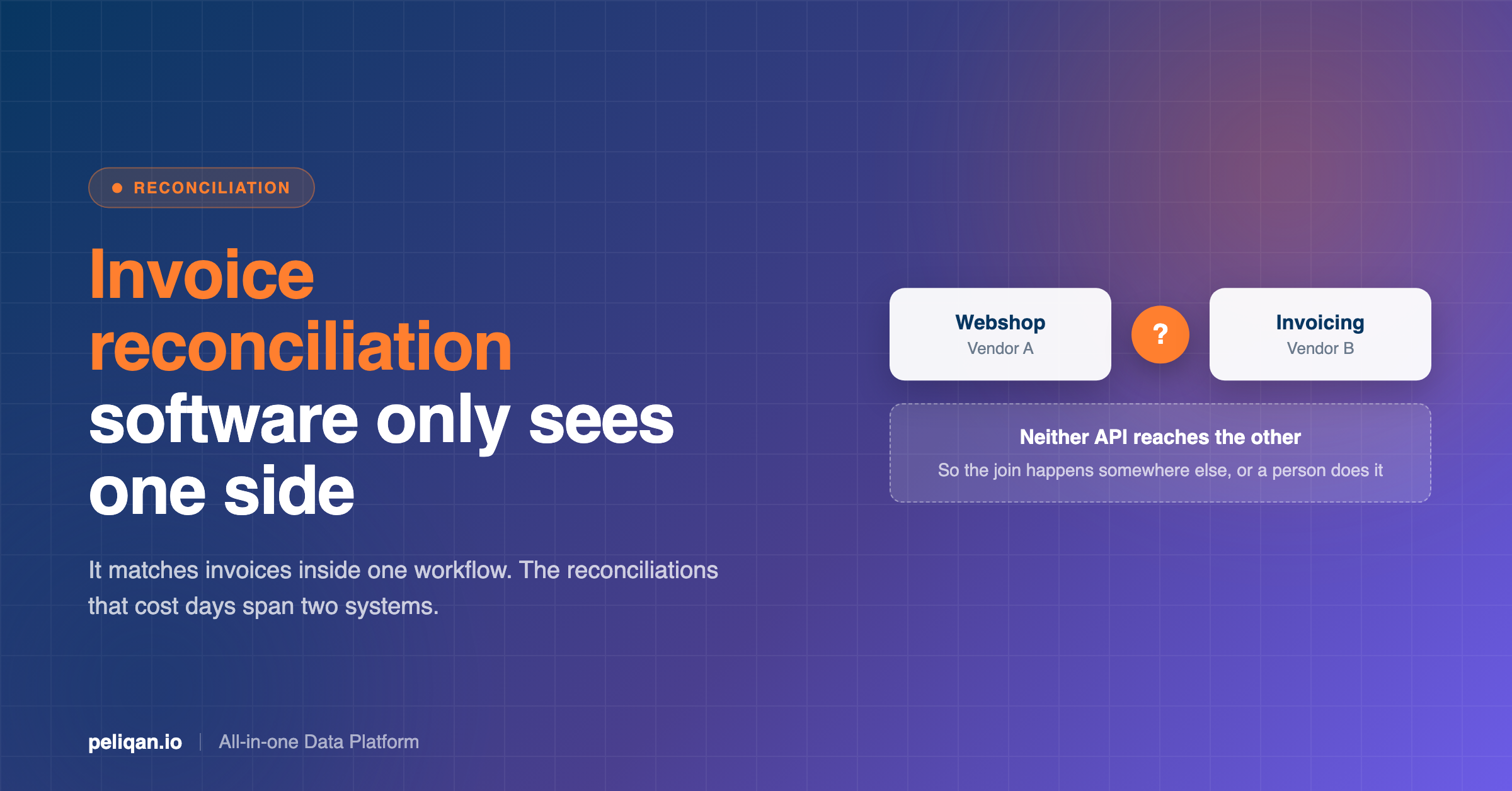
Real business questions cross systems. “Which customers with overdue invoices have an open deal?” needs accounting and CRM in the same query – and an agent hopping between two separate APIs has to reconcile the results itself, which is where errors multiply.
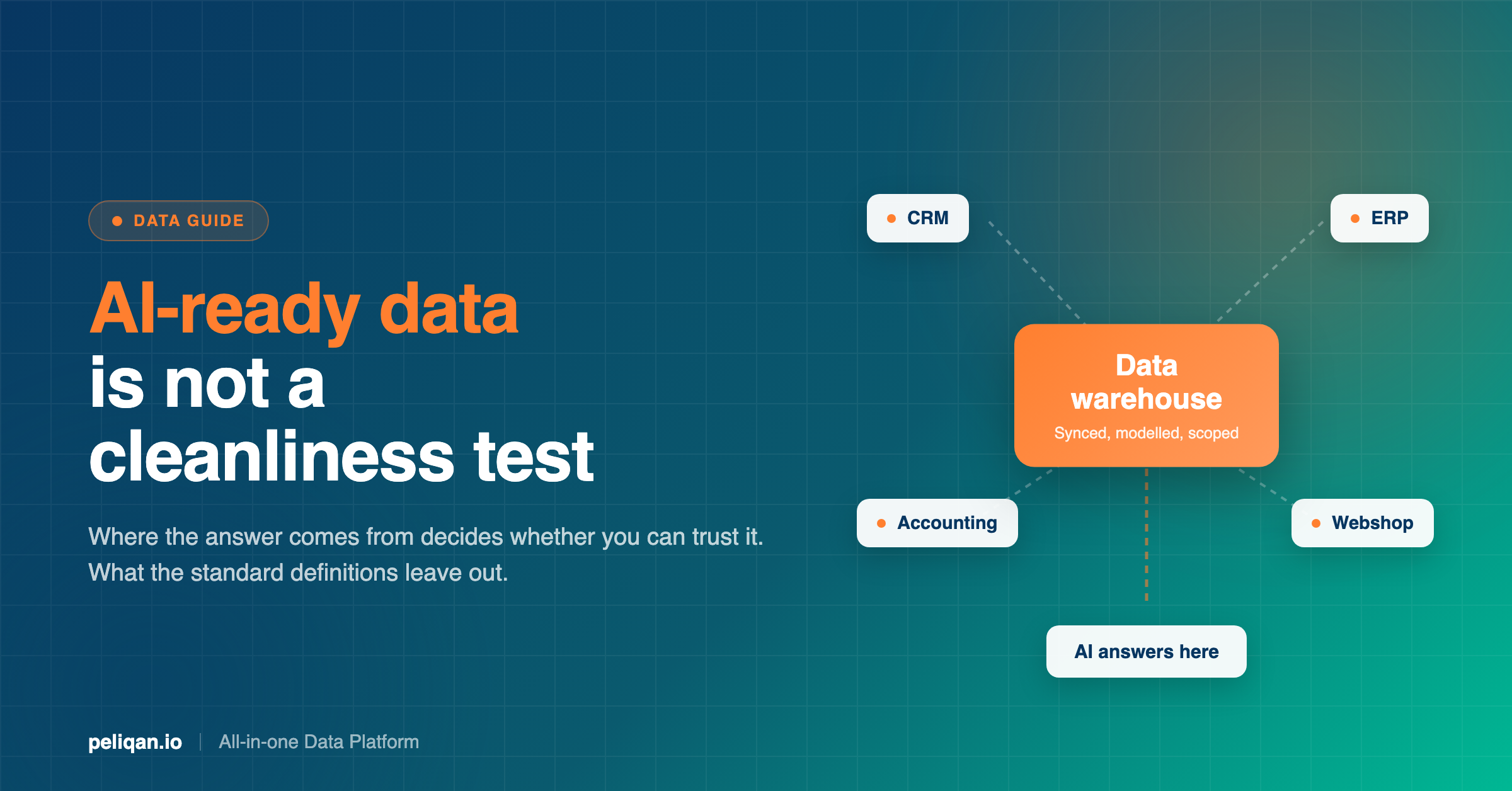
Agent-ready means one SQL surface where sources are already joined or joinable. It matters twice: accuracy, and cost – runtime API orchestration burns tool calls, while a warehouse-first setup answers cross-source questions in one statement.
The test: try to answer one cross-system question with a single query, any tool. If the honest answer involves an export and a spreadsheet, your agent-ready data story stops here.
Check 3: Entity-resolved
Your customer is one company in the real world and four records in your systems: a CRM account, an accounting debtor, a support organization, a billing customer – different IDs, no documented mapping. Every human analyst rebuilt that mapping once in their head. An agent rebuilds it per question, and often differently each time.
The test: pick three important customers. For each, count how many IDs represent them across your systems, and check whether a mapping table exists anywhere a query can reach. Three customers, ten minutes, very revealing.
Check 4: Permission-aware
An agent should not be a way around your access model. If salaries are hidden from most employees in the HR tool but sit unmasked in the warehouse the agent queries, the agent will helpfully answer “what does our sales director earn?” for anyone who asks.
Agent-ready means access control lives at the data layer: which tables, columns and rows each agent can see, per role – not a polite instruction in the prompt asking the model to behave.
The test: ask your agent for something sensitive from an account that shouldn’t see it. If you get an answer, this check fails. If you’re not sure what would happen, it fails too – you should know.
Check 5: Governed by written definitions
The quiet one that decides the other four. “Revenue”, “active customer”, “churn” – if these have no written definition with a formula and a source table, every agent answer is a coin flip between interpretations. This is the semantic layer, and a one-page version in a shared doc genuinely counts.
The test: ask three colleagues to define “active customer” in writing, separately. If the definitions differ – they will – the agent is guessing among them on every question.
Scoring yourself
Two honest notes on the scoring. First, the order matters: definitions (5) and one queryable place (2) unlock the rest, so start there. Second, no vendor – us included – can score you a 5 out of the box, because check 5 is your company’s knowledge and someone on your team has to write it down.
Where Peliqan fits
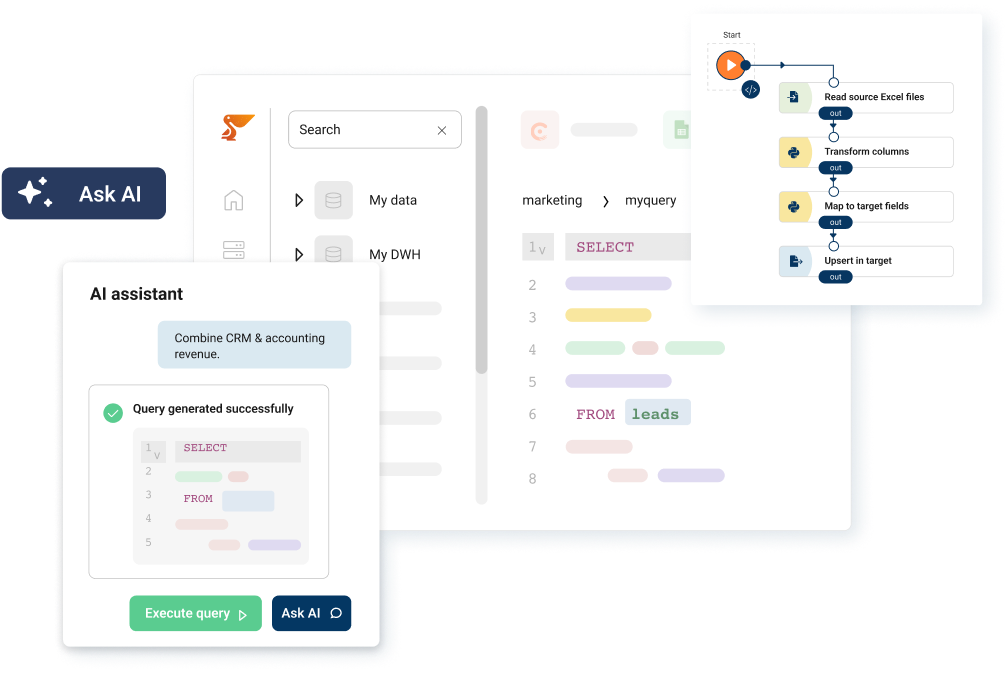
Peliqan is built to move you from 1-2 to 4-5 without a platform team. 300+ connectors sync into a built-in Postgres warehouse on schedules you set per source, which covers checks 1 and 2 in one step.
For check 4, role-based permissions with row and column-level control decide what each agent sees, and every query is logged.
For check 5, the semantic model gives your definitions a place to live where agents actually read them. Check 3 – entity resolution – is a transformation you build once in SQL, with the warehouse making it a join instead of a project.
What Peliqan doesn’t do is write your definitions or decide your freshness targets. That’s the part of agent-ready data that stays yours, whichever tool you pick.
Run the checks before the pilot
The 85% number isn’t a prophecy – it’s a queue of teams that connected agents before checking for agent-ready data. An afternoon of the five tests above tells you exactly which failure your pilot would have hit, while it’s still cheap to fix.
And if you want to see what a 4-5 setup looks like on your own systems, book a demo: connect two sources, ask a cross-source question, then ask for something the agent shouldn’t reveal. Both answers matter.