
Claude for Excel: features, limits and live business data
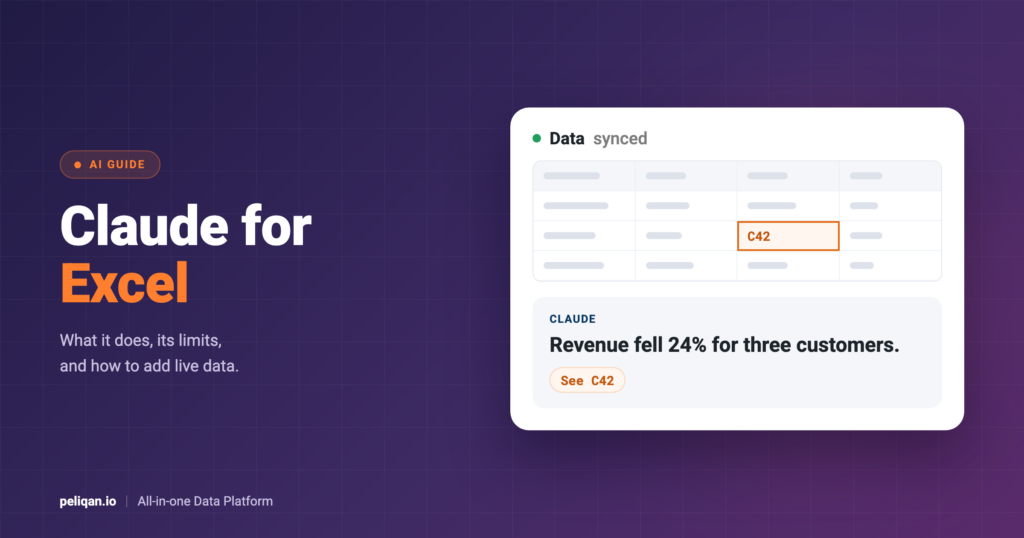
Claude for Excel is Anthropic’s add-in that puts Claude in a sidebar inside your spreadsheet. It can explain formulas, change assumptions, fix errors and build models in the workbook you have open. This guide covers what it does and which plans include it. It also explains how to install it, where it falls short, and […]
Claude Skills: What they are and the best ones to use
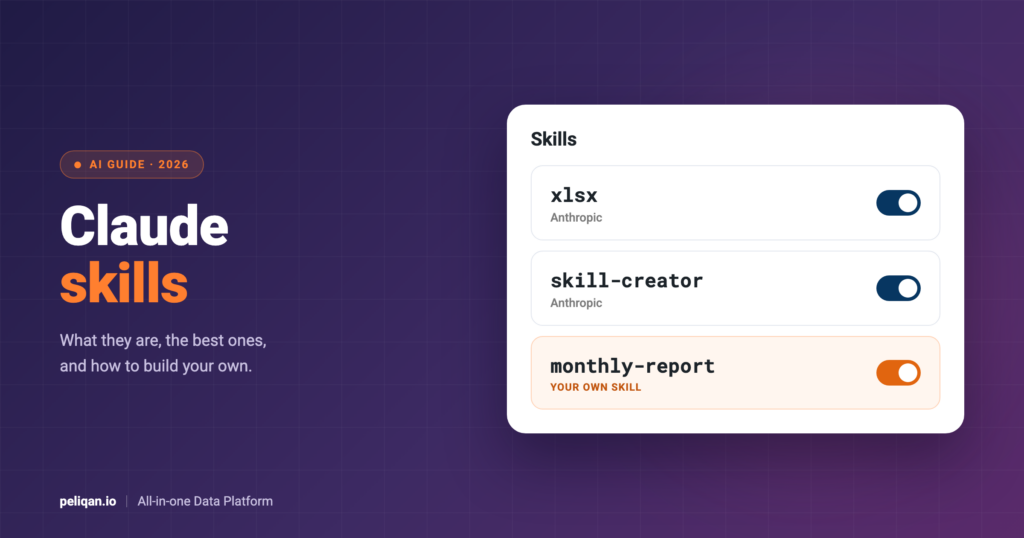
Claude skills are folders of instructions that teach Claude how to do a specific task the same way every time. For example, a skill can hold your report format, your brand rules or your team’s checklist for a code review. This guide explains what skills are, which ones are worth turning on, how they work […]
Best ChatGPT Connectors: List, Setup and Custom Apps
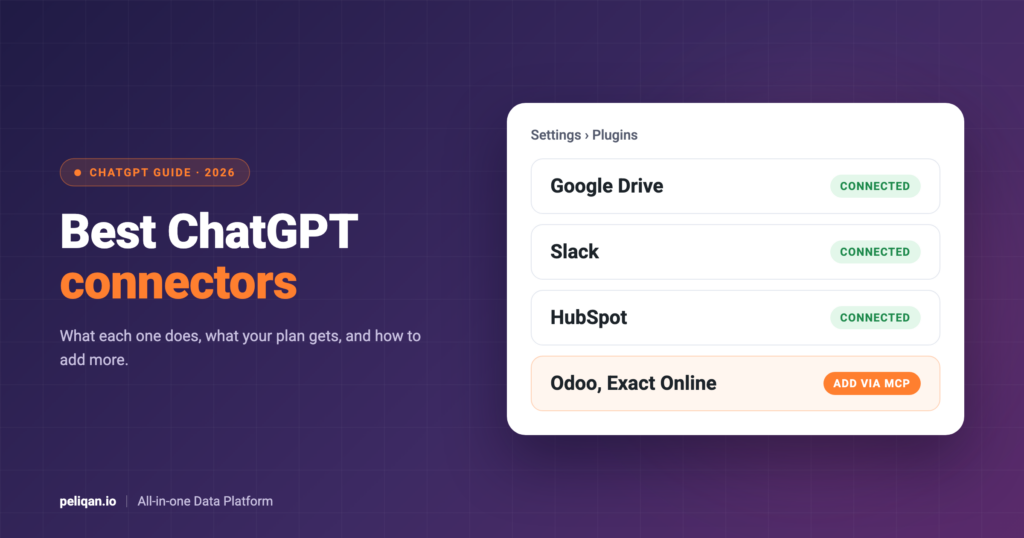
ChatGPT connectors let ChatGPT read and act on the apps you already use, such as Google Drive, Slack, HubSpot or GitHub. OpenAI now calls them apps, and you manage them under Settings, then Plugins. This guide explains what changed, lists the most useful ChatGPT connectors by job, shows which plans get what, and explains how […]
ChatGPT MCP: plans, setup and what breaks in 2026
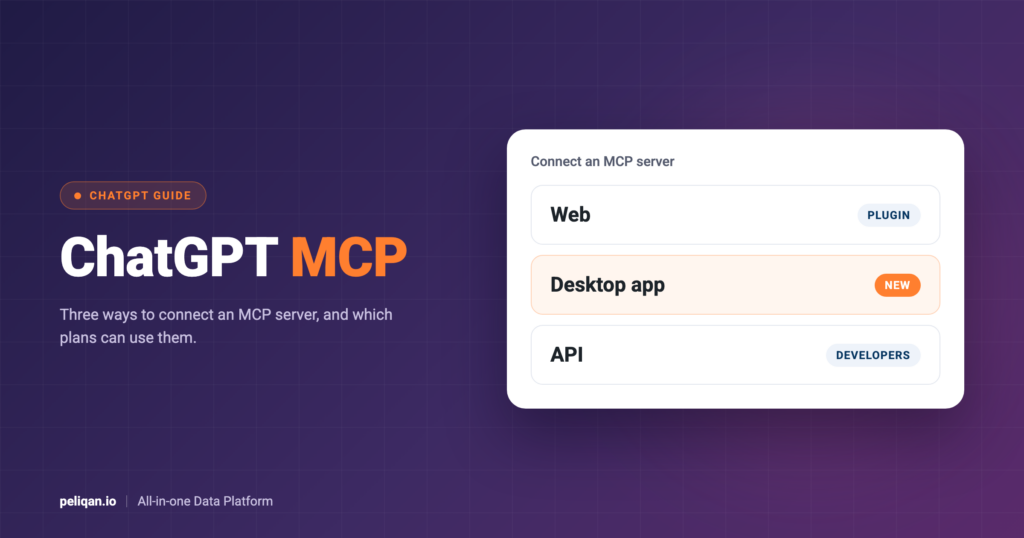
ChatGPT MCP lets ChatGPT use tools and data from other systems through the Model Context Protocol. There are now three ways to connect a server: as a plugin on the web, in the new desktop app, or through the OpenAI API. This guide explains each route, which plans can use it, the setup steps, and […]
AI-ready data: what it means and how to tell if yours is
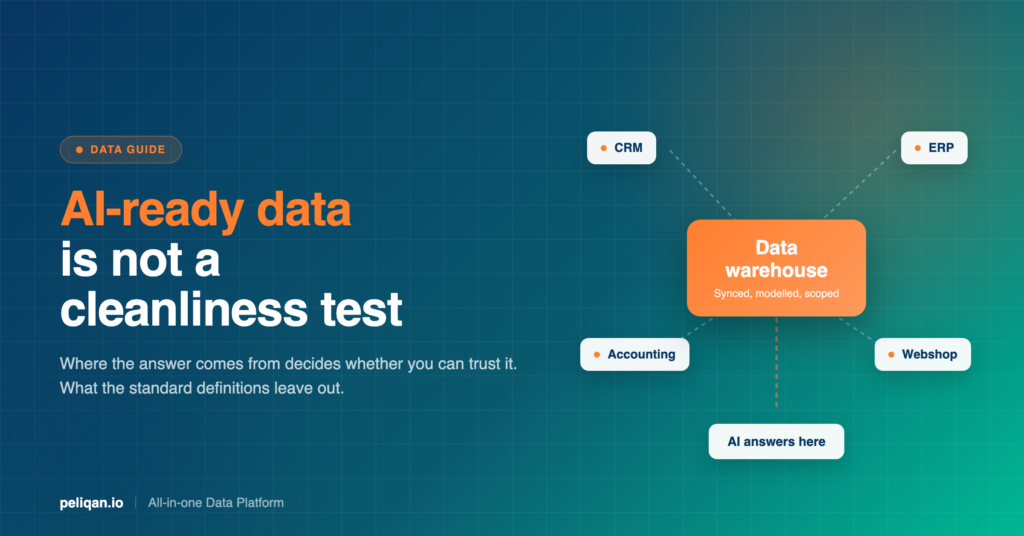
AI-ready data is data an AI system can reach, read and rely on without a human standing behind it vouching for the answer. Most definitions stop at quality and governance. This post covers the part they skip: where the answer actually comes from at the moment someone asks, and why that decides whether the answer […]
API rate limits: why AI agents burn through them fast

API rate limits cap how many requests you can send to a system in a given time. AI agents hit them faster than people do, because one question can trigger many calls – and when the limit is reached, your agent fails and your scheduled syncs often fail with it. This post explains why it […]
Agent-ready data: the 5-point self-check before AI agents
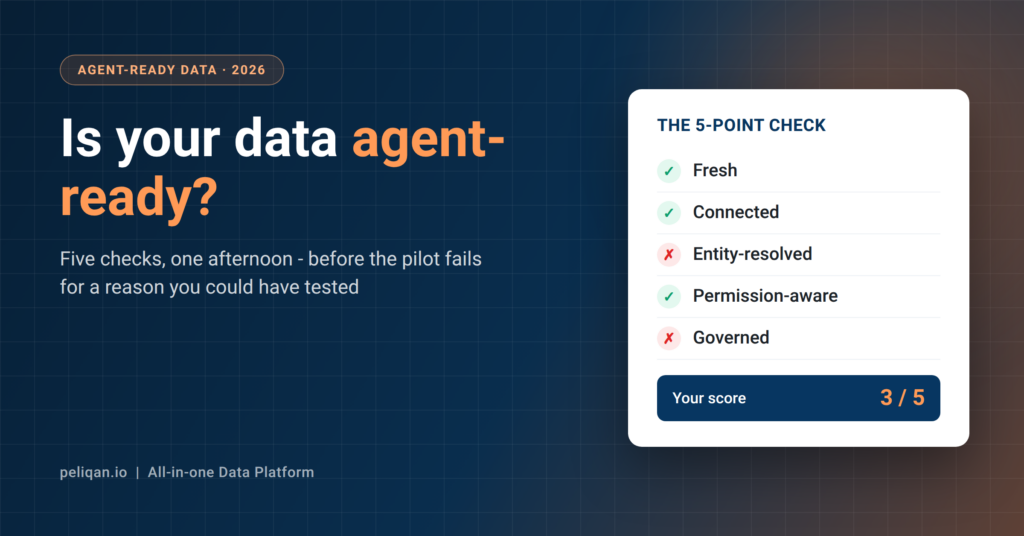
Agent-ready data is data an AI agent can answer from correctly without guessing: fresh enough for the question, joined in one queryable place, resolved to real-world entities, permission-aware, and governed by written definitions. This post is a self-check for all five – with a test you can run for each one this week. Fivetran’s 2026 […]
Data pipeline pricing: why bills spike and how to forecast
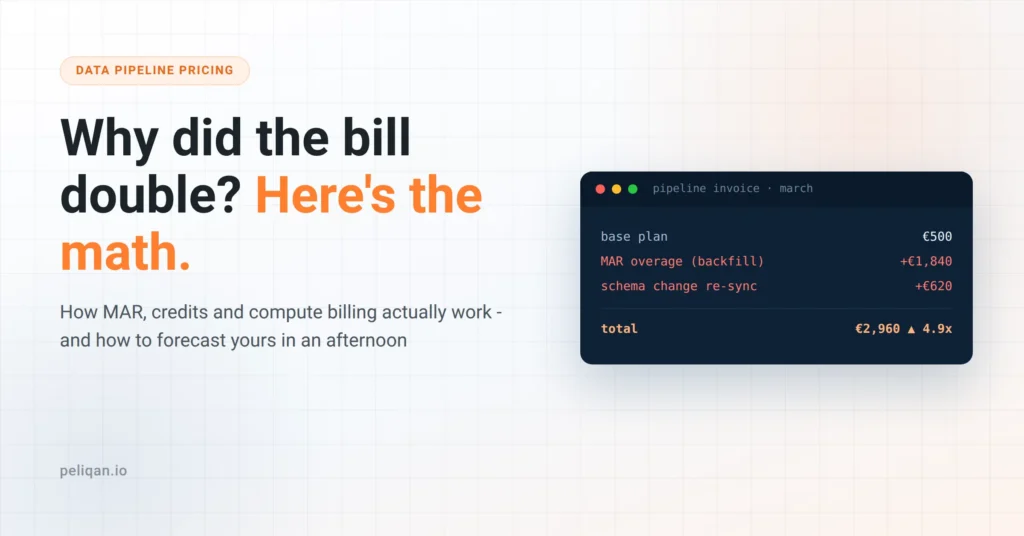
Data pipeline pricing comes in four flavors – active rows, event volume, credits and compute – and each one has a specific way of surprising you. This post explains how each model actually charges, why bills spike after backfills and schema changes, and how to forecast your own bill before you sign anything. Almost every […]
AI writeback: safe write access for AI agents in 5 steps
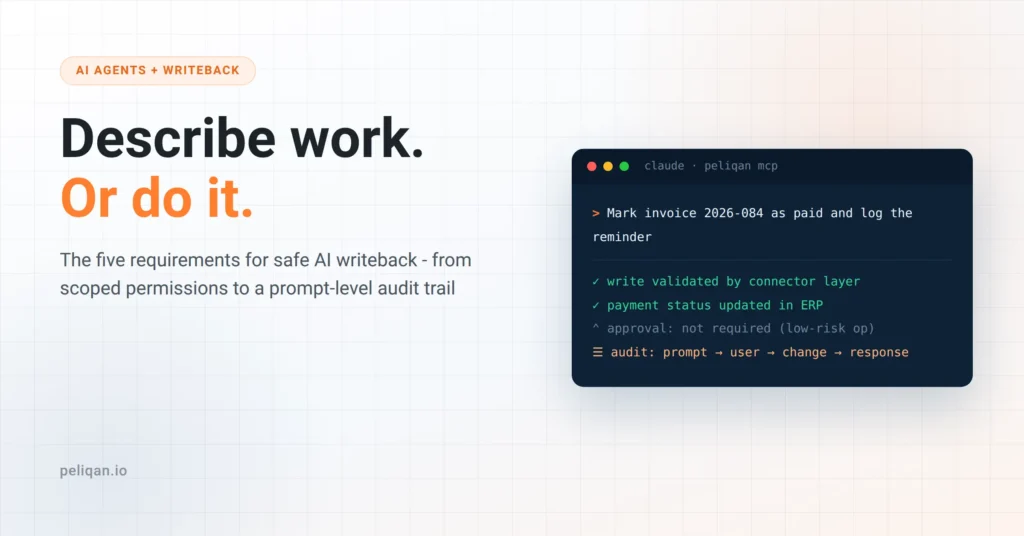
AI writeback is the ability of an AI agent to update your business systems – create an invoice, move a deal, send a reminder – instead of only reading from them. This post covers when to allow it, the five requirements for doing it safely, and the operations that should stay read-only no matter what […]
Context layer: why AI agents get 1 in 4 answers right
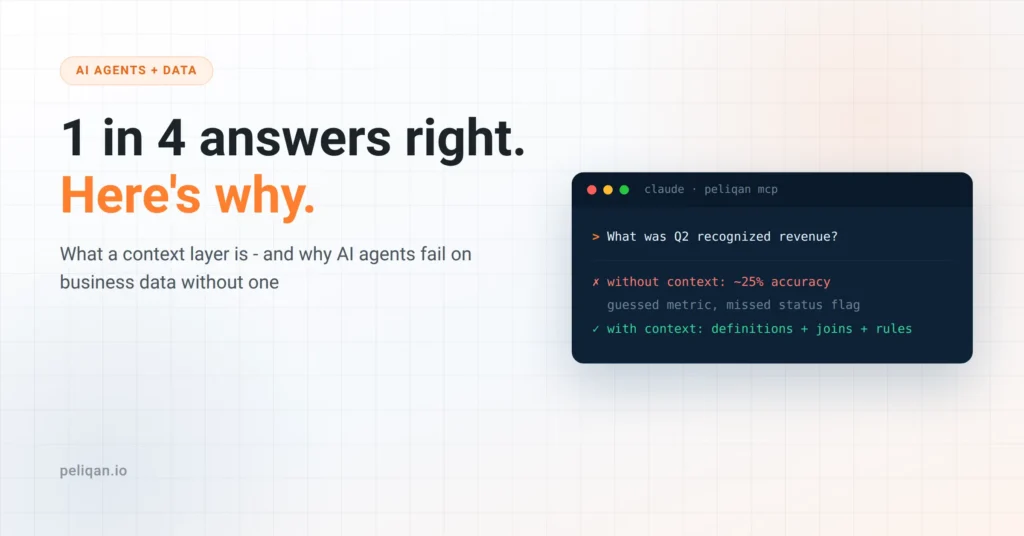
A context layer stores what your data means – metric definitions, relationships between systems, business rules – so an AI agent stops guessing. This post explains why agents fail without one, what Microsoft, Snowflake and Airbyte just shipped, and what to do if you don’t have a data platform team. In June, Snowflake published a […]