




Microsoft Fabric bundles data engineering, warehousing, real-time intelligence and Power BI into one Azure SaaS platform – but its capacity-based pricing is hard to predict, the platform assumes a Microsoft-centric stack, and OneLake creates real gravity once your data lands there. This guide compares the 10 best Microsoft Fabric alternatives in 2026, from all-in-one data platforms to lakehouse and warehouse specialists, with honest trade-offs for each.
Why teams look for Microsoft Fabric alternatives
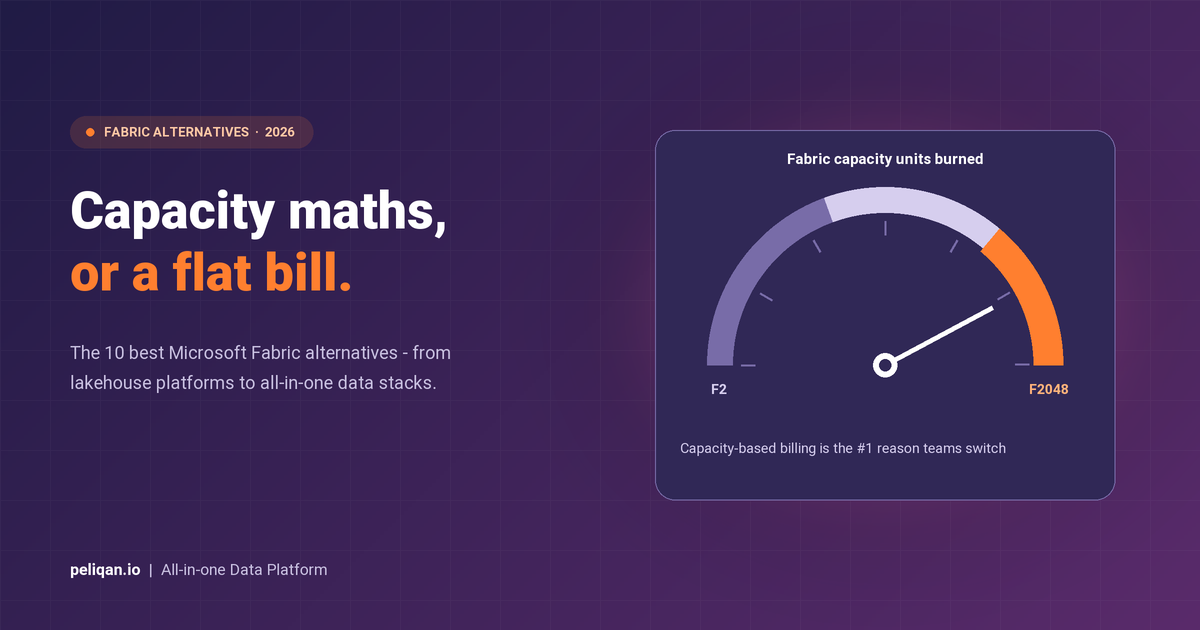
Fabric gets a lot right: if your organisation lives in Azure and Power BI, one platform with one copy of data in OneLake is genuinely convenient. The complaints that push teams to evaluate alternatives are consistent, though. Capacity pricing (the F-SKU model, from F2 up to F2048) bills you for provisioned Capacity Units, and consumption smoothing makes it hard to know which workload burned the budget – a variant of the problem we unpack in our guide to data pipeline pricing.
The second driver is stack fit. Fabric is Azure-only, and the deeper you integrate with OneLake the harder it becomes to leave. Teams on AWS or Google Cloud, or with a mixed estate, end up fighting the platform. And for organisations that mainly used Data Factory for pipelines, the move into Fabric raises the same questions covered in our review of Azure Data Factory alternatives: do you need the whole bundle, or just the parts that fit?
- Unpredictable consumption billing: Capacity Unit burn is hard to forecast for data-heavy or spiky workloads, and throttling hits when capacity runs out
- Azure lock-in: limited agility for hybrid, multi-cloud or non-Microsoft stacks once data centralises in OneLake
- Complexity for business users: many personas, many workloads, and an experience that still assumes data engineering skills
- Overbuy risk: mid-market teams often need a fraction of the bundle but pay for capacity sized to the whole
Quick picks: the short answer
- Best all-in-one alternative: Peliqan – ELT, warehouse, BI and AI in one platform at a fixed price
- Best for large-scale AI and data engineering: Databricks
- Best standalone warehouses: Snowflake, Google BigQuery, Amazon Redshift
- Best for SAP-centric enterprises: SAP Business Data Cloud (Datasphere)
- Best for regulated hybrid estates: IBM Cloud Pak for Data / watsonx.data
Microsoft Fabric alternatives: top 10
1. Peliqan – all-in-one data platform
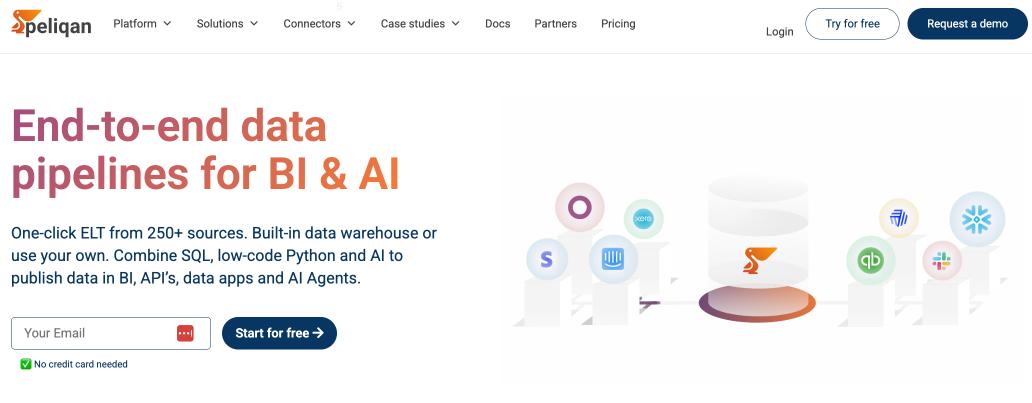
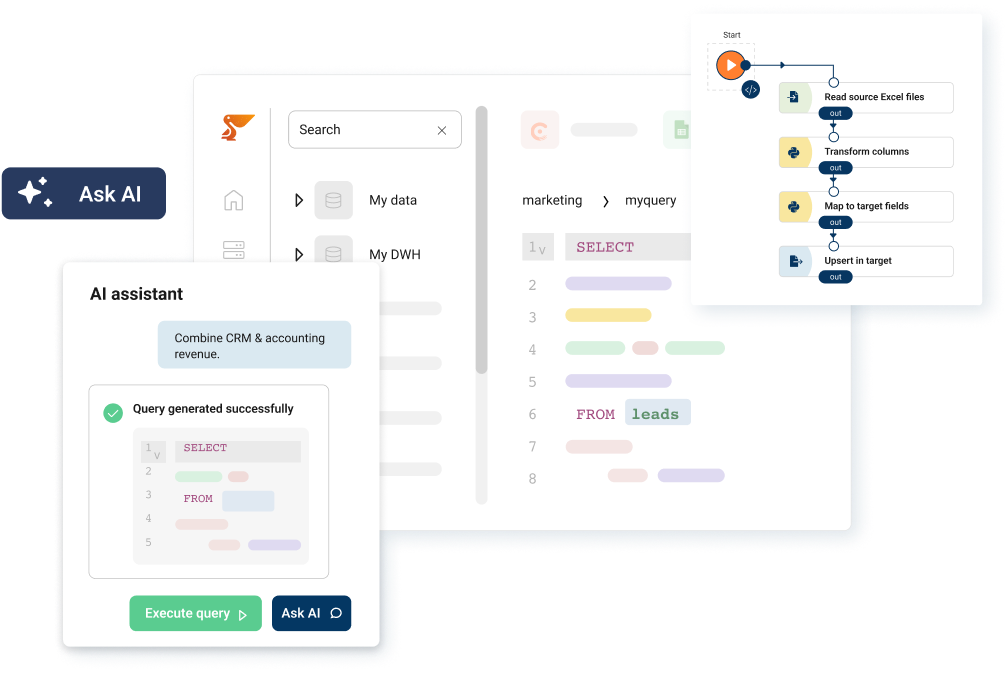
Peliqan is the closest thing on this list to what Fabric promises – pipelines, warehouse, transformations, BI and AI in one platform – but built for teams that want results in days, not a capacity-planning exercise. It ships a built-in warehouse on Postgres + Trino, so cross-source queries work out of the box, and you can bring your own warehouse (Snowflake, BigQuery, Redshift) instead.
Its 300+ connectors cover CRM, ERP, accounting and HR tools with notably deep EU software coverage, and custom connectors are built on a 2-week SLA. Transformations run in SQL, low-code Python or a spreadsheet-style UI, and data activation covers reverse ETL, alerts, API publishing and scheduled reports.
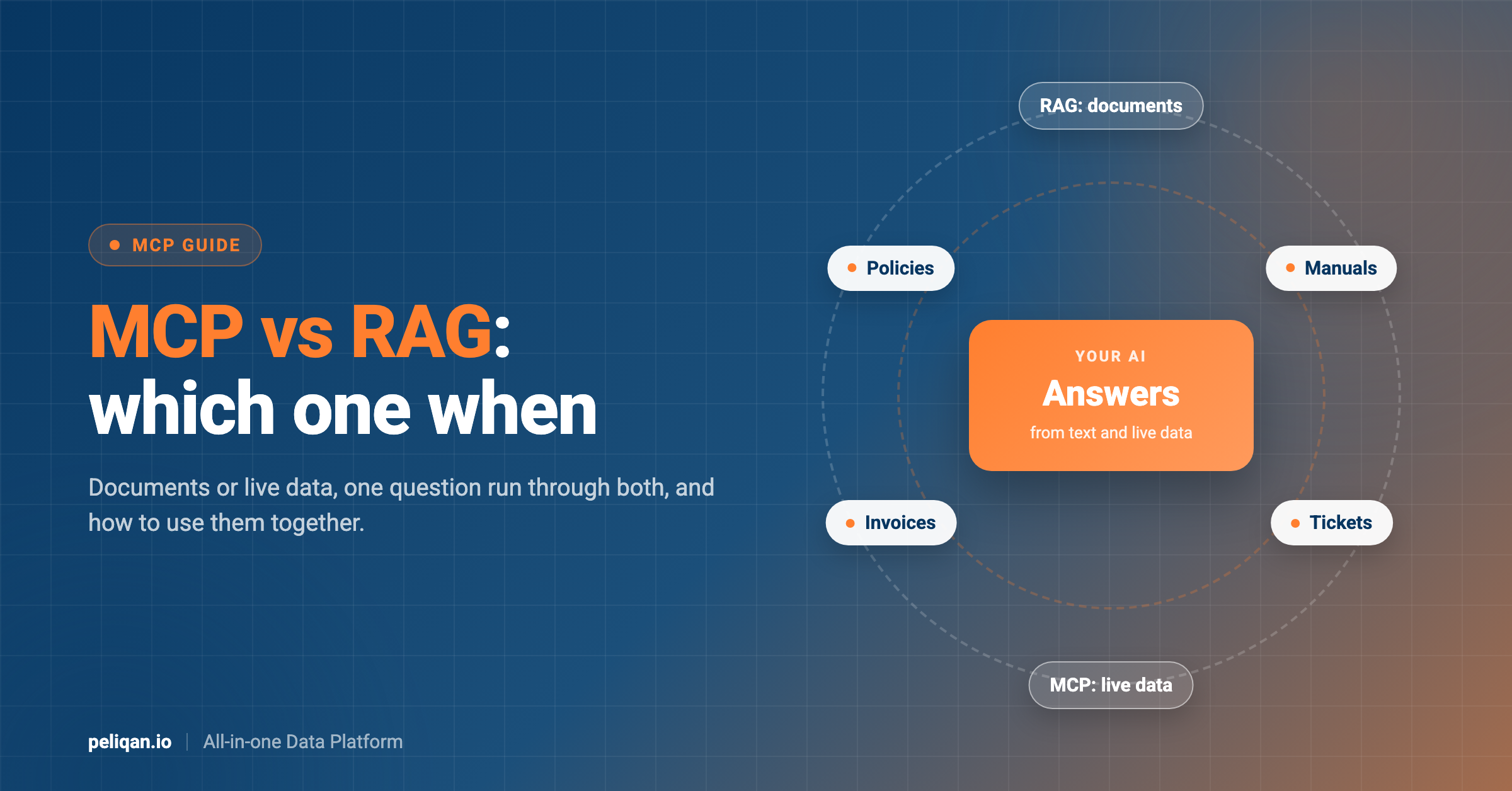
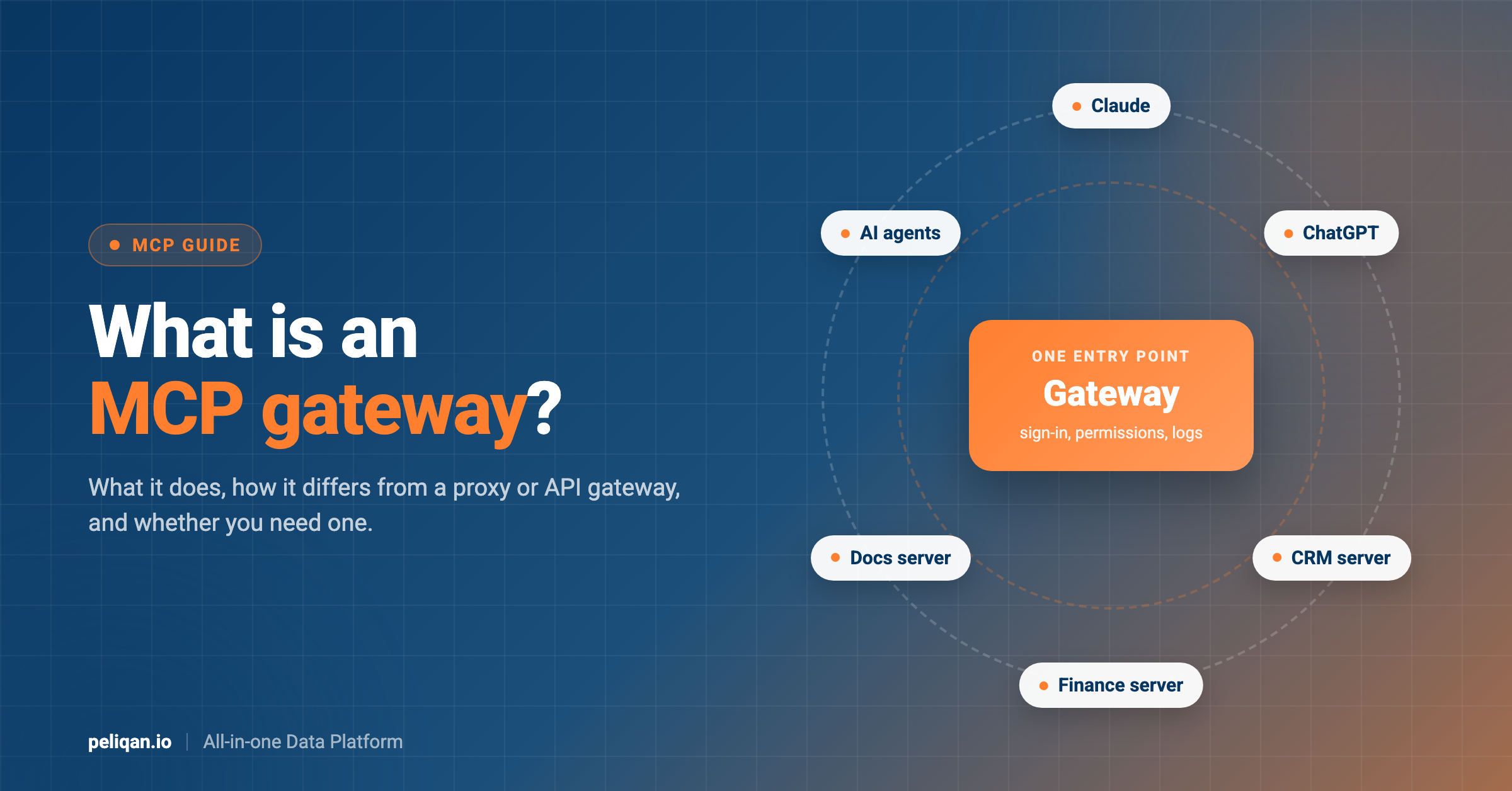
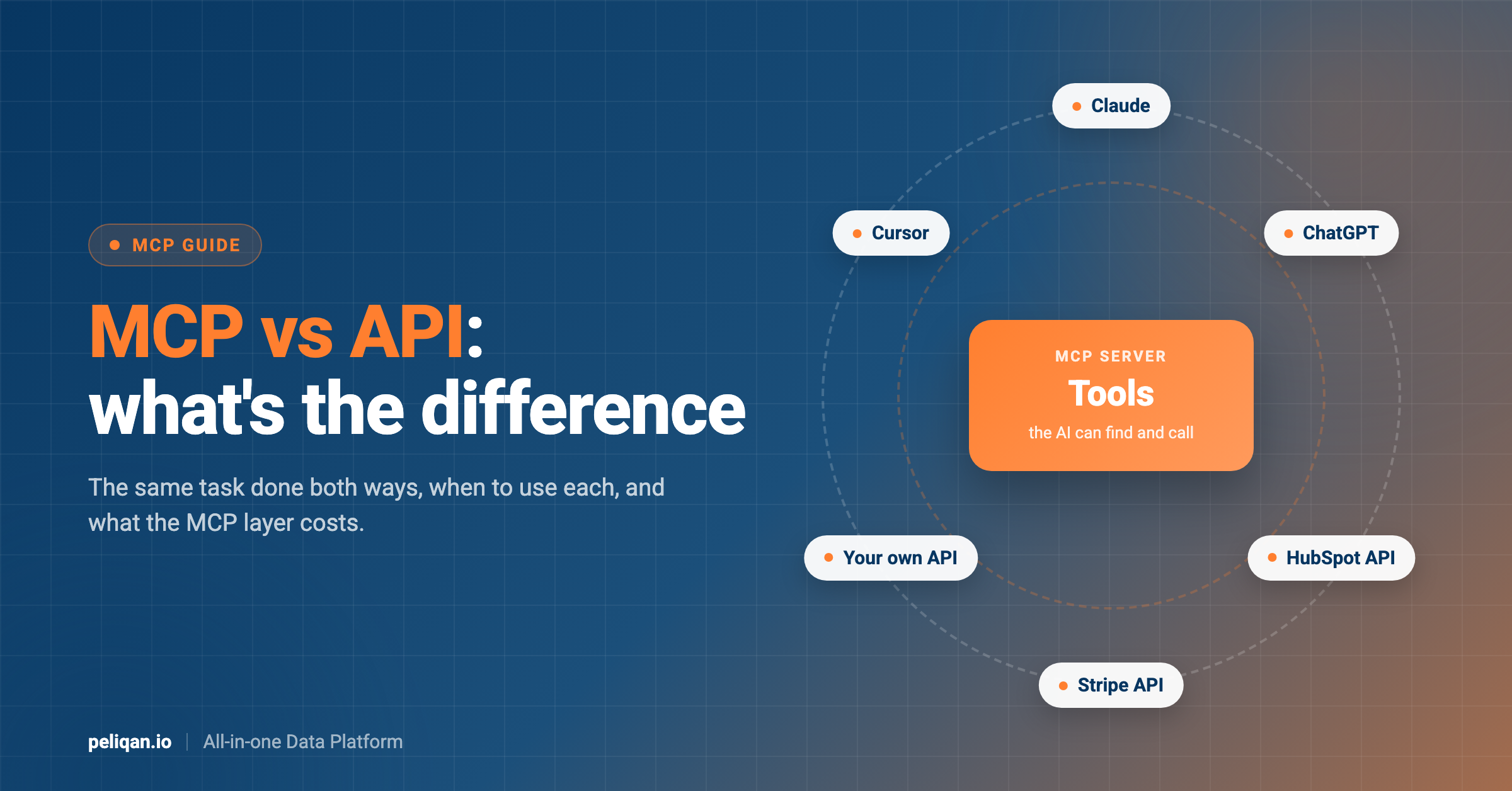
On the AI side, Peliqan pairs AI-assisted SQL with a built-in MCP server, so assistants like Claude and ChatGPT can query all connected sources through one governed endpoint – part of its broader AI feature set.
Where Fabric bills by provisioned capacity, Peliqan uses transparent fixed pricing – the difference between forecasting a bill and discovering one.
Compliance is enterprise-grade: SOC 2 Type II and ISO 27001 certified, GDPR, HIPAA and CCPA compliant, and EU-hosted on AWS Frankfurt – details on the security page.
Best for: mid-market teams, SaaS companies and consultants who want the whole stack working this week, at a predictable price.
Watch out for: cloud-first focus – on-premises deployment is limited to hybrid connectivity rather than self-hosting.
2. Databricks – unified data lakehouse
Databricks pioneered the lakehouse and remains the strongest alternative for serious data engineering and AI. Built on Spark and Delta Lake with Unity Catalog for governance and MLflow for MLOps, it runs on AWS, Azure and GCP – the multi-cloud freedom Fabric lacks. Notebooks, streaming and massive-scale ETL are where it shines, and its Mosaic AI stack covers everything from fine-tuning to agent tooling.
The trade-off is skills and cost: DBU-based pricing has the same forecasting problem as Fabric capacity, and non-engineers will find it a steep climb. We compare it in depth against other options in our Databricks alternatives guide.
Best for: data engineering and ML teams processing large volumes across clouds.
Watch out for: DBU pricing complexity and a developer-first experience.
3. Snowflake – cloud data platform
Snowflake is the benchmark cloud warehouse: compute decoupled from storage, near-infinite concurrency through independent virtual warehouses, secure data sharing, and now Cortex AI for in-warehouse LLM features. It runs on all three major clouds, which makes it a natural pick for teams leaving Azure-only Fabric.
What it does not include is the rest of the stack – ETL, BI and activation are all bring-your-own, which is exactly how many teams end up pairing it with a platform like Peliqan. Per-second consumption billing is flexible but shares Fabric’s predictability problem, a theme our Snowflake alternatives guide covers in detail.
Best for: enterprises that want a best-of-breed SQL warehouse with elastic scale.
Watch out for: no built-in ETL or BI, and consumption costs that need active governance.
4. Google BigQuery – serverless data warehouse
BigQuery is the zero-ops option: fully serverless, petabyte-scale SQL with built-in ML (BQML), Gemini integration and native hooks into Looker and Google Analytics. There is no capacity to size and no cluster to tune, which makes it the philosophical opposite of Fabric’s F-SKU model.
Costs are low at modest volumes but per-query billing scales fast with heavy scanning, and you are committing to Google Cloud’s gravity in the same way Fabric commits you to Azure.
Best for: GCP-based teams that want scale with zero infrastructure management.
Watch out for: query costs at high volume and Google Cloud lock-in.
5. Amazon Redshift – AWS data warehouse
Redshift is AWS’s flagship warehouse, available in provisioned and serverless flavours, with columnar MPP performance, lakehouse querying through Spectrum, and SageMaker integration for ML. For organisations already running on AWS, it is the path of least resistance away from Fabric.
It rewards tuning: workload management, distribution keys and concurrency scaling all need attention as usage grows, and reserved clusters trade flexibility for savings.
Best for: AWS-centric organisations consolidating analytics next to their infrastructure.
Watch out for: tuning overhead compared with serverless rivals.
6. IBM Cloud Pak for Data and watsonx.data
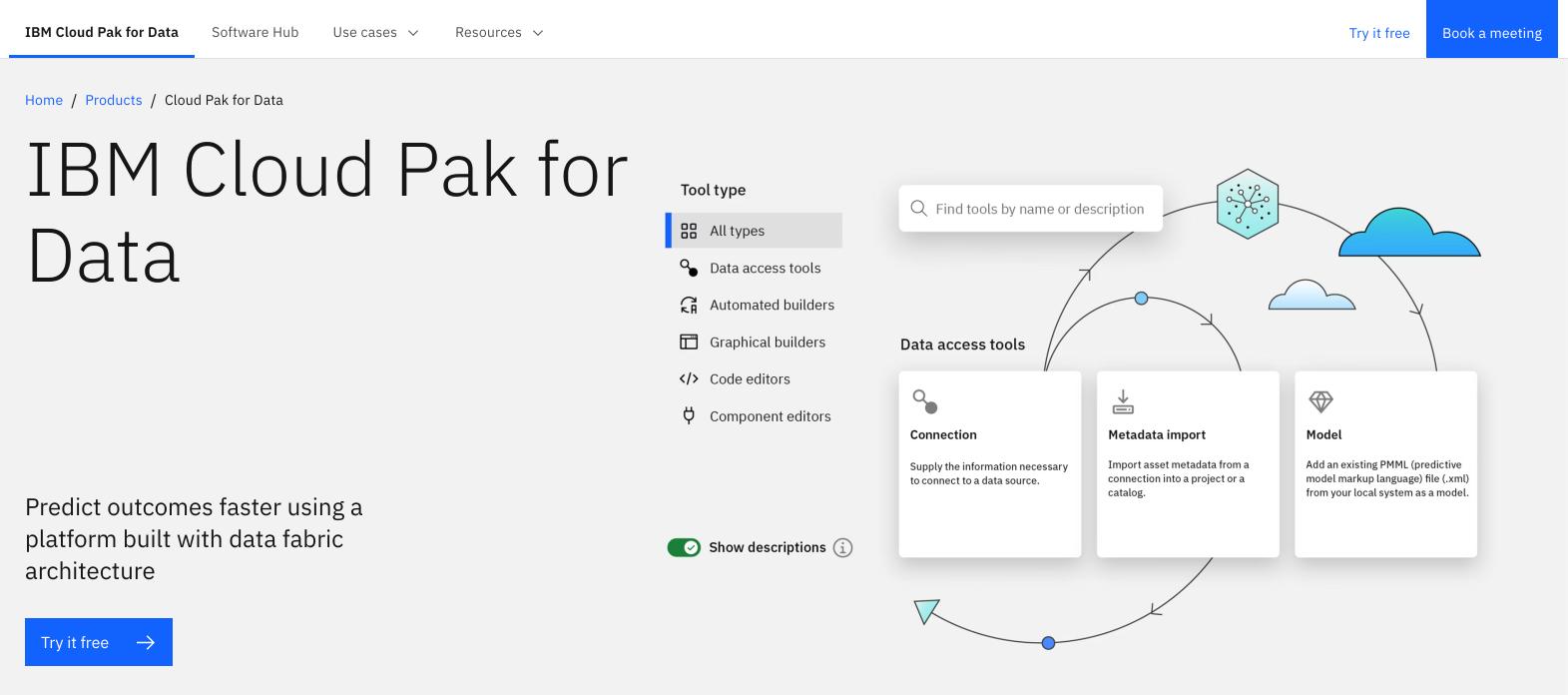
IBM’s data platform story now spans Cloud Pak for Data – the modular, OpenShift-based fabric for hybrid estates – and watsonx.data, its open lakehouse for AI workloads. The combination is aimed squarely at regulated industries: strong governance, on-premises support, and deployment models Fabric simply does not offer.
It carries enterprise weight in both senses: excellent for banks and healthcare groups with hybrid requirements, oversized in setup and cost for most mid-market teams.
Best for: regulated enterprises with hybrid or on-premises requirements.
Watch out for: implementation complexity and enterprise pricing.
7. Oracle Autonomous Data Warehouse
Oracle ADW automates the DBA away: self-tuning, self-patching and self-securing, on Exadata performance. For organisations with Oracle ERP and database estates, it delivers serious analytics performance with minimal administration.
Outside the Oracle ecosystem it is a harder sell – the architecture, tooling and licensing all assume you are staying in Oracle’s world.
Best for: Oracle-centric enterprises wanting performance without database administration.
Watch out for: ecosystem lock-in and licensing complexity.
8. SAP Business Data Cloud (Datasphere)
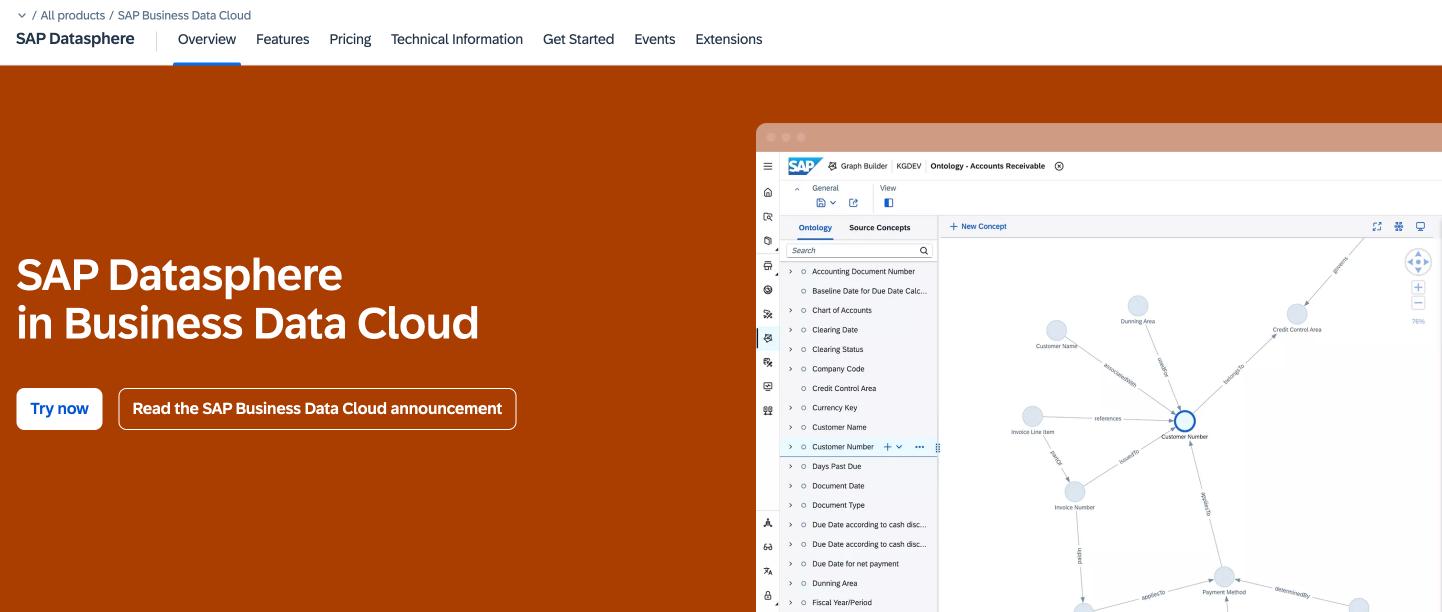
SAP folded Datasphere into Business Data Cloud, its unified data offering that pairs the business data fabric with an embedded Databricks partnership for AI workloads. The pitch: keep SAP data’s business context (semantics, hierarchies, authorisations) intact while centralising analytics – something generic platforms lose in translation.
If your gravity is S/4HANA and SuccessFactors, this is the natural Fabric alternative. If not, the SAP-shaped learning curve is hard to justify – our SAP Datasphere alternatives guide covers the other direction.
Best for: SAP-centric enterprises modernising BW-era analytics.
Watch out for: limited value outside the SAP ecosystem.
9. Tableau
Tableau, part of Salesforce, is an alternative to Fabric’s Power BI layer rather than the whole platform. Its visual exploration remains best-in-class, Tableau Prep handles light data preparation, and Pulse brings AI-generated insights to metrics. Teams that choose a standalone warehouse from this list often connect a BI tool like Tableau on top.
It needs that warehouse underneath – Tableau stores visualisations, not your data – and per-user licensing adds up across large organisations.
Best for: analytics teams that want richer visual exploration than Power BI.
Watch out for: it replaces the BI layer only – storage and pipelines are separate decisions.
10. Boomi
Boomi – independent since its 2021 sale by Dell to Francisco Partners and TPG – is a low-code iPaaS for application integration, API management and workflow automation across hybrid environments, with strong on-premises connectivity. Its Agentstudio push adds AI-agent orchestration on top of integration flows.
It belongs on this list for teams whose real Fabric use case was moving data between apps rather than analytics – but it is not a warehouse or BI platform, so analytics-first teams should look elsewhere.
Best for: enterprise app-to-app integration and process automation.
Watch out for: no analytics or warehousing – pair it with a data platform.
Comparison table
| Platform | Focus | Pricing model | Strengths | Limitations |
|---|---|---|---|---|
| Peliqan | All-in-one data platform | Fixed tiers | Unified ELT + warehouse + BI + AI/MCP | Cloud-first, no self-hosting |
| Databricks | Lakehouse / AI | Usage-based (DBUs) | ML and large-scale engineering | Complex for non-engineers |
| Snowflake | Cloud data warehouse | Usage-based | Elastic scale, data sharing | No built-in ETL/BI |
| BigQuery | Serverless warehouse | Per-query / slots | Zero ops, instant scale | Costs scale with scanning |
| Redshift | AWS data warehouse | Provisioned / serverless | Deep AWS integration | Needs tuning |
| IBM Cloud Pak / watsonx.data | Hybrid data fabric | Enterprise subscription | Governance, hybrid deployment | Complex, costly |
| Oracle ADW | Autonomous warehouse | Consumption | Self-managing, fast | Oracle-only world |
| SAP Business Data Cloud | Business data fabric | Subscription | SAP context preserved | SAP ecosystem only |
| Tableau | BI / visualisation | Per-user | Best-in-class dashboards | BI layer only |
| Boomi | iPaaS / integration | Subscription | App integration, hybrid | Not an analytics platform |
Peliqan vs Microsoft Fabric: quick comparison
For teams whose Fabric hesitation is cost predictability and stack lock-in rather than raw scale, the comparison comes down to a few concrete differences – covered head-to-head on our Peliqan vs Fabric page.
| Feature | Peliqan | Microsoft Fabric |
|---|---|---|
| Deployment | Cloud-native, warehouse-agnostic | Azure-only SaaS |
| ETL / ELT | 300+ connectors, low-code pipelines | Data Factory (within Fabric) |
| Data storage | Built-in warehouse (Postgres + Trino) | OneLake (Azure) |
| BI / dashboards | Built-in analytics plus one-click Metabase | Power BI integrated |
| AI | AI-assisted SQL, built-in MCP server | Copilot, Azure ML |
| Pricing | Transparent fixed tiers | Capacity-based (F-SKUs) |
Real-world example: CIC Hospitality
CIC Hospitality consolidated 50+ data sources – PMS, accounting, booking platforms – on Peliqan instead of assembling a heavyweight analytics suite, and saves 40+ hours per month on board reporting. Read the CIC Hospitality case study.
How to choose
- Start from your workload, not the bundle. If 80% of your need is pipelines + warehouse + dashboards, an all-in-one platform sized for that beats capacity sized for everything.
- Price a realistic month. Model your actual refresh schedules and query patterns on each vendor’s billing model – capacity, DBUs, per-query and fixed tiers produce wildly different bills for the same work.
- Check your stack’s centre of gravity. Deep Azure and Power BI investment argues for staying close to Fabric; AWS, GCP or mixed estates argue against it.
- Count the humans. Platforms like Databricks assume engineers; if analysts and business users run your data work, weigh the low-code options – including ML prediction templates that skip the data science team entirely.
- Test the exit. Whatever you pick, confirm you can get your data out – the OneLake lesson applies to every vendor.
Conclusion
Microsoft Fabric is a credible platform for Azure-committed enterprises, but it is not the default answer. Databricks wins on AI and engineering scale, Snowflake, BigQuery and Redshift win as focused warehouses, and SAP and IBM serve their ecosystems well. For teams that want Fabric’s promise – everything in one place – without capacity mathematics or Azure lock-in, Peliqan’s unified platform delivers ELT, warehousing, BI and AI with a fixed, forecastable bill.
The right choice balances usability, cost transparency and room to grow. Whichever direction you take, run a two-week proof of concept with your real data before committing a budget cycle to it.