




Mews to Power BI – if you’re running a hotel or hospitality group on Mews and need operational dashboards in Power BI, the path from PMS data to actionable reports is less straightforward than it should be.
Mews has become the PMS of choice for modern hospitality operators. Named the #1 Property Management System three years running by Hotel Tech Report, the platform now serves over 15,000 customers with 132,000+ active hoteliers across 85 countries. In January 2026, Mews raised $300 million at a $2.5 billion valuation – the largest hospitality software round ever – processing more than $19 billion in transactions in 2025 alone.
But Mews is an operations system, not a BI platform. When revenue managers, GMs, or hotel group CFOs need to combine Mews data with OTA performance, marketing spend, or financial systems in Power BI, the integration options get complicated. This guide covers what works, what doesn’t, and the approach that gives hospitality teams a reliable reporting foundation.
What data lives in Mews
Mews stores the operational core of your hospitality business. That includes reservations (bookings, check-ins, cancellations, no-shows), revenue data (room charges, ancillary spend, F&B, spa, minibar), guest profiles (contact details, preferences, loyalty data, company affiliations), rate management (pricing tiers, restrictions, availability), payments (settlements, refunds, payment methods), and property operations (housekeeping, maintenance, space utilization).
For Power BI reporting, the most valuable datasets are typically reservation data for occupancy and ADR analysis, revenue items for RevPAR and ancillary revenue tracking, guest profiles for segmentation and repeat-stay analysis, and rate data for pricing strategy evaluation. Mews exposes these through its Connector API and a newer Export API designed for bulk data extraction into warehouses.
Why connecting Mews directly to Power BI is harder than expected
Mews doesn’t offer a native Power BI connector in the traditional sense. While Mews recently launched Mews BI (April 2026) – a built-in analytics product available on Enterprise and Analytics packages – this is an in-platform tool, not a data feed for external BI. If your organization standardizes on Power BI, you still need to get Mews data out of the PMS and into your own reporting environment.
Common pain points with Mews data extraction
For a single-property operation running basic occupancy reports, Mews Analytics or the new Mews BI might be enough. But the moment you need to combine Mews data with your revenue management system, OTA channels, Google Ads spend, or a central accounting system across a hotel group, you need a different architecture.
The data warehouse approach – connect Mews to Power BI through a central hub
Instead of building custom API middleware or relying solely on Mews’s built-in analytics, the more robust approach is to replicate Mews data into a data warehouse and connect Power BI to that warehouse. This decouples your reporting from your PMS and gives you a clean, query-optimized dataset that doesn’t depend on Mews API availability or rate limits.
Peliqan includes a pre-built Mews connector that handles authentication, incremental syncing, rate limit management, and automatic flattening of Mews’s nested data structures. Setup takes about 10 minutes.
How it works with Peliqan
Example: SQL query for hotel RevPAR in Peliqan
Once your Mews data is in the warehouse, you can calculate key hospitality metrics with standard SQL. Here’s a query that computes daily RevPAR across properties – something that typically requires exporting multiple Mews reports and manual spreadsheet work:
SELECT
    DATE_TRUNC('day', r.start_utc) AS stay_date,
    s.name AS property,
    COUNT(DISTINCT r.id) AS occupied_rooms,
    SUM(ri.amount) AS total_revenue,
    ROUND(SUM(ri.amount) / NULLIF(s.total_rooms, 0), 2) AS revpar,
    ROUND(COUNT(DISTINCT r.id)::decimal / NULLIF(s.total_rooms, 0) * 100, 1) AS occupancy_pct
FROM reservations r
JOIN revenue_items ri ON ri.reservation_id = r.id
JOIN services s ON s.id = r.service_id
WHERE r.state = 'Confirmed'
    AND r.start_utc >= '2025-01-01'
GROUP BY 1, 2, s.total_rooms
ORDER BY 1 DESC;
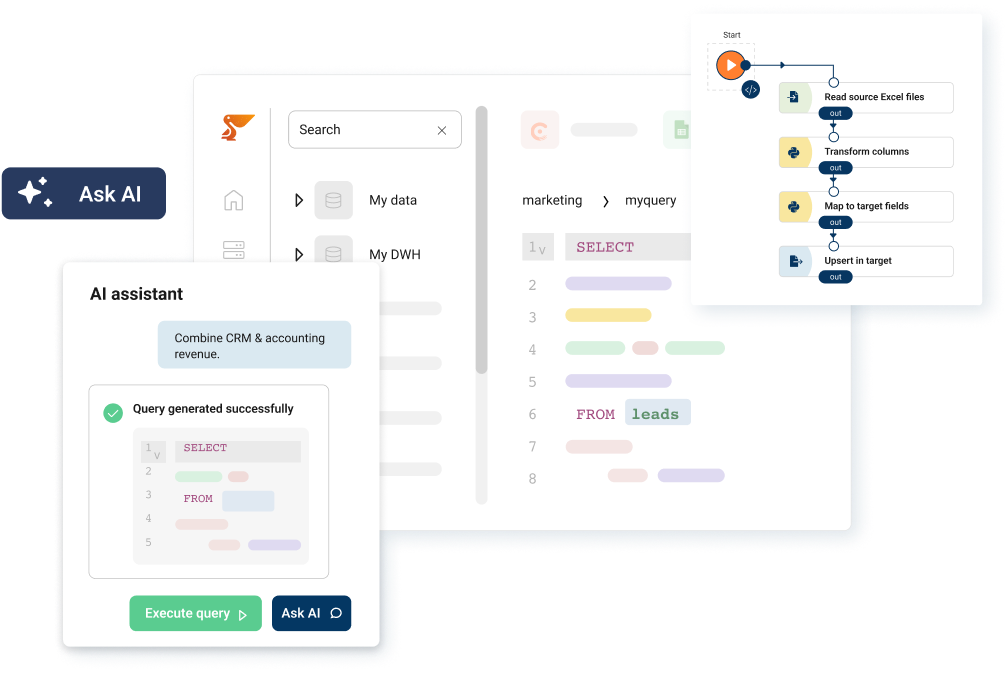
Peliqan’s AI-assisted SQL editor can generate these queries from plain English too – ask “show me RevPAR by property for the last 90 days” and get working SQL against your Mews schema. Save these as materialized views that refresh with each sync cycle.
Connecting Power BI to the Peliqan warehouse
In Power BI Desktop, select Get Data, choose PostgreSQL Database, and enter the connection credentials from Peliqan. You’ll see all your Mews source tables plus any transformed views – reservation summaries, revenue rollups, occupancy metrics – ready for drag-and-drop dashboard building.
Peliqan’s built-in warehouse runs on Postgres with Trino for federated queries, includes 250+ connectors with a 2-week custom connector SLA, and supports SQL and low-code Python transformations. Pricing starts at roughly $199/month – a fraction of what custom API middleware would cost to build and maintain.
Real-world example: CIC Hospitality
CIC Hospitality unified fragmented data from 50+ sources into real-time, board-level reports using Peliqan – eliminating manual Excel consolidation and saving 30+ hours per month on reporting. The same warehouse-first approach works for any hotel group that needs consolidated dashboards across multiple properties and data sources. Read the full case study.
Multi-property and hotel group reporting
One of the biggest gaps in Mews’s native reporting is consolidated multi-property analytics. A hotel group with 10 properties needs portfolio-level occupancy, revenue, and guest metrics alongside property-level drill-downs – and they need it in a single dashboard, not 10 separate Mews Analytics exports.
Peliqan solves this by connecting multiple Mews properties to a single workspace, with multi-customer management that automatically tags records by property. Combined with row-level security in Power BI, group-level executives see the full portfolio while individual GMs see only their property.
Skip Power BI entirely – query Mews data with AI
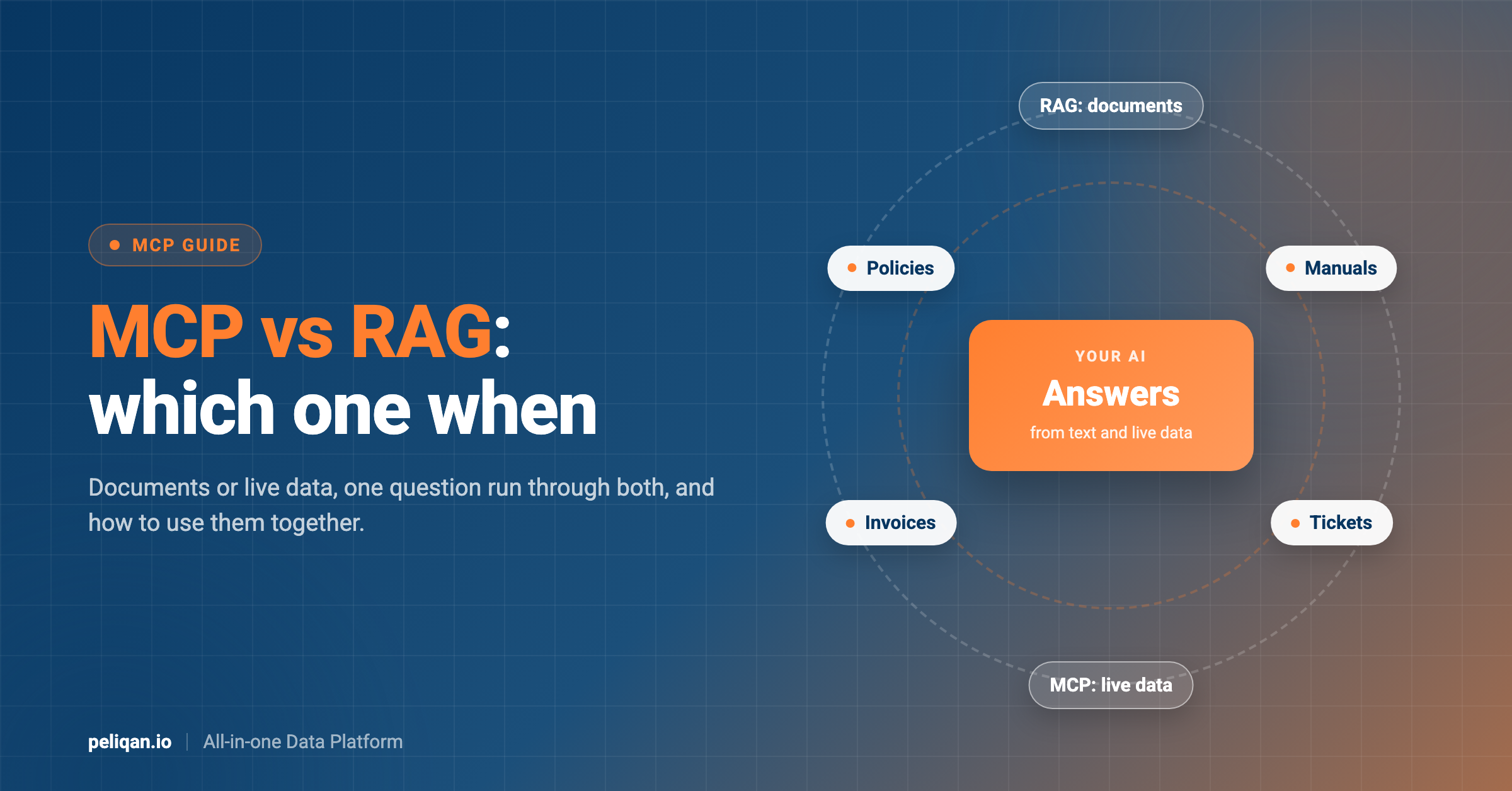
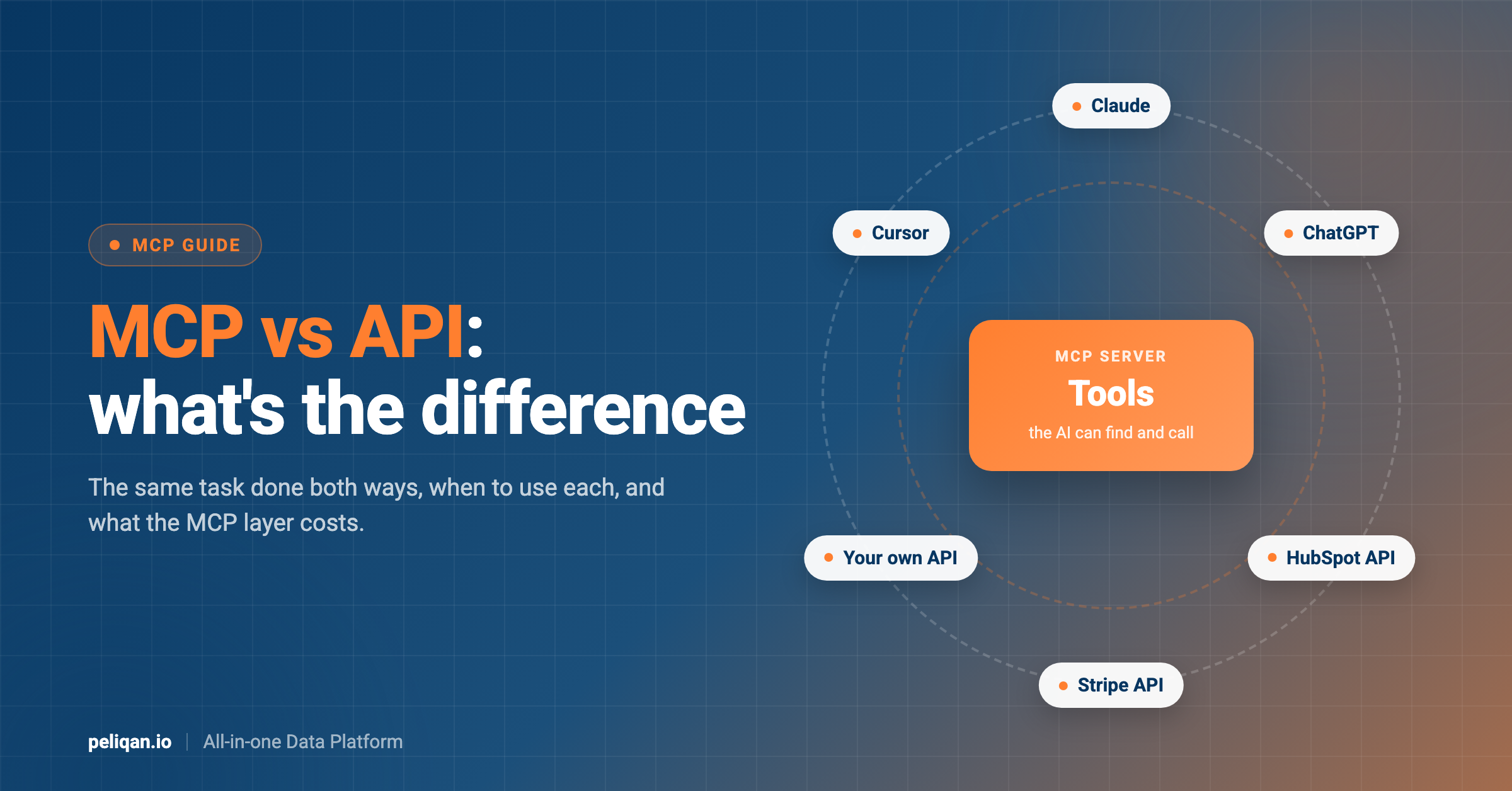
Not every question needs a dashboard. With MCP (Model Context Protocol), you can connect Mews data to AI assistants like Claude or ChatGPT and ask questions in plain English.
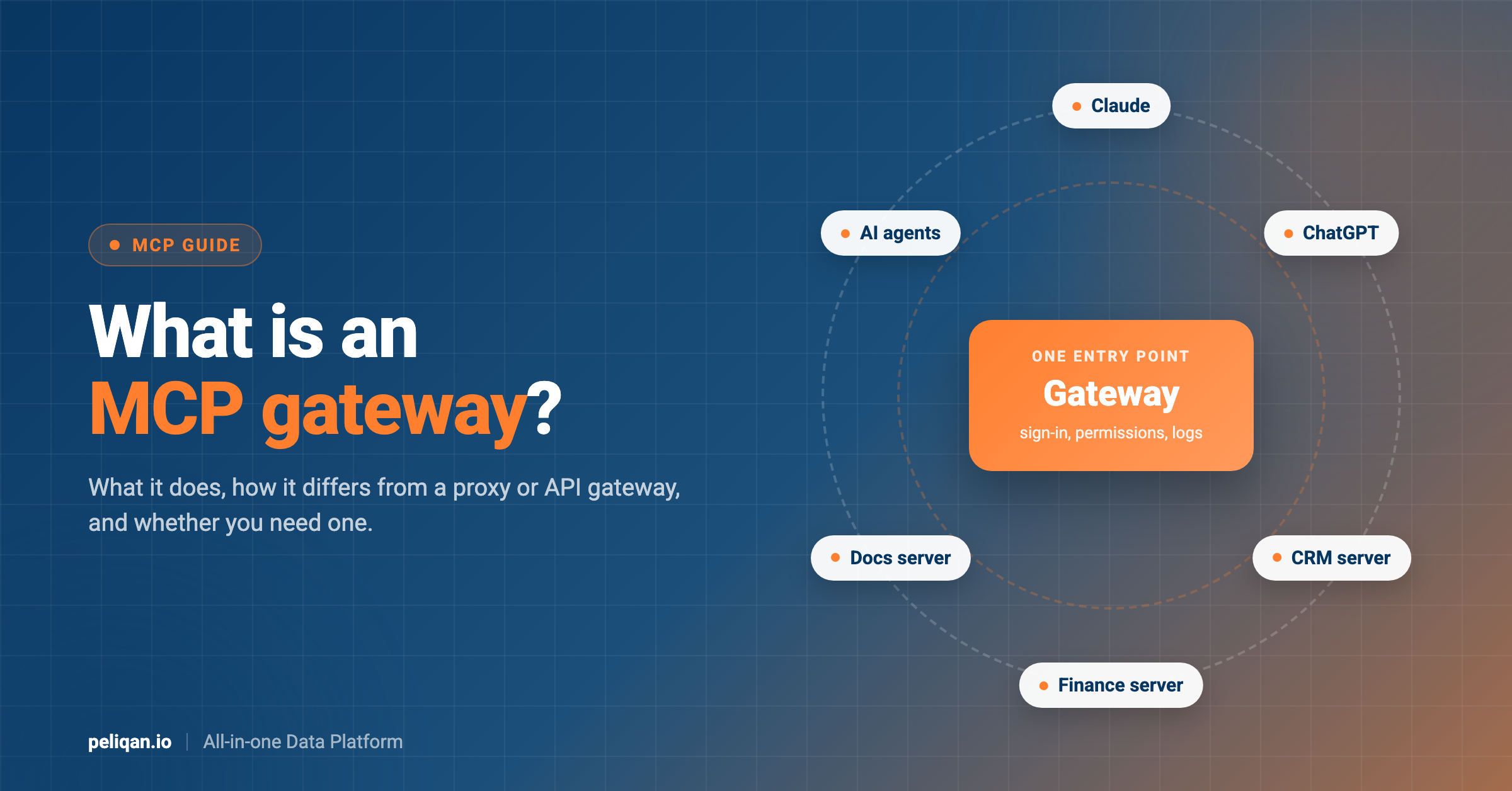
Peliqan provides an MCP server that connects to your Mews data through the same warehouse sync.
You can set up the Mews MCP connection in minutes. Once running, you can ask questions like:
- “What’s our occupancy rate across all properties this week vs. last week?”
- “Which room categories are underperforming on weekdays?”
- “Show me the top 10 corporate accounts by total revenue this quarter”
- “What’s the average length of stay by booking channel?”
The AI queries your warehouse directly, so you’re working with the same governed data your Power BI dashboards use. For revenue managers who need quick answers during morning briefings or GMs preparing for owner meetings, this approach delivers insights in seconds.
Comparing your options
Combine Mews with other hospitality data sources
Hotel operations don’t live in a single system. Revenue managers pull from Mews, channel managers, and STR benchmarking. Marketing teams track Google Ads, Meta Ads, and OTA commission reports. Finance teams consolidate Mews revenue with their accounting system.
With Peliqan’s 250+ connectors, you can bring Mews data together with your channel manager, payment processor, marketing platforms, and accounting tools in a single warehouse. Build Power BI dashboards that show the full guest journey – from ad impression to booking to checkout to post-stay review – all from one data source.
Popular Mews combinations in Power BI
- Mews + Google Ads: Calculate true cost per booking by joining ad spend with Mews reservation data and attributing revenue to campaigns
- Mews + Exact Online: Reconcile PMS revenue with accounting records, automating month-end financial reporting across properties
- Mews + Klaviyo: Combine guest profiles with email engagement data to measure the revenue impact of post-stay marketing campaigns
- Mews + HubSpot: Track group and corporate booking pipelines from initial inquiry through to actual stay revenue
Getting started
If you’re currently relying on Mews Analytics exports, building custom API integrations, or manually consolidating property data in Excel for Power BI, the warehouse approach eliminates these problems without requiring any API development work.
Peliqan offers a free trial with the Mews connector included. Connect your Mews properties, explore your data in Peliqan’s spreadsheet-style UI, build your hospitality-specific transformations, and plug in Power BI – all within a single platform.
SOC 2 Type II certified with fixed pricing from ~$199/month, Peliqan handles the entire data pipeline so your team can focus on what matters – running great hotels, not maintaining API integrations.