



Every revenue manager at a MEWS-powered hotel has the same 7:30am ritual. Pull last night’s pickup. Compare to same time last year. Check the rate fence on tonight’s BAR. Look at channel mix. Glance at occupancy and pace through to the weekend. Then explain – briefly, before the GM walks past the desk – why pickup is soft on Thursday. Five MEWS reports, two channel-manager tabs, one ADR spreadsheet, and the answer arrives just as the briefing starts.
MEWS runs more than 5,000 properties across 85+ countries and is the fastest-growing PMS in Europe. It is the most concentrated source of hospitality data in the cloud. And yet a mews claude prompt that joins reservations with ledger entries, POS spend, and channel cost in a single breath remains rare in production. The gap is not Claude. The gap is architecture. The MEWS Connector API allows 1,000 requests per hour – generous for one front-office integration, suffocating for a multi-property AI workload that also has to share the budget with the channel manager. The shortest path from raw MEWS data to a revenue-manager-grade answer is a warehouse – and that architectural decision is what separates a mews mcp server that demos well from one that runs production.
Three pressures have converged on hospitality data ops at the same time. EU AI Act enforcement is open with fines of up to €35M or 7% of global turnover for ungoverned AI on customer data – and hotel data is full of personally identifiable information including passport numbers, dietary requirements, and special requests.
The Belgian B2B Peppol mandate is live as of January 1, 2026, which affects every Belgian hotel that issues B2B invoices for corporate stays. And the talent pipeline for night auditors, revenue analysts, and F&B controllers has thinned enough that the firms growing fastest are quietly embedding AI into the workflow rather than waiting for next year’s hires. The blog you are reading is the playbook for connecting MEWS to Claude in a way that survives an EU AI Act review, a Big-4 audit, and a Sunday morning ADR briefing without four screens and three escalations.
What MEWS is, and why hospitality AI without a warehouse is structurally limited
MEWS at a glance
The MEWS positioning matters because nothing else in the MCP catalog is shaped quite like hospitality. Sales-led tools (Salesforce, HubSpot) center on opportunity stages. Finance tools (Exact Online, AFAS) center on ledger entries. Hospitality centers on a different unit entirely: the occupied room-night, with a fluid right-hand side that includes F&B spend, spa upsell, room moves, and group block consumption. The questions a revenue manager asks – pickup vs same time last year (STLY), ADR by segment, RevPAR by day-of-week, F&B contribution per occupied room – are not in the standard MCP toolkits. They have to be modelled, materialised, and exposed through a warehouse-first MCP layer to become real AI workflows.
Why connecting MEWS to Claude is harder than it looks
Six constraints every MEWS AI project hits
The painful part is not pulling a single reservation. The Connector API handles that elegantly. The painful part is everything a revenue manager prompt actually requires once it touches multiple properties, multiple modules (PMS + POS + Payments), or multiple time horizons (today vs STLY vs pace). Wrapper-style MCPs proxy individual endpoints; they cannot answer multi-property cross-module questions, no matter how many tools they ship.
The real cost of fragmented MEWS reporting
What slow MEWS reporting actually costs a hotel group
The hidden cost is not the slow report. It is the operating model that builds up around it – the daily briefings that arrive late, the F&B reviews that miss leakage, the night audits that take three hours instead of forty minutes. Cross-source AI on top of MEWS, hosted in the right jurisdiction, with auditable writeback, is the single highest-leverage investment a mid-market hotel group can make in 2026.
5 ways to connect MEWS to Claude
1. Manual exports and MEWS reports
The MEWS dashboard includes built-in reports and CSV exports for most operational views. Excellent for a one-off look at last weekend’s pickup. Does not answer cross-source questions, cannot reconcile POS with payments, and never becomes the answer to a Claude prompt.
Best for: Boutique single-property hotels with a single revenue manager.
2. Direct Connector API with custom Python
Any data engineer can authenticate against the Connector API and pull Reservations, Customers, RatePlans, Resources, AccountingItems, Bills, and POS data. The catch is the 1,000-per-hour ceiling, the multi-property fan-out, and the lack of stateful aggregates (pickup, pace, STLY) which have to be computed externally. A maintainable layer is weeks of engineering. Best for: Hotel groups with a dedicated data engineer and a narrow set of fixed extracts.
3. Vinkius MEWS MCP and Pipedream MEWS MCP
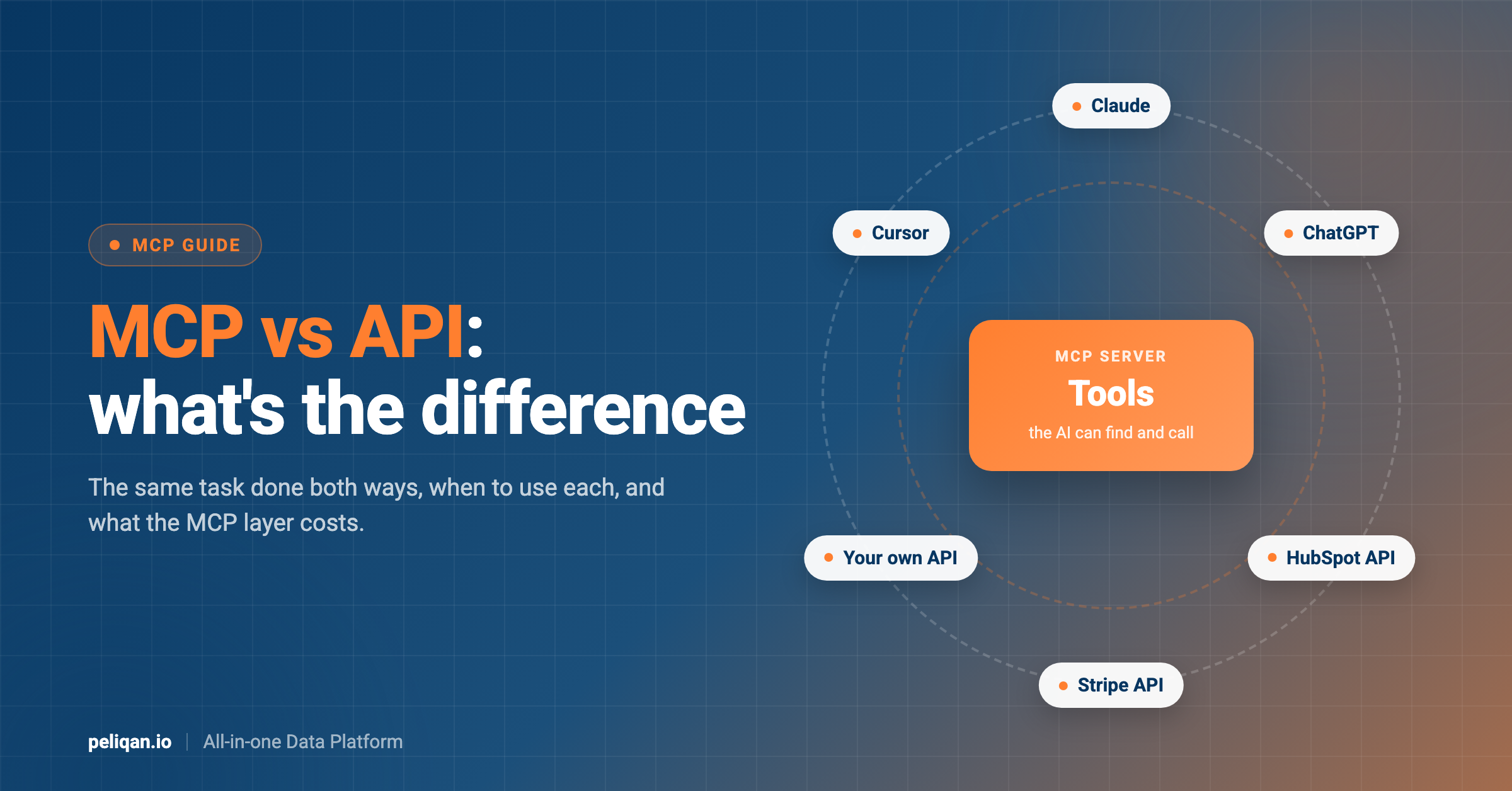
Vinkius ships a hosted MEWS MCP server with a curated set of tools (Get Guest, Get Property Info, Get Reservation, List Bills, List Outlet Items, List Payments, List Rates, List Room Blocks, List Rooms, Services). Pipedream offers a similar action-based MCP. Both are useful for single-property prompts and event automations. Neither has a warehouse beneath, neither does cross-source SQL across multiple sources, and the multi-property fan-out is per-flow rather than native.
Best for: Single-property AI prototypes and event-driven workflows.
4. Composio and community GitHub MEWS MCP repos
Composio’s MEWS integration sits inside a broader unified-action framework across hundreds of SaaS tools. Community GitHub repos wrap the Connector API with similar shapes. They are starting points – free, action-focused, US-hosted by default. They have no warehouse, no cross-source SQL, and no audit trail strong enough for a Big-4 audit.
Best for: Engineering prototypes against the core PMS entities.
5. Warehouse-first MCP platform (Peliqan)
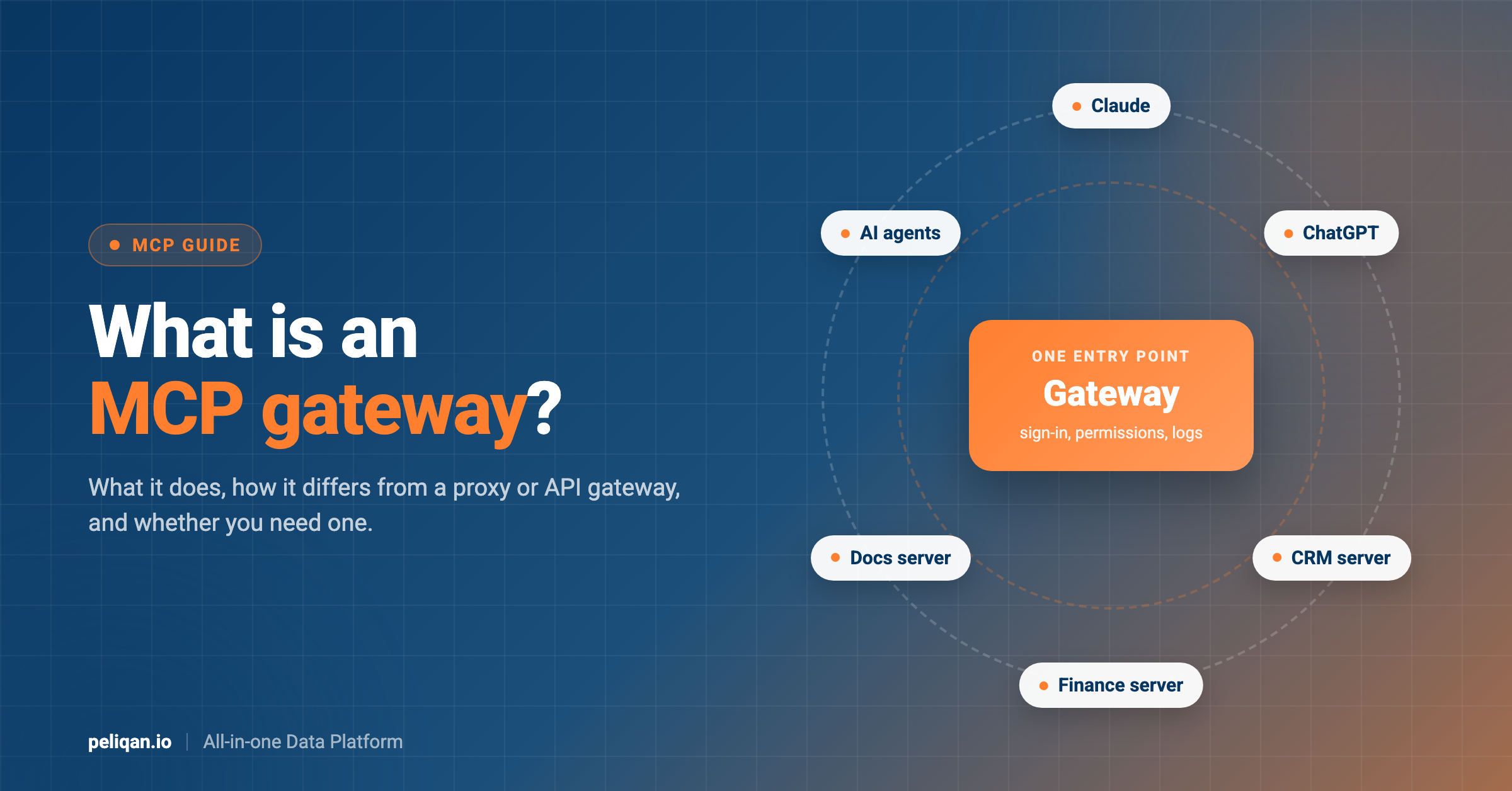
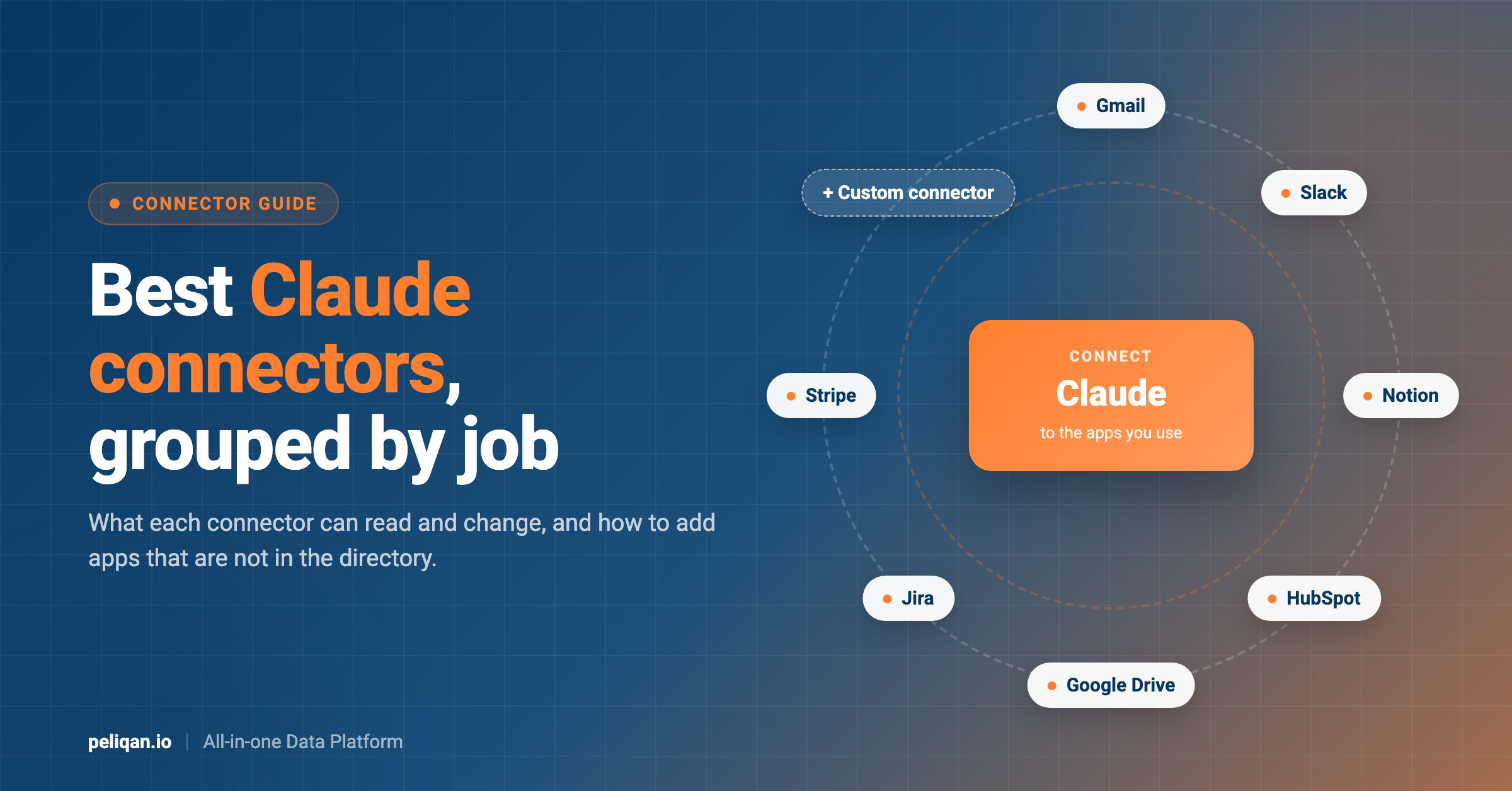
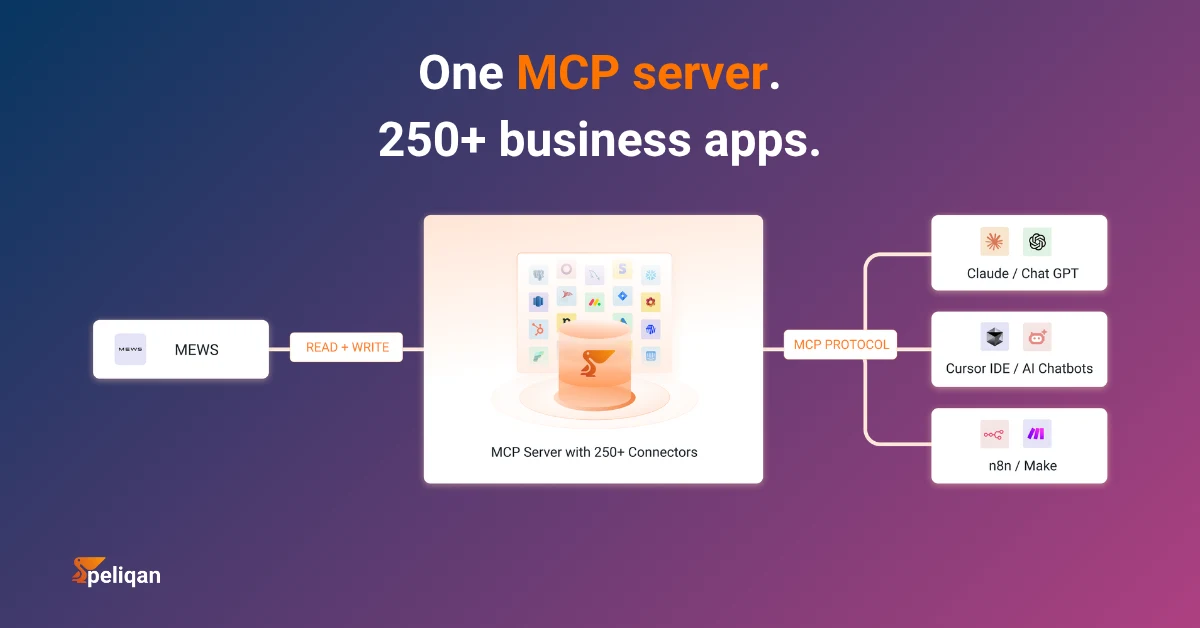
Peliqan syncs every MEWS module – Reservations, Customers, RatePlans, Resources, AccountingItems, Bills, Companies, Contracts, Outlets, Orders, Services, Vouchers – into a managed EU-hosted Postgres + Trino warehouse, queues all calls inside the 1,000-per-hour budget, and exposes the cleaned tables to Claude, ChatGPT, Cursor, or any MCP client through the Peliqan MCP server.
Materialized tables hold pre-computed pickup, pace, STLY, RevPAR, and F&B-per-occupied-room aggregates. Column-level PII masking ships by default. Writeback flows through reverse ETL with a full audit log. Cross-source SQL joins MEWS with Exact Online, Billit, Stripe, Adyen, Salesforce, and 240+ other connectors. EU-hosted, SOC 2 Type II, GDPR-native.
Best for: Mid-market hotel groups running MEWS at multi-property scale. See the MEWS connector.
Comparison: 5 ways to connect MEWS to AI
| Method | Multi-property | Pickup / STLY / RevPAR | PII masking | Cross-source | EU-hosted |
|---|---|---|---|---|---|
| Manual exports | Manual merge | In MEWS dashboard | On the user | No | N/A |
| Direct API + Python | Hand-rolled fan-out | Hand-rolled | Custom-built | Hand-rolled | Depends on host |
| Vinkius / Pipedream MCP | Per-property setup | No | Limited | Event-only | US-default |
| Composio / community MCP | Single property | No | No | No | US-default |
| Peliqan MCP | Native, all properties | Pre-materialised | Column-level | SQL across 250+ apps | EU, SOC 2 Type II |
The MEWS entities that matter most for hospitality AI
| MEWS entity | What it powers | Hospitality AI use case |
|---|---|---|
| Reservations | Bookings, stays, status | Pickup, pace, occupancy, cancellation analysis |
| Customers | Guest profiles, PII, history | VIP arrivals, repeat-guest detection, segmentation |
| RatePlans | Rate codes, fences, BAR | ADR analysis, rate-fence integrity checks |
| Resources | Rooms, room types, inventory | Allocation balance, out-of-order tracking |
| AccountingItems + Bills | Folio postings, charges, taxes | Night-audit reconciliation, leakage detection |
| Companies + Contracts | Corporate accounts, negotiated rates | Corporate consumption vs commitment, group block analysis |
| Outlets + Orders (POS) | F&B, spa, retail transactions | F&B contribution per occupied room, upsell analysis |
| Services + Vouchers | Add-ons, packages, gift vouchers | Service-attach rate, voucher liability tracking |
Decision framework: which MEWS architecture fits your group shape
Match the architecture to the hotel group shape
The hospitality playbook: 5 MEWS + Claude workflows that change the cadence
The temptation is to bolt a chatbot onto the PMS sidebar and call it AI. The actual value comes from compressing the workflows that recur every morning, every night audit, every weekend service. Five workflows repeat across the hotel groups running this architecture.
1. Daily pickup briefing for the revenue manager
“Across all 12 properties, show me last night’s pickup vs STLY by segment, with ADR delta, and flag any property tracking below 95% of pace for the next 30 days.” That is one Postgres SQL query against a materialised pickup table. The same prompt against the raw MEWS API is dozens of paginated calls per property and a manual STLY join. Cross-source joins in Peliqan handle the property-level aggregation.
2. Front-office arrival prep with VIP and special requests
“Today’s arrivals at the flagship – show me VIPs, repeat guests with more than 5 stays, dietary requirements, and any flagged special requests from previous stays.” That joins Reservations + Customers + Bills + notes history. The Claude agent returns a structured arrival briefing without exposing passport numbers – column-level PII masking handles the GDPR posture. Building AI agents in Peliqan covers the implementation pattern for this workflow.
3. F&B contribution per occupied room analysis
“For the last 90 days, show F&B revenue per occupied room by outlet, ranked, with the same metric YoY for context, and flag outlets trending more than 10% below their previous-year average.” This is the leakage detector that catches missed postings, wrong charges, and unbalanced outlets. Materialized tables in Peliqan hold the per-occupied-room rollups so the AI agent answers in seconds.
4. Night audit assistant
“For tonight’s audit, show every Bill with unbalanced postings, every reservation with mismatched check-in/check-out times, and every outlet posting that did not land on a folio – flag anything that needs night-audit attention before the close.” This is the workflow that takes a night auditor 90 minutes today and a properly-prompted Claude agent four. Data quality monitoring handles the alerting layer for the patterns the auditor wants surfaced automatically.
5. Multi-property group reporting for boards and PE owners
“Across all 18 properties, give me RevPAR by region, ADR by segment, occupancy by day-of-week, and F&B contribution as a percentage of total revenue – with last-year comparisons and forecast pace through the quarter.” That is the board pack a group VP normally assembles in two days. With a warehouse-backed MEWS, it is one prompt and a 20-second answer. Multi-customer management handles the per-property isolation and the group-level aggregation in a single MCP context.
How Peliqan handles MEWS
What you get with the MEWS MCP server on Peliqan
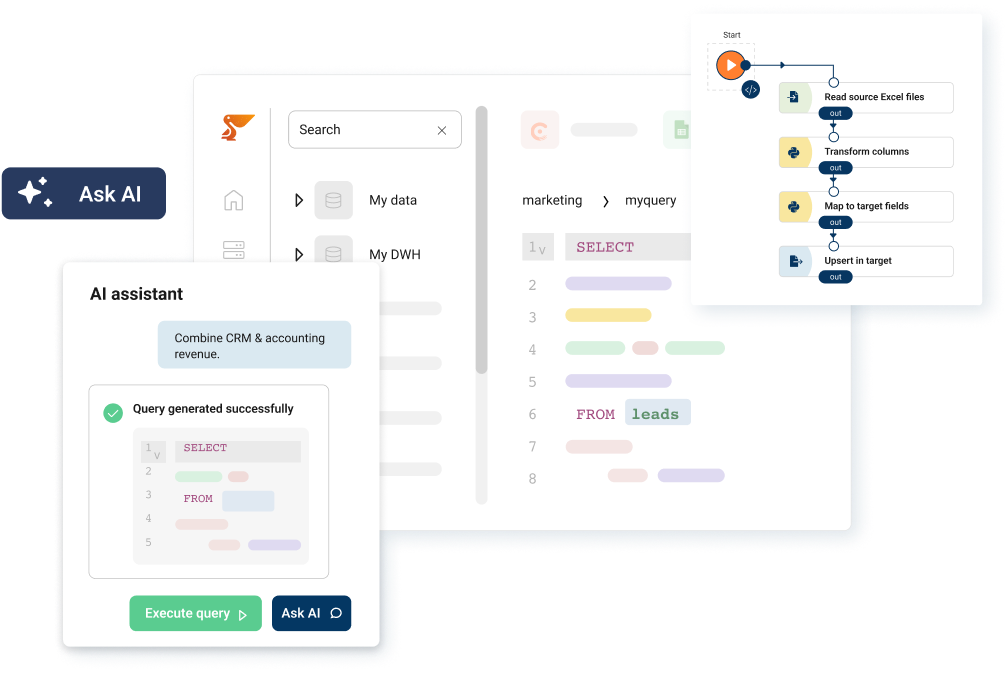
The Peliqan MEWS MCP server is the shortest path from a multi-property hospitality group to an AI operating model that uses Claude in production rather than in pilot. The warehouse handles the slow, queued, rate-limit-aware sync. The materialised KPI layer holds pickup, pace, STLY, RevPAR ready to serve. The MCP server exposes clean tables to any client. Reverse ETL closes the loop so writeback flows into MEWS with a defensible audit log. And the cross-source layer means that when a revenue manager wants to ask a question spanning MEWS, the channel manager, the bank, and the GL, that is one query. The general Claude MCP overview covers the protocol details for engineers.
The MEWS MCP server landing page goes deeper into the connector schema, the writeback matrix, and the live demo.
The main MCP hub covers the cross-source pattern, the ROI math for a typical mid-market hotel group, and the comparison framing against Vinkius, Pipedream, and Composio – useful when defending the architectural choice to a GM or a board.
For European hotel groups whose accounting runs on Exact Online, the same warehouse holds both ledgers – revenue and ledger reconcile in one Claude prompt rather than across three reports. The cross-source pattern described in the decision framework above scales directly to a multi-property group running shared services across the chain.
For groups whose payments are processed through Stripe alongside the MEWS Payments module, the Stripe + Claude playbook covers the payments-side pattern that joins to MEWS Bills in the same MCP context – cash collection, dispute intelligence, and folio reconciliation in one query.
For Belgian hotels issuing corporate B2B invoices, failed Peppol acknowledgements become an audit signal the AI agent surfaces before they become a VAT penalty. The same warehouse that holds MEWS Bills also holds the Peppol Access Point event stream, so the cross-source reconciliation is a single SQL statement rather than a manual export-and-match.
For deeper module-by-module coverage, the MEWS AI page shows the live agent patterns for pickup briefing, arrival prep, and night audit – the three workflows that most often justify the architecture in the first quarter of use.
For engineering teams that want to roll their own MCP layer on top of MEWS, the build MCP server guide covers the protocol details. For most hotel groups, the Peliqan-managed MEWS connector is the faster path – the schema, the materialised KPIs, the PII masking, and the audit trail ship pre-wired.
Reverse ETL in Peliqan is the writeback engine that pushes AI-recommended actions – rate adjustments, room blocks, folio corrections – back into MEWS with the audit log attached.
Alerting and messaging handles the proactive layer – rate-fence breaches, pickup anomalies, F&B leakage spikes – that should post to Slack or email before they become tomorrow morning’s exec briefing.
What revenue managers and group VPs should do this quarter
Three steps turn a MEWS + Claude conversation from a slide into an operating model.
First, pick one workflow that has been stuck in spreadsheets for a quarter – daily pickup briefing, multi-property group reporting, or F&B contribution analysis – and prove it can be answered from a single Claude prompt against a warehouse-backed MEWS.
Second, audit your current AI tooling against GDPR posture. Any tool that touches passport numbers or guest PII without column-level masking is a future incident.
Third, document the audit log requirement now if you are PE-backed or audited – the Big-4 team will ask, and the AI agent has to be defensible by design.
Hospitality revenue management is moving from monthly to daily cadence, and MEWS is the system of record that backs most of it. Putting a warehouse and an MCP server between the PMS and the prompt surface is not optional – it is the difference between a revenue manager who can answer cross-property questions in 60 seconds and one who promises an update by next week. The mews claude stack is the next operating-model change, and it is one short architectural decision away.