
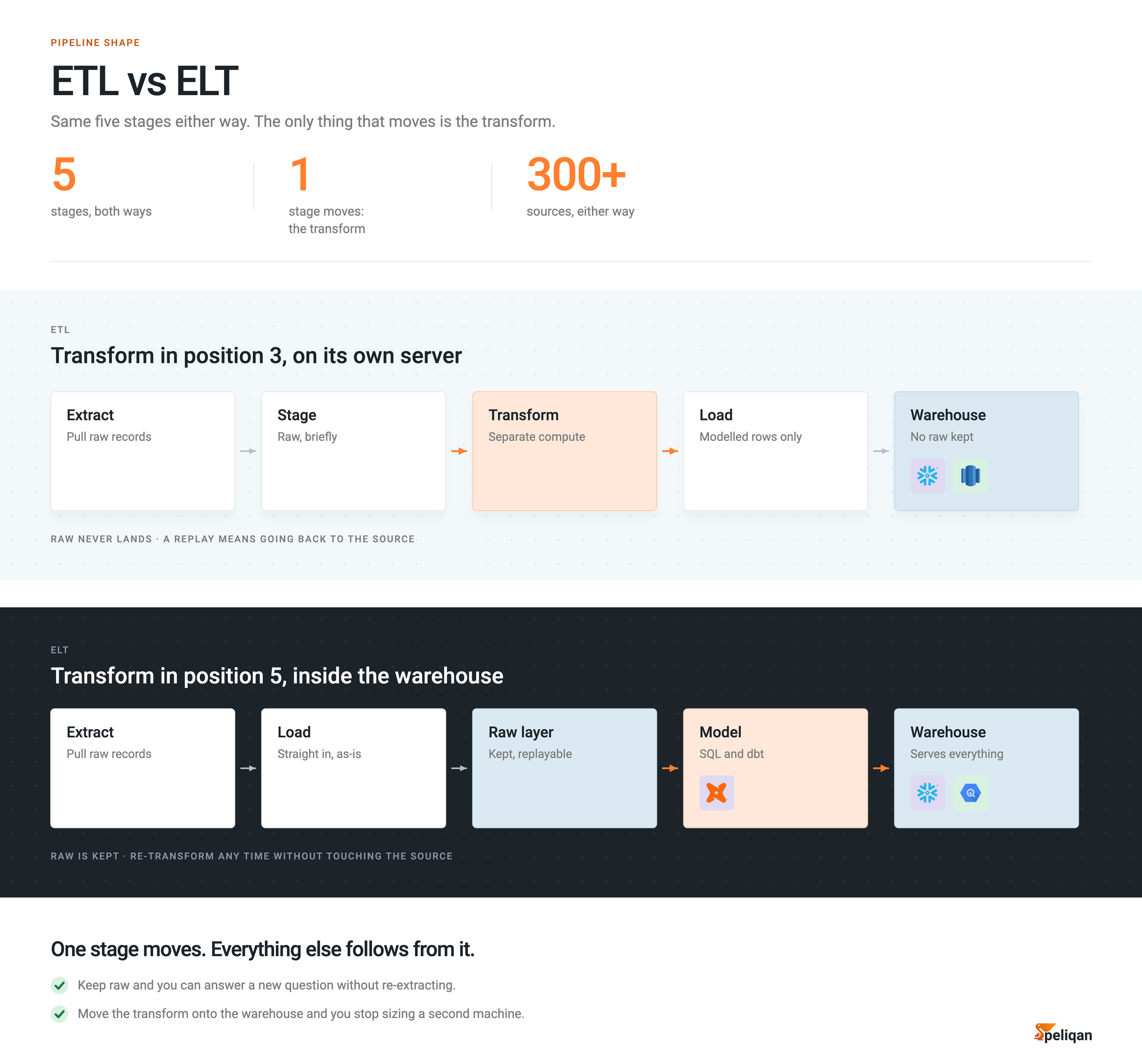
ETL and ELT move the same data through the same stages. The difference is which machine does the transforming, and whether the raw data still exists afterwards.
The two approaches
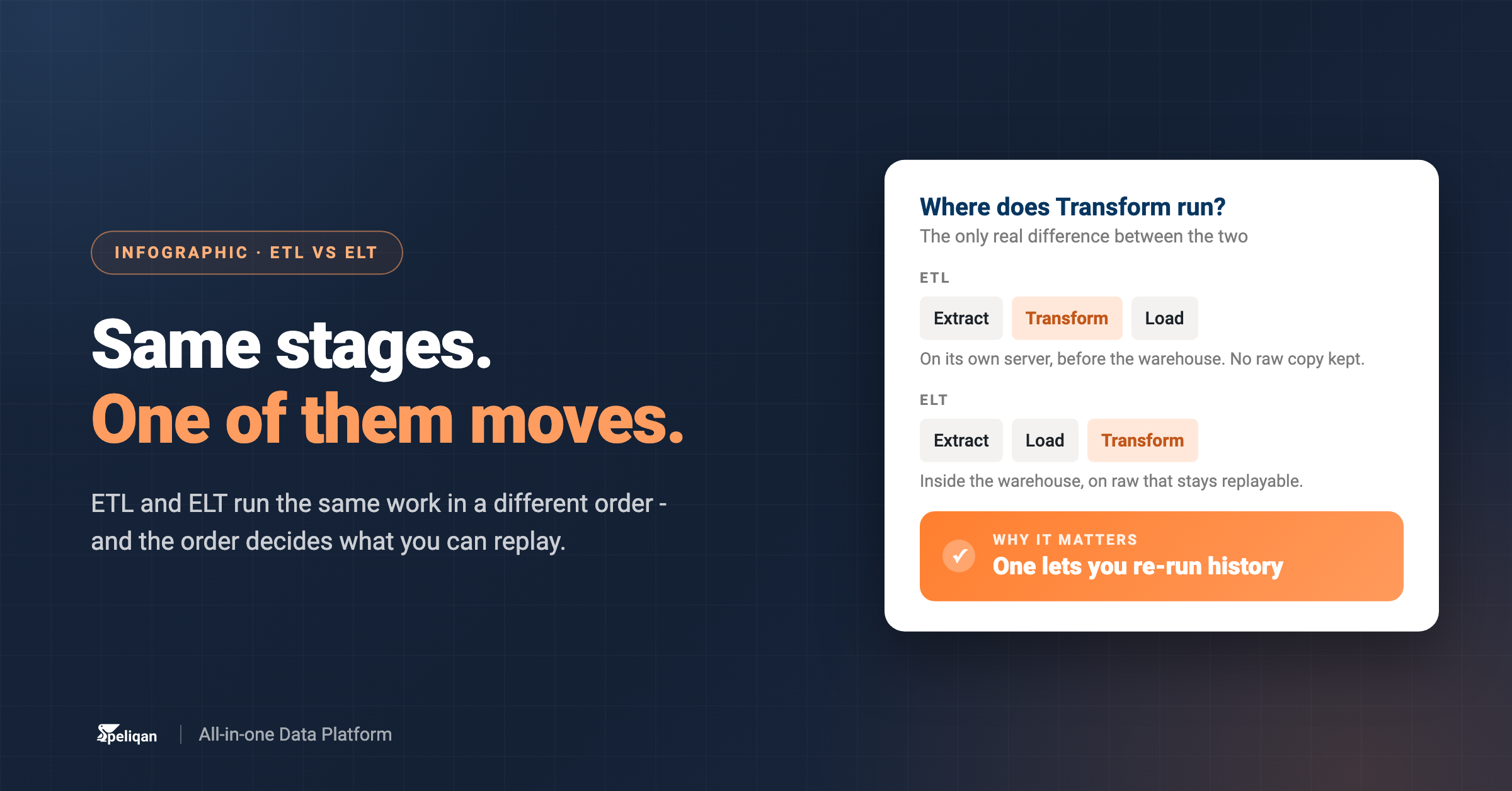
- 1ETL transforms before loading. Records are extracted, then cleaned, joined and aggregated on dedicated ETL compute that you size and pay for. Only the finished tables are written, so the warehouse stays small and holds nothing but modelled data.
- 2ELT loads first and transforms in place. Records land raw, exactly as they arrived, and the transformation runs inside the warehouse in SQL or dbt. Cheap storage and separated compute are what made this practical, and it is now the default for cloud warehouses.
The difference that actually matters
Most comparisons stop at the letters. The decision worth making is whether you want a replayable history of your source data. ETL trades that away for a smaller warehouse: because the raw records were never stored, reworking a model means going back to the source systems and extracting all over again. ELT keeps the raw layer and accepts more storage and in-warehouse compute in exchange.
A useful test: how often do your definitions change? If the answer is more than once a quarter, the raw layer pays for itself.
When ETL is still the right call
- Data must be masked or dropped before you are allowed to store it
- The target cannot transform at all, so the work has to happen upstream
- A fixed source feeds a stable model that nobody revisits
How this works in Peliqan
Peliqan runs the ELT shape in the diagram. Data is loaded from 300+ sources into a managed warehouse, kept as a raw layer, and modelled with SQL or Python in the same place, so there is no API code to write or maintain. There is more detail in our full ETL vs ELT comparison.
Use this diagram wherever you like
The diagram is free to use, including commercially, as long as there is a visible link back to this page. Download the PNG for slides and documents, or the SVG if you want to edit the labels. No email required. You can browse the rest of the set in the Peliqan diagram library.
Ready to build this on your own data? Get started with Peliqan.