





Yuki, the cloud bookkeeping software that is now called Nmbrs Accounting, has no MCP server of its own. This guide explains what a Yuki MCP server does, what the Yuki API allows, which options exist, and how to connect Yuki to Claude in a few minutes.
The short answer
- What it is: a Yuki MCP server is the link between your AI app and Yuki. You ask a question in plain language, and the AI uses the server to fetch the numbers or, if you allow it, to create a record.
- Who makes one: not Yuki itself. The options come from Peliqan, CodeMill (open source) and Yuki MCP Works.
- How to choose: for quick questions on one administration, a server that calls the Yuki API directly is enough. If you want Yuki next to your CRM, bank or webshop, need answers across many administrations, or keep running into the daily API limit, use a server that keeps a synced copy.
Peliqan’s Yuki MCP server is one of the synced-copy options. We compare it with the others below, including where another tool may suit you better.
Yuki is now Nmbrs Accounting
Since 1 September 2026, Yuki, WeFact, Nmbrs and Visionplanner go on together under one name, Nmbrs. Yuki is now called Nmbrs Accounting. The web address moved from yukiworks.nl to accounting.nmbrs.nl, and you log in through Visma Connect.
According to Nmbrs’ own announcement, existing integrations and the API stay the same. Everything in this guide still applies. We use the name Yuki below because that is still the name most people search for.
Yuki at a glance
What is a Yuki MCP server?
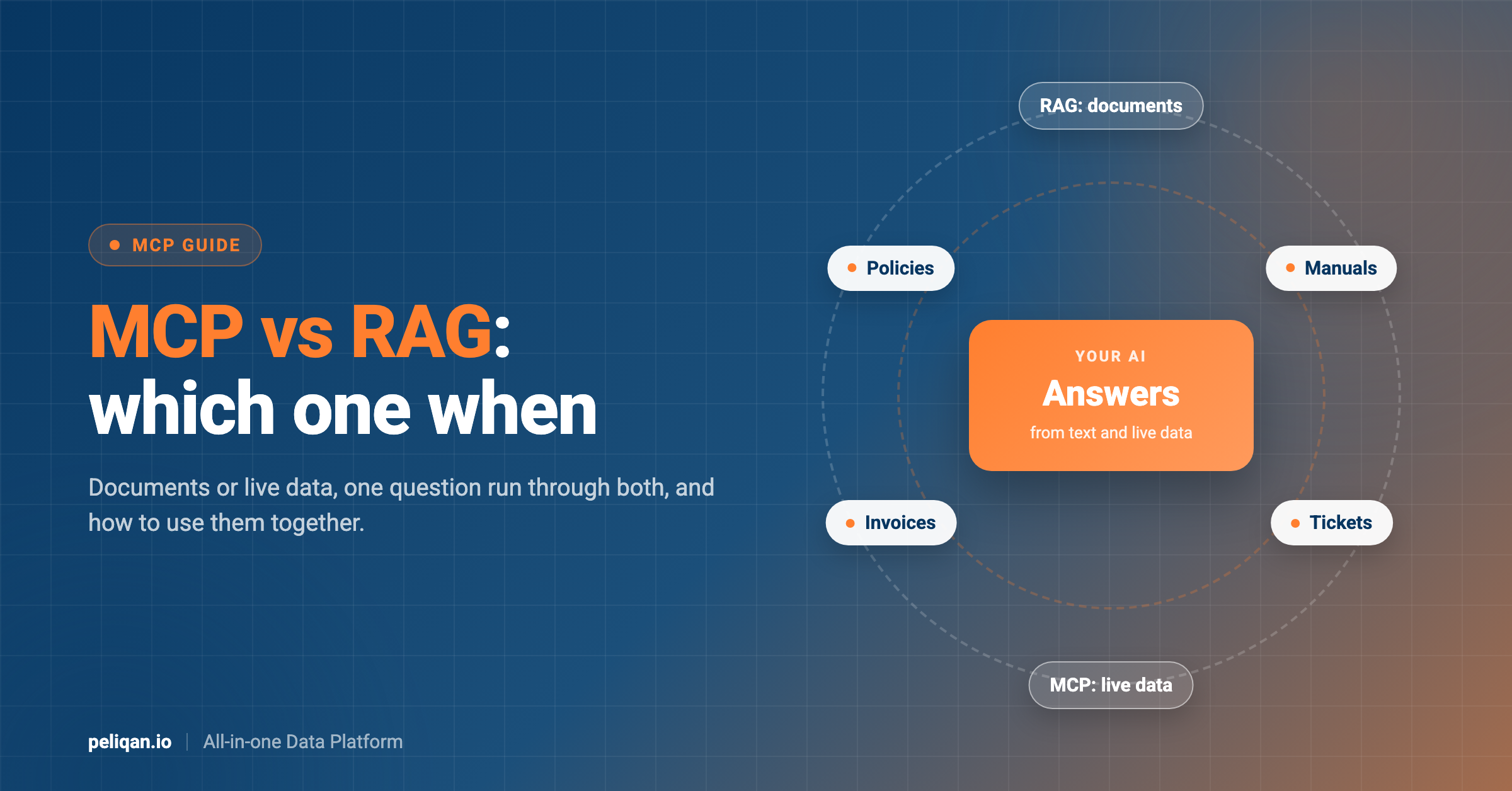
MCP stands for Model Context Protocol. It is an open standard that lets AI apps use outside tools and data in the same way, whatever the app. Claude, ChatGPT, Gemini and Cursor all support it. Our guide to Claude MCP covers the protocol itself in more detail.
A Yuki MCP server gives the AI a set of tools, such as “list open customer invoices” or “create a contact”. When you ask “Which customers owe us the most?”, the AI picks the right tool, the server gets the data from Yuki, and the AI writes the answer. The server holds your Yuki API key, so your AI app never sees it.
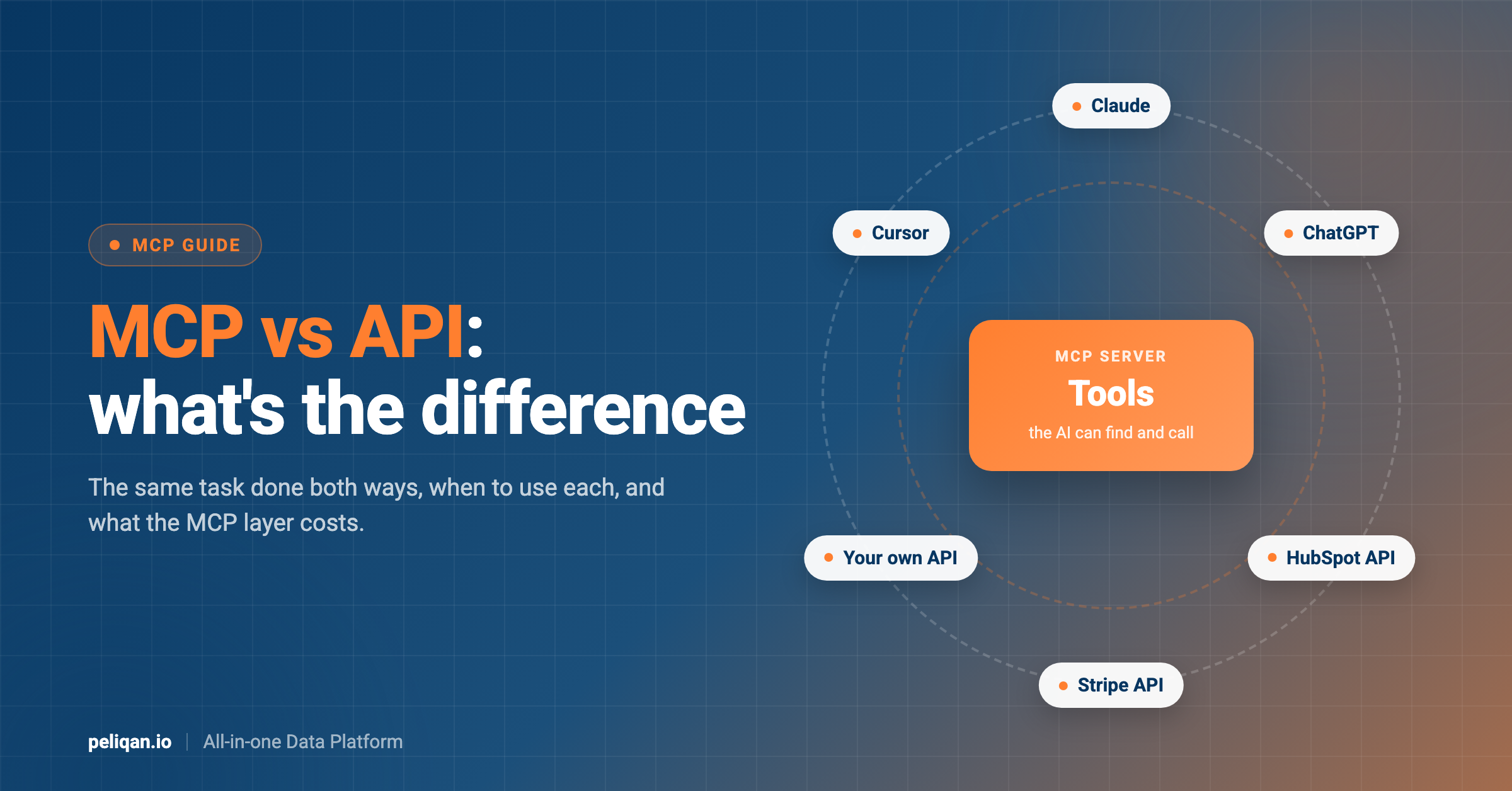
If you are wondering how this differs from calling the API yourself, our post on MCP vs API explains it.
The Yuki API in short
Every Yuki MCP server works through the Yuki API, so the API’s rules shape what a server can do.
- SOAP web services. Yuki’s main API uses SOAP with XML messages, not the REST and JSON style that most modern tools expect. Yuki has also started a REST platform API on its developer portal, but it covers only a few endpoints so far.
- API key. A portal administrator or a user with the Director role creates the key under Settings, then Web Service. A key can work at portal, domain or administration level. Yuki’s guide to setting up web services shows the steps.
- Daily call limit. Each domain gets 1,000 web service calls a day for free. Paid add-ons raise this to 5,000 or 10,000 calls a day, according to Yuki’s article on its API.
The call limit matters a lot for AI. A broad question like “show every open invoice per customer” can take many calls on a server that asks the API each time. Those calls come out of the same daily budget as your other Yuki integrations.
Two kinds of Yuki MCP server
Live API servers
A live server turns each question into calls to Yuki’s web services and returns the result. The answer is always current, and your data is not stored anywhere else.
The catch is the daily limit. Big questions use up calls quickly, and a live server only sees Yuki, so it cannot put your books next to your CRM or webshop.
Synced-copy servers
A synced-copy server copies your Yuki data into a database on a schedule. Questions run as SQL on that copy, so asking a question does not spend API calls. Totals, groupings and joins with other apps are quick. Changes, such as creating a contact, still go to Yuki through the API.
The trade-off is freshness: answers are as current as the last sync. Peliqan stores the copy in its built-in data warehouse, which runs on Postgres with Trino as the query engine. You can save common queries as materialized tables, so repeat questions stay fast.
How a synced-copy MCP server works
→ sync on a schedule →
Peliqan data warehouse
Postgres + Trino
→ SQL →
MCP server
→
Claude, ChatGPT, Gemini
→
MCP server
→ writeback via the API →
Yuki
Questions run on the synced copy. Changes go straight to the Yuki API.
Yuki MCP servers compared
These are the Yuki MCP options we found in October 2026. The details come from each vendor’s own public pages, so check them again before you decide.
Which one fits you
- You are a developer and want to try it for free on one administration: CodeMill’s open-source server, if you are happy to run and update it yourself.
- You mainly want the AI to book purchase invoices and upload documents: CodeMill or Yuki MCP Works, which both write purchase invoices. Peliqan does not do that today.
- You want Yuki in the same conversation as your CRM, webshop, bank or another accounting package, or you keep hitting the daily API limit: a synced-copy server that covers those apps too, such as Peliqan.
What data you can get out of Yuki
With Peliqan, these Yuki tables sync into the data warehouse. One connection can cover every administration your API key can see, so an accounting practice can ask about all its clients in one place. Each line shows the kind of question it answers.
Two things to know. Transaction details cover roughly the last 12 months on each sync, so a year-on-year comparison on transaction detail is not possible today. And the full table of booked transactions needs a client ID and secret from Yuki on top of the API key. Ask us if you need it.
What you can ask and do
A few questions that work well on Yuki data:
- “Group all open customer invoices by how overdue they are: current, 1-30, 31-60, 61-90 and 90+ days.”
- “How much do we still owe suppliers, and which bills are due in the next 14 days?”
- “Which GL accounts have a negative balance?”
- “Find the contact with Bakker in the name and show their VAT number.”
And a few changes the AI can make in Yuki:
- “Add a new contact: Groen Tuinen, phone 030-1234567.”
- “Create a new project called Office Move for customer Groen Tuinen.”
- “Create a sales invoice for Janssen BV for 12 consulting hours at 95 euro plus 21% VAT.”
Writeback is on by default and can be switched off per connection. Your AI app asks for your approval before it runs a tool, unless you have chosen to always allow it. Marking an invoice as paid, booking journal entries and changing a sales invoice after it is created are not supported.
How to connect Yuki to Claude
These steps use Peliqan. Other hosted servers follow a similar pattern: give the server your Yuki API key once, then add the server URL to your AI app.
- Create an API key in Yuki. As a portal administrator or Director, go to Settings, then Web Service, and add a key. A key made at office level in the accountant portal covers every administration under the office; a key at administration level covers one. Peliqan’s Yuki setup guide shows the steps.
- Connect Yuki in Peliqan. Start a free trial on the Peliqan MCP page for Yuki, then enter the API key and a start date for the sync. The administration ID is optional: leave it empty to sync every administration the key can see, or enter one ID, or several separated by commas, to sync only those.
- Add Peliqan to Claude. In Claude, open Settings, then Connectors, then Add custom connector. Give it a name, paste
https://mcp.peliqan.io/mcpas the URL, click Add, then sign in and approve. Anthropic’s guide to custom connectors shows the same screens. - Ask your first question. For example: “Which customers owe us the most right now?”
The Yuki to Claude video walkthrough shows these steps on screen.
If you use the full Peliqan data platform rather than Peliqan MCP, use the MCP URL shown in your Peliqan account, and see the help pages on connecting data for the Yuki setup.
ChatGPT, Gemini and Cursor
The same URL works in other MCP apps. Peliqan MCP has one-click setup for ChatGPT and Gemini. Note that ChatGPT only allows custom MCP connectors on paid plans.
In Cursor, add the server to your mcp.json file and sign in when Cursor asks. The Cursor MCP docs explain where the file lives.
Yuki next to your other apps
Few businesses and accounting practices run on Yuki alone. Some clients use Exact Online, the CRM sits in HubSpot, and payments come from the bank or a webshop. Peliqan’s MCP server covers 300+ apps in the same server, so one question can combine them. For example: “Compare the open invoices in Yuki with the deals in HubSpot for the same customers.”
If you also run Exact Online, see Peliqan’s Exact Online MCP server. The Peliqan MCP overview lists how the other apps work.
Prefer fixed reports over questions? The same synced Yuki data works in Power BI, and the Yuki connector page shows what else you can do with it. If you need a workflow that the standard tools do not cover, you can also build your own MCP server on Peliqan.
Limits to know
- Daily API calls: syncs and changes use the same daily call budget as your other Yuki integrations. Questions on the synced copy do not.
- Transaction history: transaction details cover roughly the last 12 months.
- Writes: contacts, projects and new sales invoices only.
MCP itself is an open standard, documented on the Model Context Protocol site. Whichever server you pick, start with one administration and a few questions you already know the answer to. That is the quickest way to see whether the answers can be trusted.