




Composio became the go-to managed integration layer for AI agents because it solved the hard part – OAuth, tokens, retries – across 1,000+ apps with one SDK. But teams shipping production AI agents are running into the same wall: closed-source tools, reliability issues, no fine-grained authorization, and pricing that does not scale once usage grows. If you are evaluating Composio alternatives in 2026, the good news is the market has matured fast. Below are the 11 best options – covering managed tool calling, open-source data sync layers, embedded iPaaS, and the data-first integration platforms that quietly outperform Composio when your agent also needs to read from a real warehouse.
What is Composio?
Why teams look for Composio alternatives
Composio earned its 4.9/5 G2 rating fast and pulled in 100,000+ developers – but production teams keep hitting the same friction points. The closed-source toolkits cannot be inspected or extended, so when a pre-built tool returns the wrong shape for your use case, you rewrite it from scratch. Reliability is the second pain – users report tool execution inconsistency that breaks agent workflows mid-task.
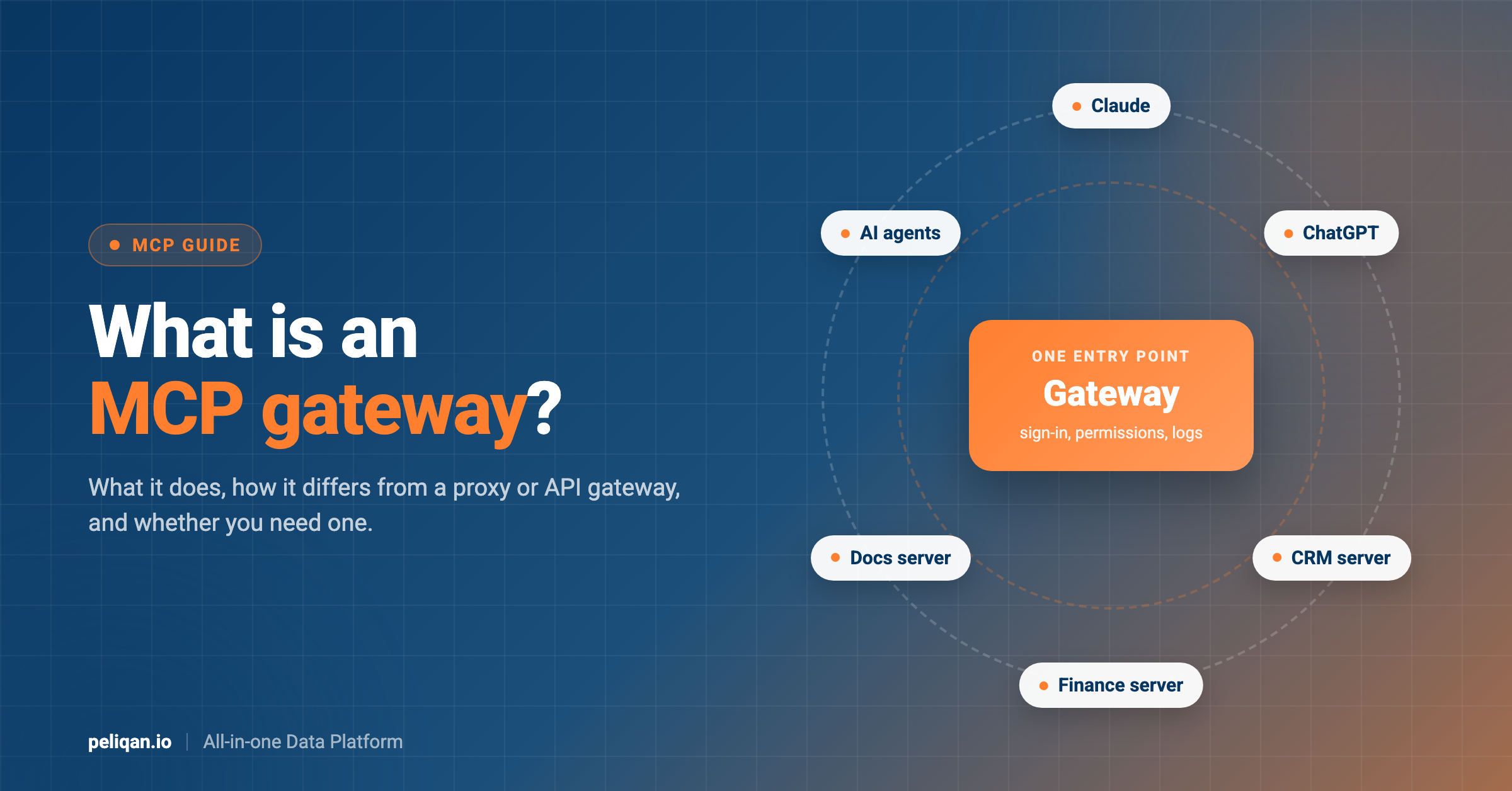
The third issue is architectural. Composio handles authentication (storing and refreshing tokens) but does not enforce authorization at the tool level – whether a specific agent acting for a specific tenant is allowed to call a specific connector with a specific scope. That gap matters the second your agent is customer-facing.
And then there is the data question. Composio is a tool-calling SDK, not a data integration platform. It cannot give your agent the consolidated business context that lives across HubSpot, NetSuite, Shopify, Postgres, and your data warehouse – because there is no underlying iPaaS or data layer doing that consolidation. Most teams discover this gap on day 30, after the prototype works but the agent keeps hallucinating because it can only see one app at a time.
Common reasons teams move off Composio
- Closed-source toolkits: No way to fork, inspect, or modify the integration code when a tool returns the wrong fields.
- Tool execution failures: Reviews consistently mention inconsistent execution and agent workflow failures in production.
- No data layer: Pure tool calling means no warehouse, no reverse ETL, no consolidated context across apps.
- Per-call pricing scales fast: $199/mo for 500K calls sounds fine until a multi-agent workflow hits that in a week.
- Authorization gap: Token storage is solved, but per-user, per-tenant scope enforcement is not.
- SDK lock-in: Python + TypeScript only; Go, Rust, Java, .NET teams are out of luck.
The 11 best Composio alternatives in 2026
1. Peliqan – the data-first AI integration platform
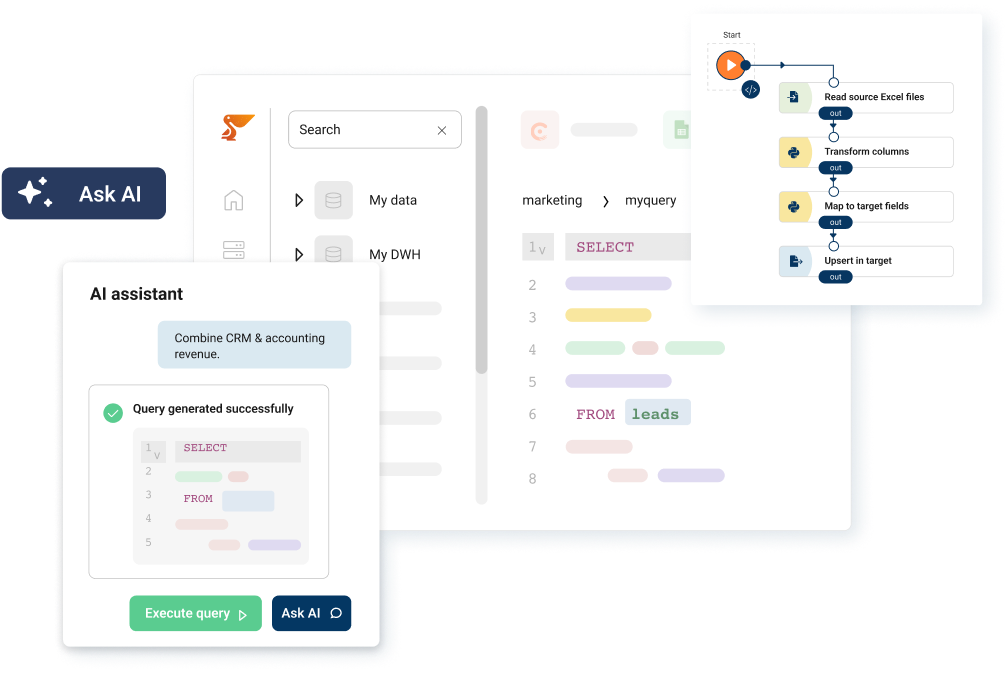
Peliqan takes a fundamentally different bet than Composio. Instead of giving your agent 1,000 isolated tool calls, Peliqan first consolidates your business data from 250+ sources into a built-in Postgres + Trino warehouse, then exposes everything – including write-back – through a single MCP server. Your agent sees one unified context: HubSpot pipelines, NetSuite invoices, Shopify orders, Postgres rows, all queryable as SQL plus callable as actions. This is why Peliqan ranks first in this list: most “AI agent integration” problems are actually data integration problems wearing a tool-calling costume.
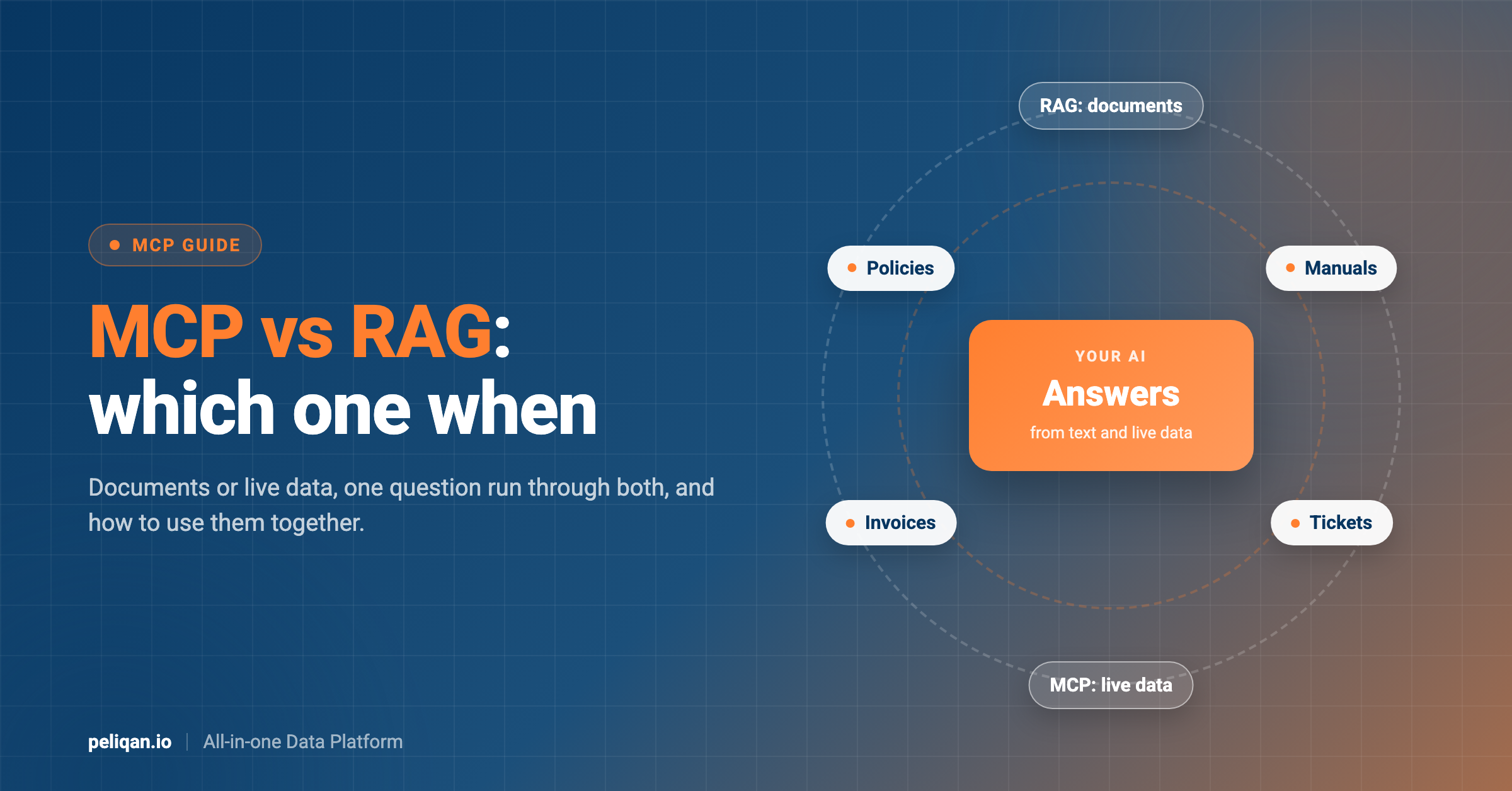
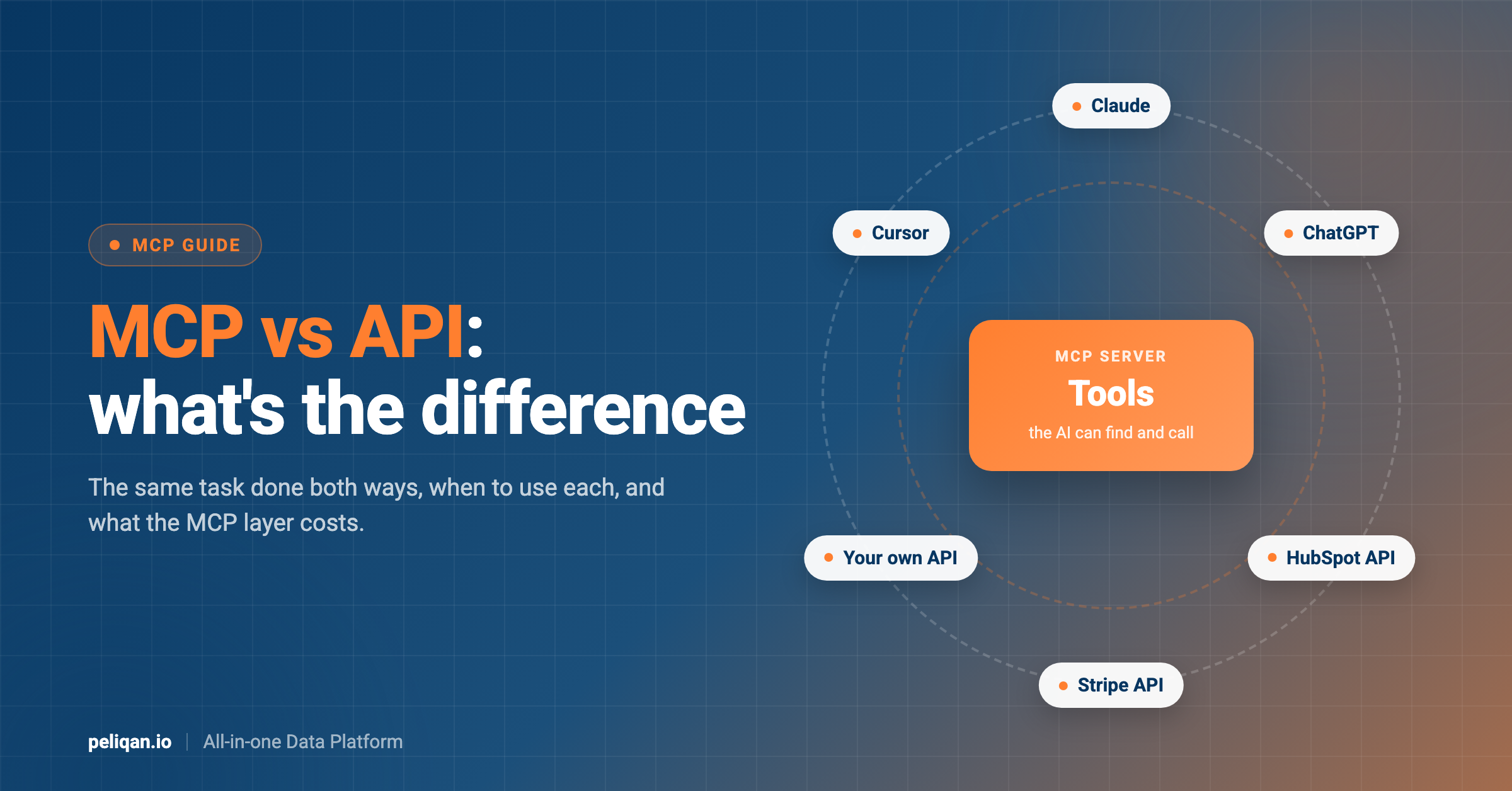
Where Composio is a managed tool-calling SDK, Peliqan is an all-in-one data platform that just happens to expose every connector through MCP, REST, and reverse ETL. The MCP server (open source, pip install mcp-server-peliqan) connects Claude, ChatGPT, Cursor, n8n, and Make to every business app you have wired in – with text-to-SQL and RAG combined in one context.
The platform ships with a low-code Python + SQL + spreadsheet UI for data transformations, automatic data lineage, data quality monitoring with Slack/email alerts, and a 48-hour custom connector SLA if something is missing.
Fixed pricing from ~$199/month – the same headline number as Composio Growth, but you also get the warehouse, reverse ETL, white-label, and multi-customer management built in.
For teams using Claude MCP or building production agents that need to read from multiple business systems and write back changes, this is the cleanest swap.
Peliqan also lets you build AI agents directly inside the platform with the warehouse, transformations, and connectors already wired up.
Why Peliqan beats Composio for production AI agents
2. Nango
Nango is the strongest open-source Composio alternative for teams who want code-first control across 800+ APIs. Tool definitions live in your repo as TypeScript functions, while Nango handles execution, OAuth, retries, and rate limiting. The platform offers deep real-time observability with OpenTelemetry export and a runtime that adds less than 100ms of overhead per tool call.
Nango supports both data syncs and LLM tool calls in a single platform, with a native MCP server and webhook support. The catch: you need engineering capacity to write and maintain the tool definitions yourself. For teams that already invest in custom integration code, Nango feels like the right escape hatch from Composio’s closed toolkits. For teams that wanted Composio specifically because they did not want to write integration code, Nango may be too much work.
3. Arcade.dev
Arcade was founded by Okta executives and treats every tool call as a permissioned action tied to a specific user identity. Where Composio handles authentication, Arcade enforces authorization – the agent calls a tool, Arcade verifies the user’s delegation, checks their permission scope, then executes only what that user is actually authorized to do. This makes Arcade the natural pick for enterprise agent governance and security workloads.
The trade-off is catalog size and breadth. Arcade ships roughly 112 integrations across 9 categories (productivity, sales, customer support), no data syncs, no webhooks, MCP-only tool calling. If your top constraint is per-user OAuth delegation and audited authorization, Arcade is the right tool. If you also need data syncs or a wider catalog, you will pair it with something else.
4. Pipedream Connect
Pipedream Connect handles both serverless workflow automation and AI agent infrastructure with 2,800+ apps and native MCP server support. You can write JavaScript or Python directly inside each workflow step, which gives developers the same control as Composio plus the visual workflow layer that Composio lacks. Pipedream is event-driven by default and has been quietly turning into one of the most flexible Composio alternatives for backend agent workflows.
The catch is positioning: Pipedream is not designed for embedded, customer-facing integration out-of-the-box. It lacks the pre-built end-user UI components that Paragon or Composio expose, so if you are shipping an AI feature inside your SaaS product and your customers need to authorize their own accounts, Pipedream needs more glue code than Composio does.
5. Paragon ActionKit
Paragon ActionKit is built for embedded iPaaS – shipping AI integrations that look like part of your actual product. Polished embedded UI components, a flexible workflow builder, and pro-code escape hatches for the moments low-code is not enough. Paragon shines when you are building a customer-facing AI agent inside a multi-tenant SaaS product and the integration UI needs to feel native.
For pure backend AI agents that just call tools and never expose an integration UI to end users, Paragon is more platform than you need. But for B2B SaaS shipping AI features to their own customers, ActionKit is one of the cleanest Composio alternatives on the market.
6. Merge Agent Handler
Merge built its reputation on unified APIs across HRIS, ATS, CRM, accounting, and ticketing categories. Merge Agent Handler extends that catalog to AI agent tool calling, normalizing data across hundreds of SaaS platforms into common data models and exposing every unified resource as a callable action. The pitch: your agent calls one Merge endpoint and works across Workday, BambooHR, ADP, and 30 other HRIS systems without writing per-vendor code.
Merge wins on category depth and enterprise observability. The trade-off is normalization itself – unified models work great for the 80% of common fields and lose information when you need vendor-specific custom fields. Teams who need every field from one specific HRIS often prefer a direct integration; teams who want broad coverage across many vendors prefer Merge.
7. Truto
Truto offers a zero-code unified API with native LLM toolsets. Where Composio gives agents pre-built tools to call external APIs, Truto normalizes data across hundreds of SaaS platforms into common data models – then exposes every unified resource as a tool call. The architecture is config-driven with a generic execution pipeline, so adding new platforms takes hours rather than days of integration-specific code.
Truto sits in the same unified-API category as Merge but skews more toward AI-first use cases. If you are building an AI agent that needs to read and write across a category of similar SaaS tools (a CRM agent that works across HubSpot, Salesforce, Pipedrive), Truto is one of the better-fit Composio alternatives.
8. Membrane
Membrane takes the most radical approach in this list: instead of giving you a catalog of pre-built tools, Membrane’s AI agent reads API documentation and generates production-ready integration code from natural language prompts in about five minutes. The output is actual integration code you own, not a managed runtime call.
This is a different shape of Composio alternative. Teams who want full code ownership and unique integrations to long-tail or internal APIs get more value here than from any closed-source toolkit. Teams who want managed integrations without ever touching code will find Membrane requires more engineering involvement than Composio does.
9. Zapier AI Agents (MCP)
Zapier launched AI Agents and a Zapier MCP server, exposing its 8,000+ app catalog to Claude, ChatGPT, and other agent runtimes. The trade-off is depth versus breadth: Zapier is great for simple automations but struggles with complex, multi-step AI agent workflows where reliability and observability matter. Per-task pricing also adds up fast at scale.
If your agent needs to touch a long tail of niche apps (the kind that show up in Zapier but nowhere else) and the workloads are low-volume and tolerant of occasional failures, Zapier MCP is the path of least resistance. For production agents shipping to paying customers, the more developer-focused Composio alternatives in this list scale better.
10. n8n
n8n is the open-source automation tool that took the workflow-builder crown from Zapier among developers. n8n 2.0 launched in early 2026 with a massive AI overhaul: 70+ AI nodes, native LangChain integration, persistent agent memory across executions, vector database support for RAG workflows, and sandboxed code execution. You can self-host n8n entirely on your own infrastructure – a key advantage over Composio’s cloud-only model.
For teams that already use n8n for general workflow automation and want to layer AI agents on top, this is the lowest-friction Composio alternative. For greenfield AI agent projects with no existing n8n footprint, the visual node graph can feel slower to iterate on than Composio’s SDK-first developer experience.
11. Workato Enterprise MCP
Workato launched Enterprise MCP that lets you expose collections of recipes (Workato’s prebuilt workflows) as MCP servers. For enterprises already running Workato as their iPaaS, this turns the existing recipe library into agent-callable tools without writing any new integration code.
The catch is the same one Workato has always had: enterprise pricing, complex licensing, and a tilt toward business analyst personas rather than the developer audience that Composio targets. If you are a Workato shop, this is the obvious Composio alternative. If you are not, the price of admission is high just to access the MCP layer.
Also worth a look: MintMCP
MintMCP provides enterprise MCP infrastructure designed for IT, security, and AI operations teams deploying AI agents at scale. The focus is on the governance plane – policy, audit, observability – rather than the integration catalog itself. MintMCP is closer to “MCP control plane” than to “tool catalog,” which makes it a complement to most platforms in this list rather than a head-on Composio replacement.
Composio alternatives comparison table
Market context: why this category exploded in 2025-2026
The AI agent integration category did not exist 24 months ago. Composio raised its $25M Series A in July 2025, Anthropic published the Model Context Protocol spec in late 2024, and by Q1 2026 every iPaaS, automation tool, and data platform had shipped some form of MCP support. The reason is simple: the bottleneck for production AI agents is no longer the model – it is reliable, secure, scoped access to business data and business actions.
Gartner’s 2026 outlook puts agentic AI as the top strategic technology trend, with one-third of enterprise applications expected to embed agentic AI by 2028. That is what is driving the rush of platforms positioning themselves as “the integration layer for agents.” Some of them are tool-calling SDKs (Composio, Arcade), some are unified APIs (Merge, Truto), some are data platforms with MCP bolted on (Peliqan, Workato), and some are workflow tools that added AI nodes (n8n, Zapier, Pipedream).
The right Composio alternative depends on which of those shapes your problem actually is. The fastest way to know is to look at where the data your agent needs lives – and whether you need to read it, write it, or both. For most production teams, the answer involves both, which is why pairing your agent with a unified MCP layer tends to outperform pure tool-calling SDKs over a 12-month horizon.
How to choose the right Composio alternative
Decision framework
- Pick Peliqan if your agent needs unified context across 250+ data sources, a built-in warehouse, reverse ETL, and a single MCP endpoint with read + write – and you want fixed pricing instead of per-call meters.
- Pick Nango if you have an engineering team that wants open-source tool definitions in their own repo with 800+ APIs available.
- Pick Arcade if your top constraint is per-user OAuth delegation and audited authorization at enterprise scale.
- Pick Pipedream Connect if you want serverless backend workflows with Python/JS code blocks and 2,800+ apps.
- Pick Paragon ActionKit if you are embedding AI features inside a B2B SaaS product and need polished customer-facing integration UI.
- Pick Merge Agent Handler if you need broad coverage of one category (HRIS, ATS, CRM, accounting) through a unified API.
- Pick Truto if you want a zero-code unified API specifically built for AI agent tool calling.
- Pick Membrane if you need integrations to unique or long-tail APIs and want generated code you own outright.
- Pick Zapier AI / MCP if you need the longest tail of niche apps and your workloads are low-volume.
- Pick n8n if you want a fully self-hosted, open-source workflow tool with strong AI nodes.
- Pick Workato Enterprise MCP if you are already a Workato shop and want to expose existing recipes as agent tools.
What most teams underestimate when choosing
The first thing to check is not the catalog size or the SDK syntax – it is the read path. Composio is excellent at calling actions (“send this Slack message,” “create this Jira ticket”) but it does not give your agent a clean way to read across multiple systems and answer questions. Most production agents fail because they cannot see enough context to make good decisions, not because they cannot execute actions. The teams that quietly succeed are the ones that put a consolidated data layer under the agent before they wire up the tool calls.
The second thing is write-back. A surprising number of “AI agent integration” platforms ship read-only or read-mostly catalogs, with write actions limited to a small set of high-volume apps. Verify that the platform supports write-back across the exact connectors you need – this is where Composio alternatives diverge most. The Peliqan MCP server documentation walks through this for every supported connector.
The third thing is governance. Composio handles authentication; Arcade handles authorization; almost nothing handles audit, lineage, and data quality monitoring at the platform level. If your agent is making decisions that affect real customers or real money, you want the same governance you would put around a production ETL pipeline – including automatic lineage, alerts when something drifts, and continuous monitoring.
That last piece is where most Composio alternatives quietly underdeliver. Treat data quality monitoring as a non-negotiable from week one rather than a feature you bolt on later.
Connecting your data and AI stack
Most teams shopping for Composio alternatives discover that the tool-calling SDK is only one piece of the picture. You also need the data layer that gives the agent context, the warehouse that lets it query across sources, the reverse ETL that pushes its decisions back into operational systems, and the governance plane that keeps the whole thing auditable. These are not separate problems in 2026 – they are one problem with four faces.
Platforms that started life as data tools (Peliqan, parts of Workato) tend to give you all four. Platforms that started life as tool-calling SDKs (Composio, Arcade) tend to give you one. Both shapes are legitimate; the question is which matches your roadmap. For teams already running an iPaaS or warehouse, layering MCP on top of what you already have is usually faster and cheaper than ripping it out for a Composio-shaped tool. For greenfield agent prototypes, Composio is still fast to start with.
If you want to see the all-in-one shape in action, walk through building an MCP server in Peliqan and compare what your agent can do with full data context versus what it could do with isolated tool calls. The architectural difference shows up in the answer quality, not in the line count.
The 2026 verdict on Composio alternatives
Composio is still the right pick for greenfield AI agent prototypes where you want to ship in a weekend and you have not yet built any data infrastructure. The 1,000+ toolkit catalog and the Python/TypeScript SDKs are genuinely best-in-class for that use case. But once your agent is in production with real customers, real auditing requirements, and real data spread across HubSpot, NetSuite, Shopify, and Postgres – the closed toolkits, the per-call pricing, and the missing data layer start to bite.
For that production phase, Peliqan is the alternative that tends to outlast every other option in this list. The reason is structural: you only need one platform when the platform is both an iPaaS and an MCP server backed by a real warehouse. Everything else in this category requires you to stitch together two or three platforms to get the same shape. That stitching cost is what most teams underestimate when they pick a Composio alternative on day one.
Whatever you pick, the right move in 2026 is to assume your agent will need both deep tool calling and deep data integration. Plan for that from day one and the swap from Composio to whatever comes next will be a configuration change, not a re-architecture.