
History tables: why your warehouse only knows “now”
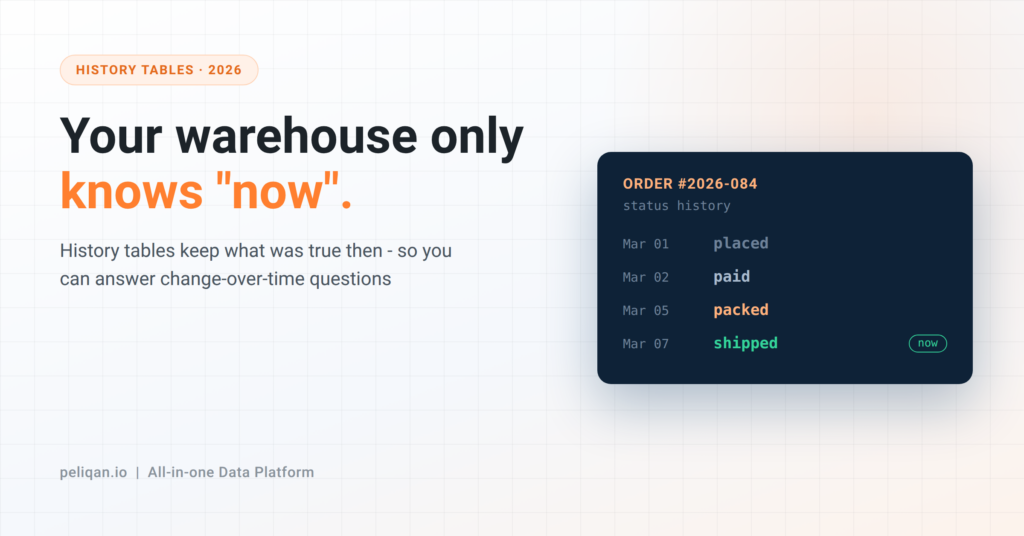
A history table keeps a dated record of how your data looked over time, instead of only its latest state. Without one, a status change overwrites the old value and the history is gone. This post explains what history tables are, when you actually need them, and how to set them up – in plain […]
Entity resolution: one customer, four IDs, how to fix it
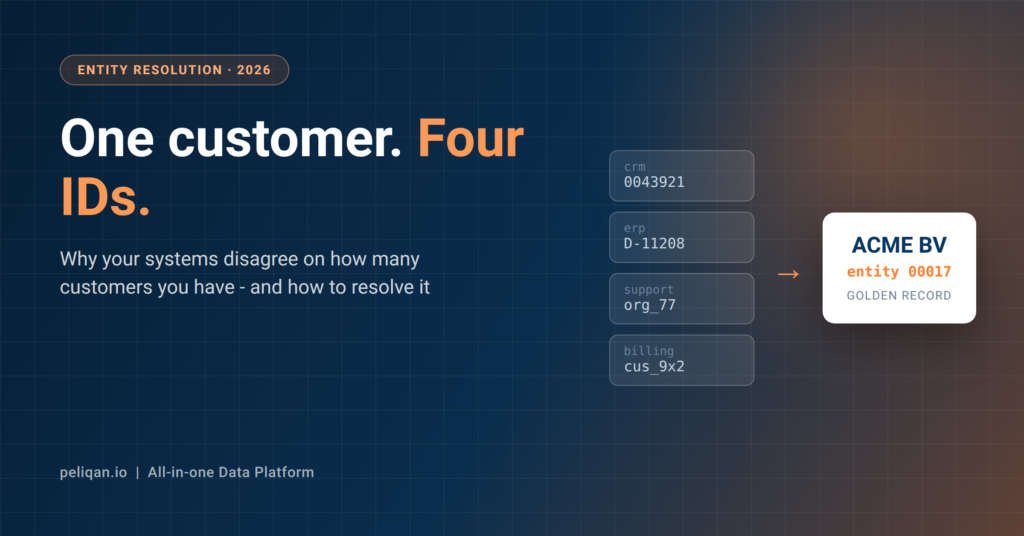
Entity resolution is the work of recognizing that a CRM account, an accounting debtor, a support organization and a billing customer are the same real-world company – and giving that company one identity your queries and AI agents can rely on. This post explains why it quietly breaks analytics and agents, the three matching strategies, […]
SQL Server Integration Services – SSIS
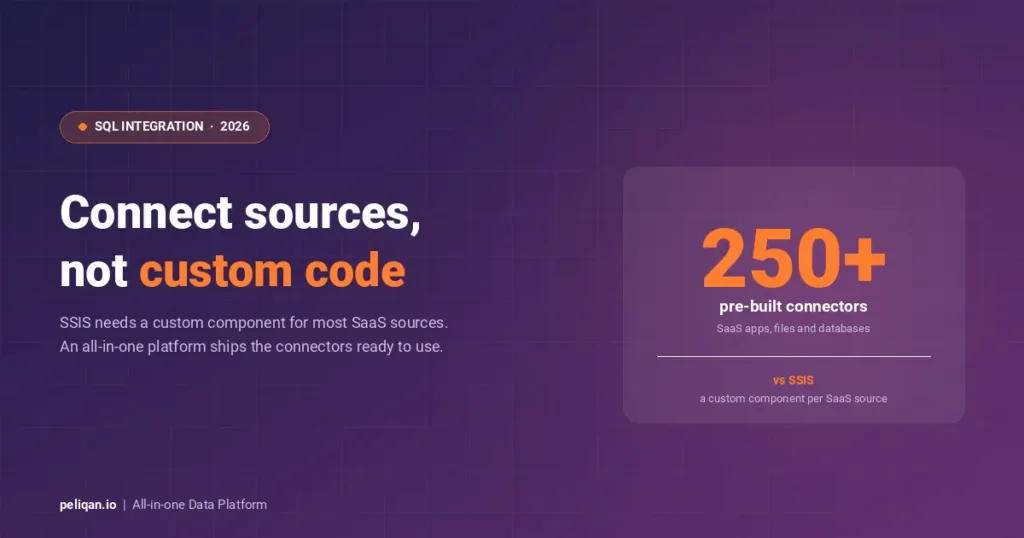
SQL integration is how organisations turn scattered databases, applications, and files into one consistent, query-ready source of truth. For many Microsoft-centric teams, SQL Server Integration Services (SSIS) is still the default tool for the job. This guide explains SQL integration end to end, how SSIS works in 2026, where it falls short, and the modern […]
SQL Salesforce: A Comprehensive Guide to SOQL
In today’s data-driven business landscape, the ability to effectively extract, analyze, and leverage Customer Relationship Management (CRM) data is paramount. For a significant number of enterprises worldwide, Salesforce serves as the cornerstone of CRM operations. However, the true value lies in the capacity to harness this wealth of information efficiently. This is where SQL Salesforce, […]
Why organisations should embrace low code tooling?
In the rapidly evolving landscape of digital transformation, the question arises: Can low/no-code be the catalyst for organizations to embrace a data-driven culture and mitigate talent shortages in IT departments? While some may view it as a solution to talent scarcity, the true power of low code lies in employee empowerment and business agility. Beyond […]
Low-code Python for data integration and activation
Data platforms and iPaaS tools are widely used to implement ETL pipelines in all kinds of flavours. These pipelines take data from various sources – for example business applications – and centralise the data in a data warehouse. Once the data is in a data warehouse, the next step is often a “reverse” ETL flow […]