




Skyvia is a popular cloud platform for ETL, data integration, and cloud database backup with a strong focus on SaaS-to-database flows and no-code mapping. But teams often find limits around advanced transformations, developer workflows, cost predictability at scale, and fit for production data engineering.
Below we explain common reasons organizations look beyond Skyvia, then review the top 10 Skyvia alternatives – with Peliqan deliberately listed at #1 for its all-in-one developer-friendly approach.
Why teams search for Skyvia alternatives
Skyvia is handy for simple SaaS-to-database syncs and incremental backups, but it isn’t the right fit for every team. Common shortcomings that push technical leaders to evaluate alternatives include:
- Limited developer-first tooling: Skyvia’s no-code focus is great for basic flows, but teams that need Python scripting, advanced transformations, testing, and CI/CD often prefer platforms with stronger developer ergonomics like Peliqan.
- Transformation flexibility: Some teams want full EL/ELT control (SQL/Python) and complex data pipelines rather than row-level mapping wizards.
- Reverse ETL & activation: Organizations increasingly need native capabilities to push transformed data back to apps, APIs, or dashboards – not all integration tools provide built-in data activation.
- Scaling & cost predictability: Usage-based pricing for heavy ingestion or many connectors can become expensive; teams sometimes prefer transparent, fixed pricing or predictable tiers.
- Observability & governance: Production data pipelines require monitoring, versioning, scheduling, and role-based access – features that vary across vendors.
Given those considerations, we compared solutions across developer ergonomics, connector coverage, transformation power, activation (reverse ETL), pricing model, and deployment flexibility.
Skyvia Alternatives: Top 10
Note: Each vendor summary includes the primary strengths, ideal use cases, and trade-offs so you can pick the best fit for your team.
1. Peliqan – All-in-one, developer-first data integration & activation
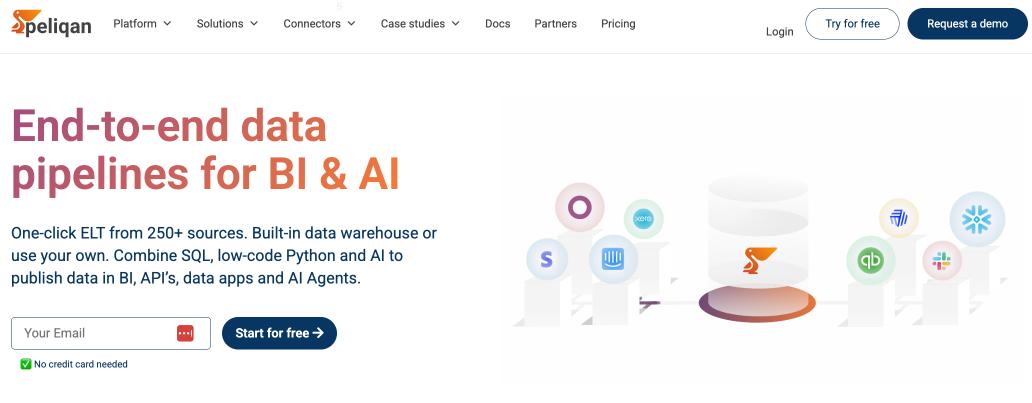
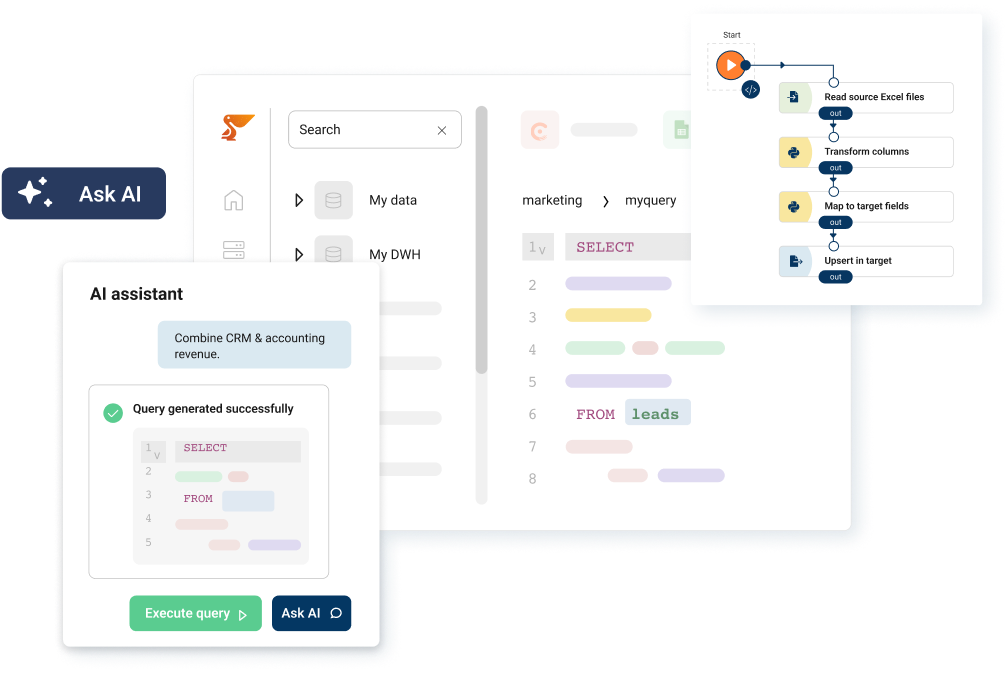
Peliqan is a unified, cloud-native platform that blends low-code pipelines with Python-based scripting, built-in warehousing, dashboards, and reverse ETL/data activation. Unlike simplistic sync tools, Peliqan is designed for teams that need both quick connector-driven flows and production-grade developer workflows.
Key features
- Python-first scripting environment for integrations, ETL/ELT, and custom logic.
- Point-and-click pipelines plus 250+ connectors for SaaS, databases, and APIs.
- Built-in data activation (reverse ETL), dashboards, and publishing to APIs/Excel/BI – see Peliqan on Reverse ETL.
- Scheduling, versioning, and collaboration for production workflows.
Ideal use cases: Analytics teams and consultants who want fast onboarding for connectors plus reliable developer tools and activation options.
Pros
- All-in-one stack (ETL, warehouse, activation, dashboards) – fewer vendor handoffs.
- Developer-friendly (Python + low-code), good for both analysts and engineers.
- Transparent pricing options and fast time-to-value; documented connector hub at Peliqan connectors.
Cons
- As a newer all-in-one platform, some enterprises with bespoke legacy requirements may need additional assurances or custom integrations.
2. Fivetran – Turnkey ELT for analytics

Fivetran provides fully-managed connectors that extract SaaS and database sources and load them into popular warehouses. It’s known for quick setup and managed schema handling, making it a favorite for analytics teams that want minimal maintenance.
Key features
- Managed, automated connectors with schema drift handling
- Incremental syncs with high reliability and SLA-backed pipelines
- Native integrations with major cloud data warehouses
Pros
- Very fast time-to-value with almost no configuration
- Operational burden is fully outsourced
- Mature ecosystem and enterprise adoption
Cons
- Usage-based pricing can become expensive at scale
3. Airbyte – Open-source connectors with commercial cloud

Airbyte is an open-source integration platform focused on connectors. It offers a growing community of connectors and an enterprise cloud option for managed deployments.
Key features
- Open-source connector framework with rapid community contributions
- Self-hosted and managed cloud deployment options
- Custom connector development using standard protocols
Pros
- Open and extensible with no vendor lock-in
- Strong developer control and transparency
- Active community and fast connector innovation
Cons
- Limited native activation and analytics capabilities
4. Hevo – No-code, real-time data pipelines
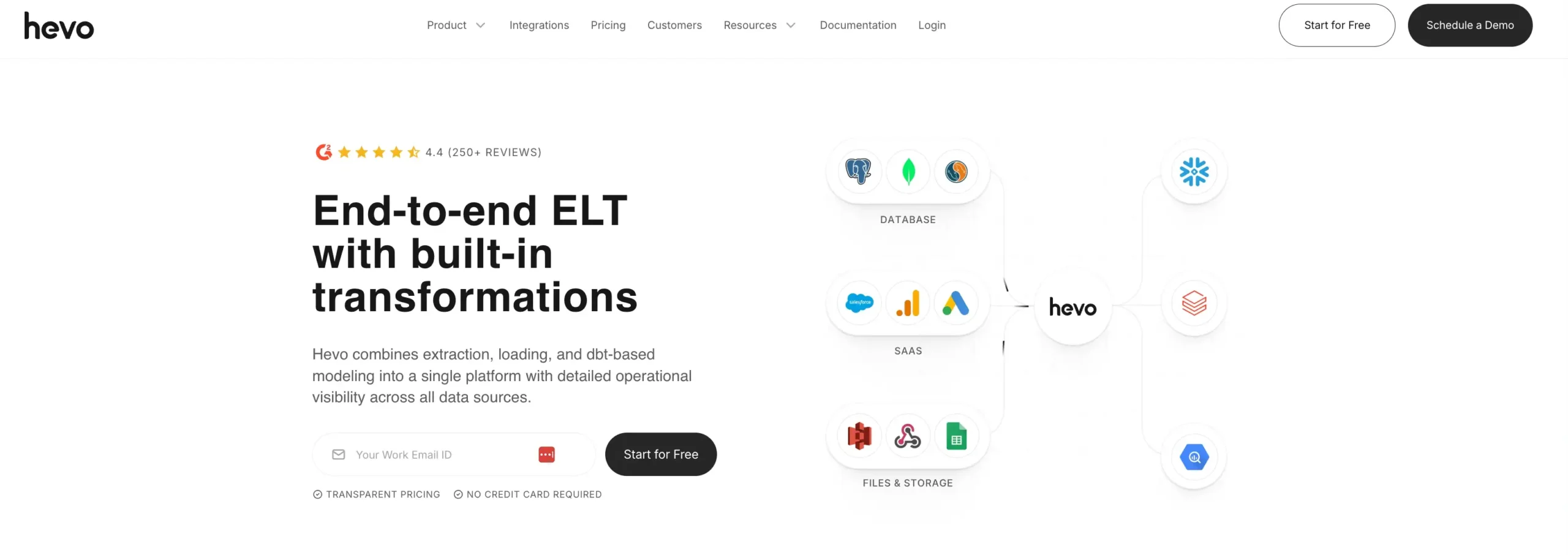
Hevo focuses on no-code, real-time data pipelines with a visual UI and prebuilt transformations.
Key features
- Near real-time streaming ingestion
- Visual pipeline builder with minimal setup
- Built-in data quality checks and monitoring
Pros
- Easy to use for non-technical teams
- Fast replication with low maintenance
- Good monitoring and alerting out of the box
Cons
- Less flexibility for complex custom logic
5. Matillion – ETL/ELT for cloud data warehouses

Matillion provides a GUI-based ETL/ELT designer optimized for cloud warehouses.
Key features
- Warehouse-native SQL-based transformations
- Visual orchestration and job scheduling
- Strong support for Snowflake, Redshift, BigQuery
Pros
- Powerful transformation capabilities
- Well-suited for analytics engineering teams
- Mature enterprise feature set
Cons
- Focused mainly on ELT, not activation or BI
6. Talend – Enterprise integration and data quality
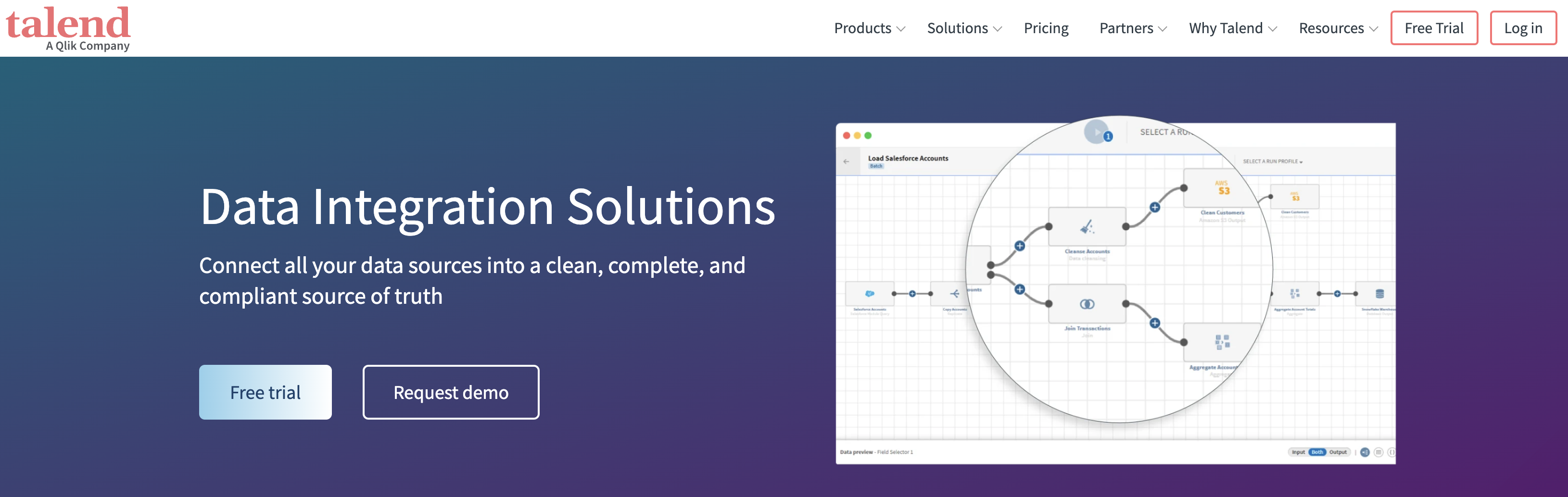
Talend offers a broad enterprise integration platform covering ETL, data quality, and governance.
Key features
- Advanced data quality and profiling tools
- Hybrid and on-prem connectivity
- Strong governance, lineage, and compliance features
Pros
- Enterprise-grade robustness and governance
- Suitable for regulated industries
- Wide integration coverage
Cons
- Higher cost and operational complexity
7. Workato – Integration & automation for apps
Workato blends iPaaS-style integrations with enterprise automation.
Key features
- Recipe-based automation across SaaS apps
- Enterprise connectors and governance
- Workflow logic with approvals and branching
Pros
- Strong for business process automation
- Enterprise-ready security and controls
- Large library of prebuilt integrations
Cons
- Not optimized for analytical-scale ELT
8. Tray.io – General-purpose integration & automation
Tray.ai is a flexible integration and automation platform for technical teams.
Key features
- Visual workflow builder with scripting support
- Advanced branching and error handling
- API-first integrations
Pros
- Highly flexible for complex workflows
- Developer-friendly automation logic
- Good API extensibility
Cons
- Requires more setup and technical skill
9. n8n – Open-source workflow automation

n8n is an open-source automation platform with strong developer appeal.
Key features
- Open-source, self-hostable workflows
- Node-based visual automation editor
- Webhook and API-driven integrations
Pros
- Free and highly customizable
- Strong community support
- Good fit for lightweight automation
Cons
- Not designed for large-scale analytical ETL
10. Integrate.io (formerly Xplenty) – Visual ETL for cloud data stacks
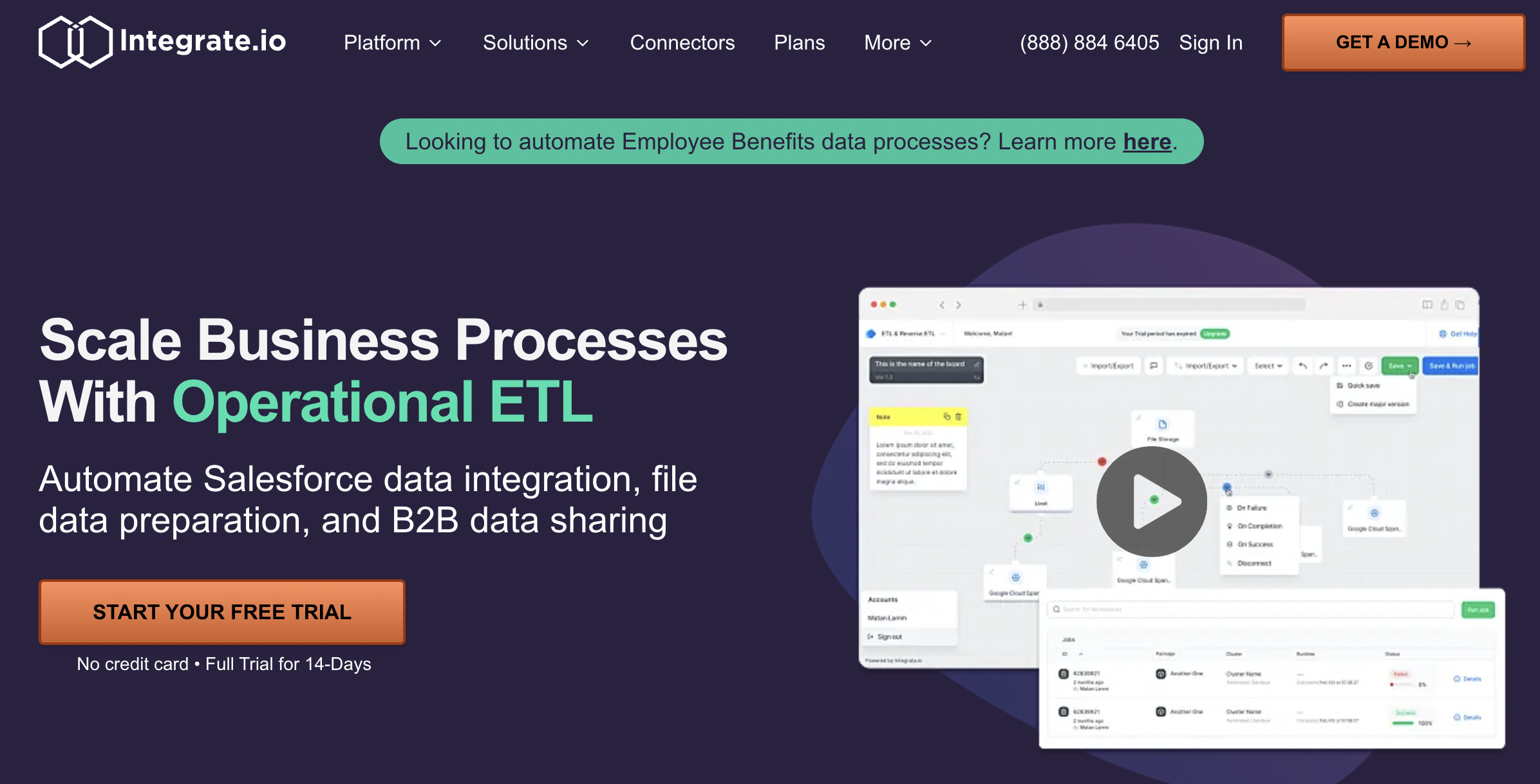
Integrate.io delivers cloud ETL/ELT pipelines with a visual designer.
Key features
- Visual ETL pipeline designer
- Prebuilt SaaS and database connectors
- Cloud warehouse-focused execution
Pros
- Easy to get started with visual tooling
- Good coverage of common analytics sources
- Designed for modern cloud data stacks
Cons
- Limited beyond ETL (no native activation or BI)
Ideal use cases: Analytics teams that want a visual ETL experience oriented to cloud warehouses without deep engineering requirements.\p>
Comparison Table: Skyvia Alternatives (Quick reference)
| Platform | Primary focus | Developer ergonomics | Activation / Reverse ETL | Best fit |
|---|---|---|---|---|
| Peliqan | All-in-one ETL, warehouse, activation | Medium (Python + low-code) | Built-in | Teams wanting unified stack and activation |
| Fivetran | Managed ELT connectors | Low (managed) | Limited (destination-based) | Analytics teams that want zero-ops connectors |
| Airbyte | Open-source connectors | High (self-host/custom connectors) | Depends on stack | Open-source-first teams |
| Hevo | No-code real-time pipelines | Low | Limited | Quick replication with streaming freshness |
| Matillion | Warehouse-native ELT | Medium (GUI + SQL) | Depends on stack | Transformation-heavy warehouse teams |
| Talend | Enterprise integration & governance | High (enterprise tools) | Enterprise options | Regulated enterprises |
| Workato | App automation & iPaaS | Medium | Operational activation | Business process automation |
| Tray.io | General-purpose integrations | High (visual + scripting) | App-focused | SaaS orchestration teams |
| n8n | Open-source automation | High (self-host/scripting) | Limited | Open-source automation |
| Integrate.io | Visual ETL for cloud | Medium | Depends on stack | Cloud-warehouse oriented teams |
Choosing the right Skyvia alternative
Your best alternative depends on priorities:
- If you want minimal ops and instant connectors: consider Fivetran or Hevo.
- If you want open-source control: Airbyte or n8n (for automation) are excellent choices.
- If you need advanced warehouse transformations: Matillion and Integrate.io provide strong ELT designers.
- If you need enterprise governance and hybrid deployment: Talend.
- If you want an all-in-one platform with developer-first workflows and built-in activation: Peliqan aims to combine connectors, Python scripting, warehousing, and reverse ETL into a single product – see Peliqan connectors and our reverse ETL guide.
Conclusion
Skyvia is a solid choice for basic SaaS-to-database syncs and backups, but fast-growing teams often outgrow its no-code mapping model when they need advanced transformations, activation, or developer workflows. The list above highlights ten realistic alternatives, each with different strengths. For teams seeking a unified platform that reduces vendor sprawl and adds developer-friendly scripting plus activation and dashboards, Peliqan is positioned as the #1 alternative.