
Data apps are low-code Python scripts that run inside Peliqan. Use them for automations, custom data pipelines, reports, imports and exports, and REST APIs. This tutorial shows how to build one, read and write your warehouse from it, and put it in front of other people.
How to build a data app
- 1Create an app. Go to the Build section and start from a template or an empty app. Example code is there to work from.
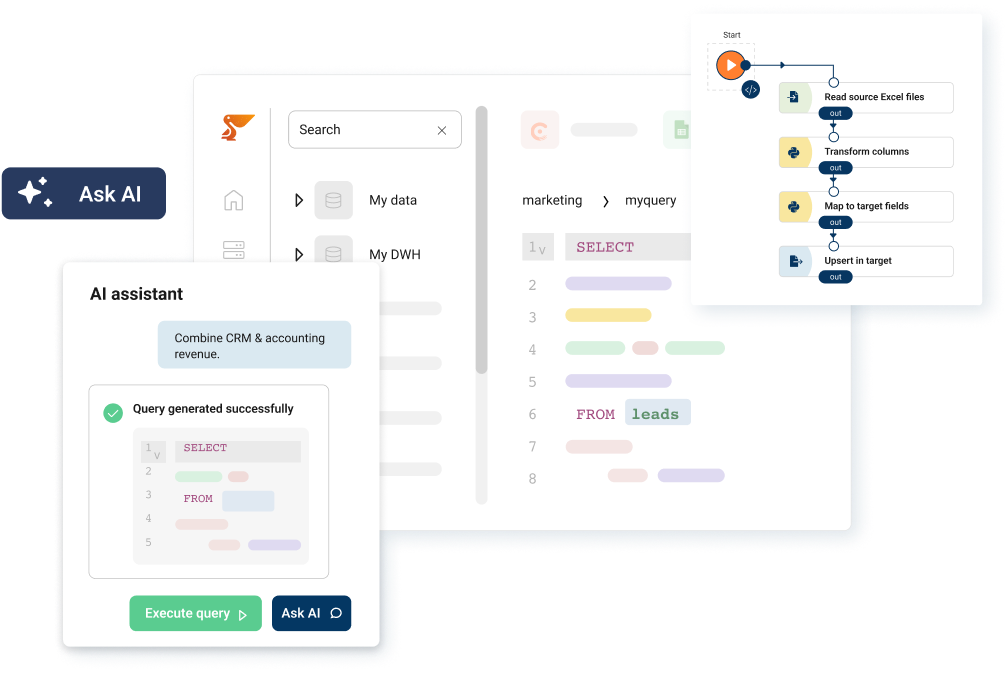
- 2Read and write your data. Built-in functions connect to the data warehouse and fetch a table – Pipedrive deals, for example. You can write back too, with insert, update and upsert. One function implements a whole pipeline: give it a dataframe or JSON from an API plus a primary key, and it creates the table and columns by introspection and upserts on that key.
- 3Add a UI with Streamlit. Streamlit is imported automatically, so you can show titles, text, inputs and charts. Apps run in the background or in interactive mode – buttons and inputs need interactive mode.
- 4Expose an API or receive webhooks. Create an app that acts as an API handler, then configure the endpoint name, authorization, route and HTTP method to get a callable REST URL. Incoming webhooks are stored automatically in a schema called webhooks, where a script can process or reprocess them.
- 5Schedule, publish and check the logs. Run an app every few minutes, hourly or daily. Interactive apps can be published as a URL or embedded in a portal, and every run is logged with its errors.
What you can do with data apps
- Automate work that sits between your systems, without hosting anything yourself
- Build custom pipelines that call any API and upsert into the warehouse on a primary key
- Turn a script into an interactive app with Streamlit charts and inputs
- Publish a REST API endpoint, or take in webhooks from any tool that can send them
About low-code Python in Peliqan
The warehouse connection, the Streamlit import, the upsert helpers and the scheduler all come with the platform, so there is nothing to install or host. Templates cover common cases, including the Reverse ETL app used for data activation between two business systems.