Instantly connect Apple App Store, use any BI tool. Combine magical SQL and low-code Python to integrate, automate and activate your data.
Apple App Store is a marketing platform capturing campaign performance, lead engagement, and email metrics across the customer journey. Native Apple App Store reports cover campaign basics but cannot tie marketing spend to actual revenue without a unified warehouse. Peliqan provides a managed Apple App Store connector that syncs campaigns and engagement data into your warehouse for full-funnel attribution and lifecycle reporting.

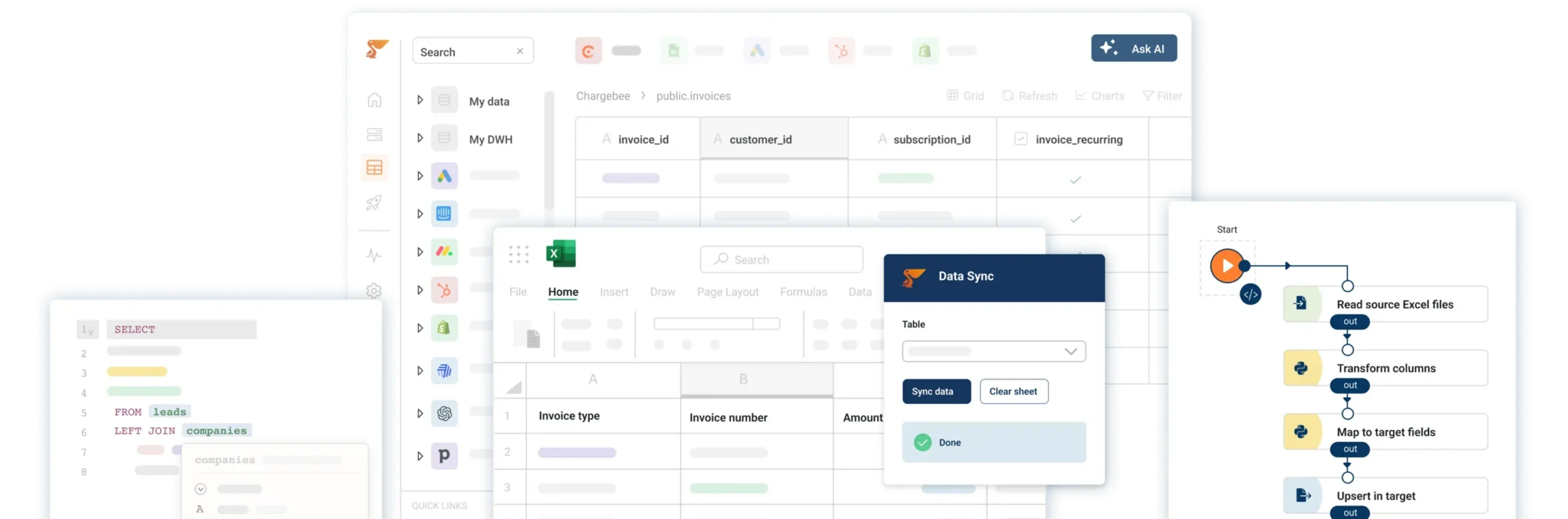
Peliqan brings ETL pipelines, data transformations and reverse ETL together in one integrated platform. Connect your favorite BI tool and activate your data with SQL and low-code Python.
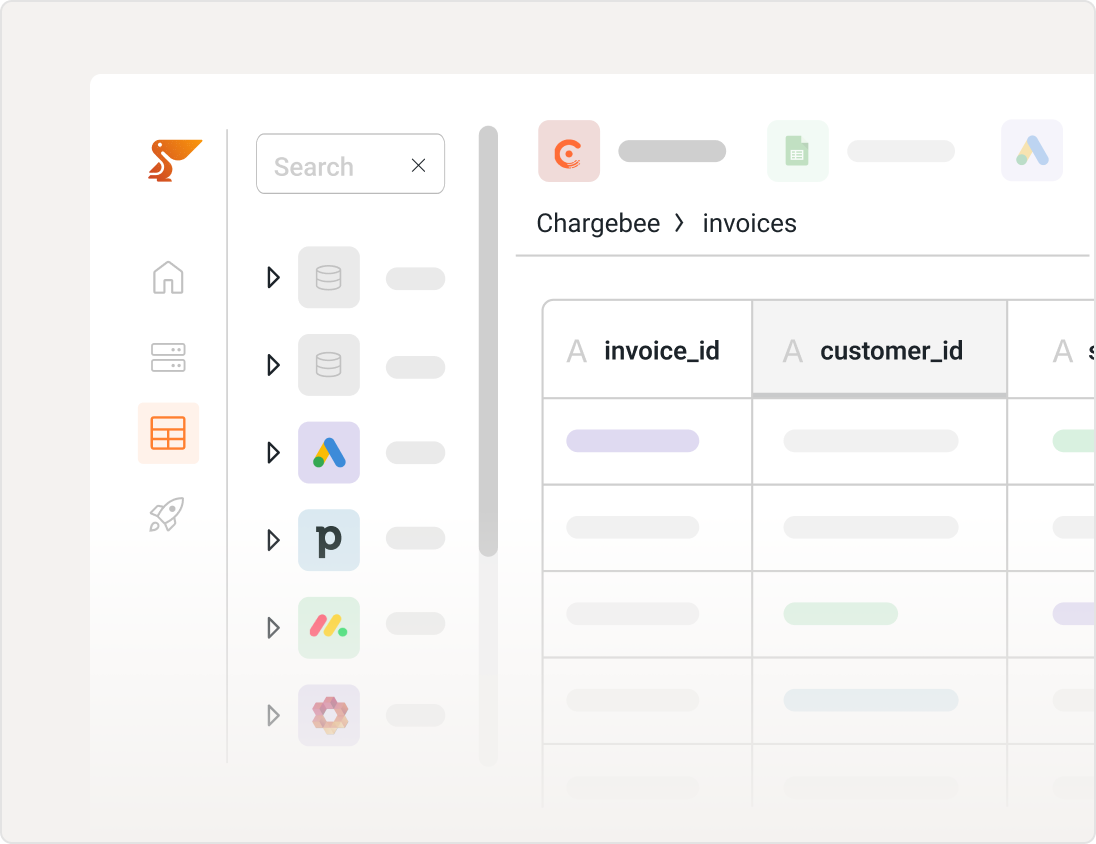
Sync Apple App Store into a data warehouse with a few clicks, and start exploring your data in an easy spreadsheet.
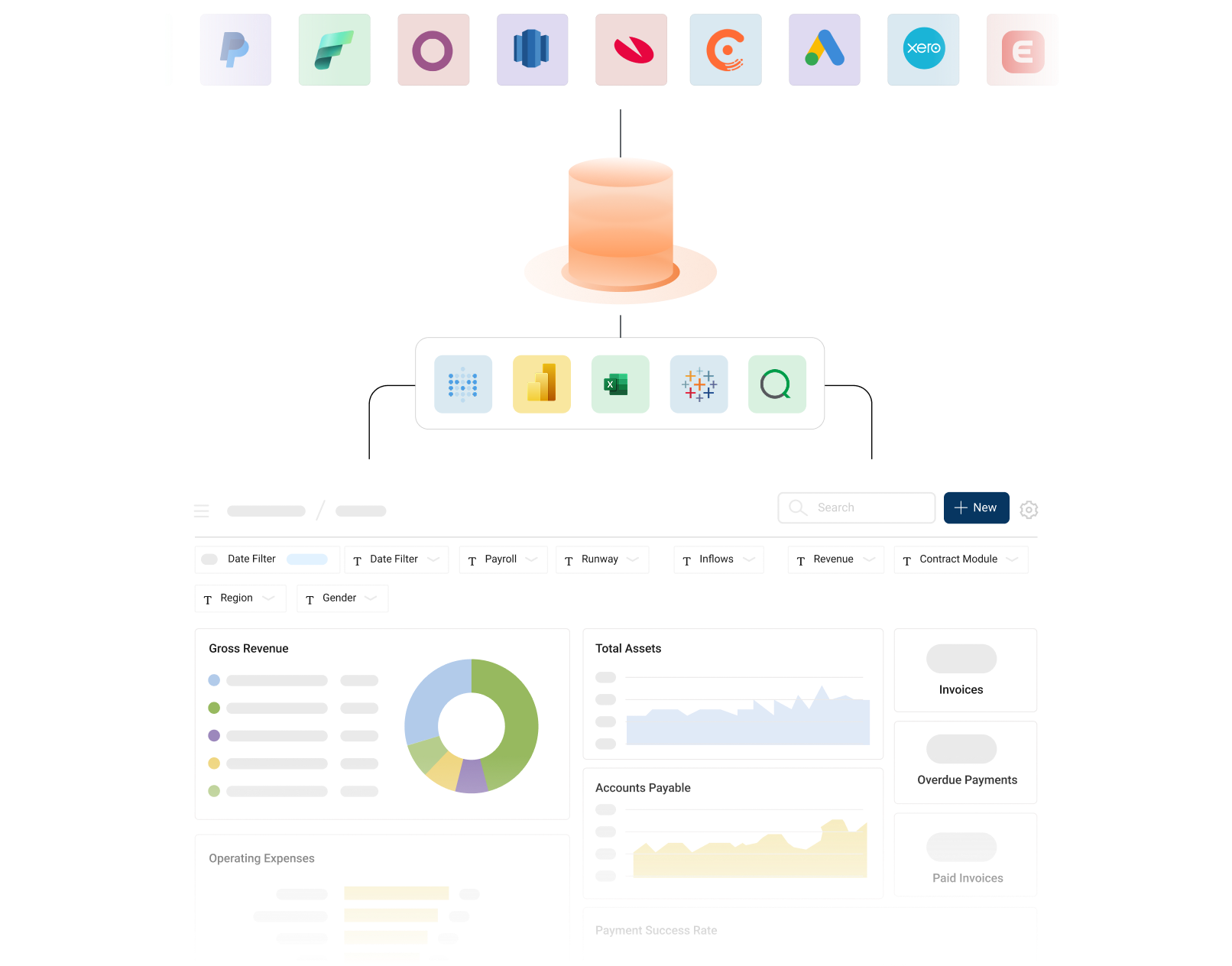
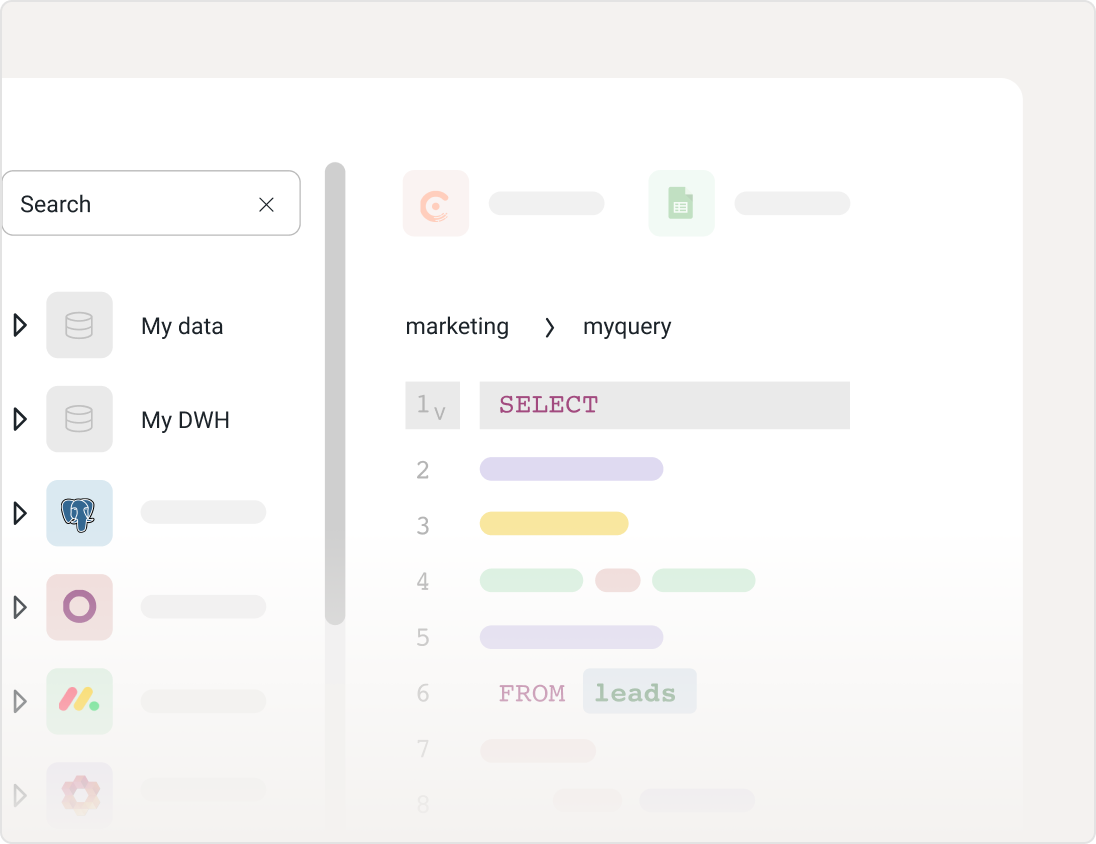
Use SQL on Apple App Store to combine data, build custom reports and prepare data for your favorite BI tool such as Microsoft Power BI, Tableau, Qlik Sense, Looker or Metabase. ETL data pipelines are automatically created.
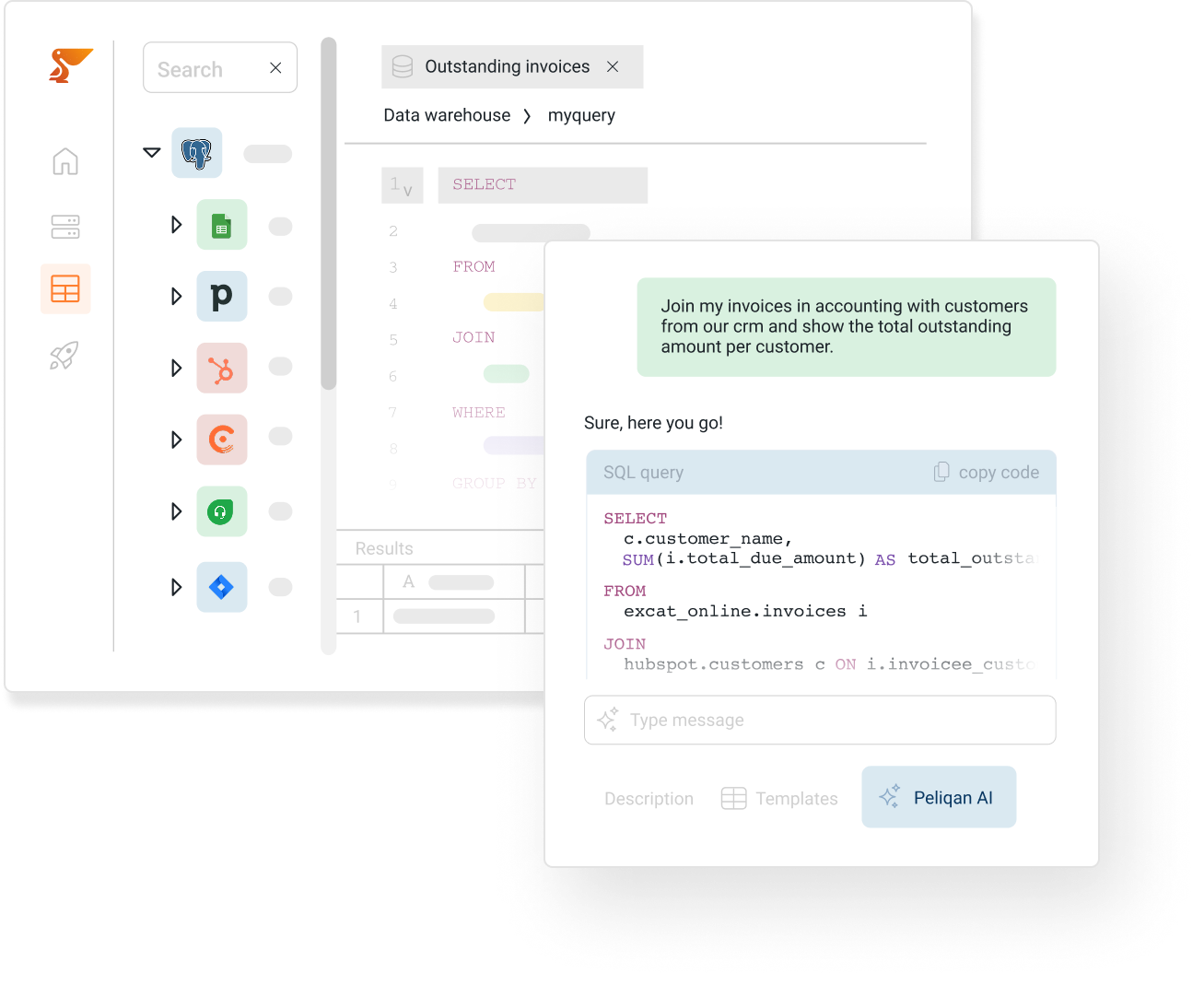
Explore data in a rich spreadsheet UI. Use Magical SQL to combine and transform data. SQL queries become new tables that can be shared with business users and used in any BI tool.
Use Peliqan’s built-in distributed query engine to combine data between sources, e.g. write JOIN queries between tables in the Peliqan DW and external databases.


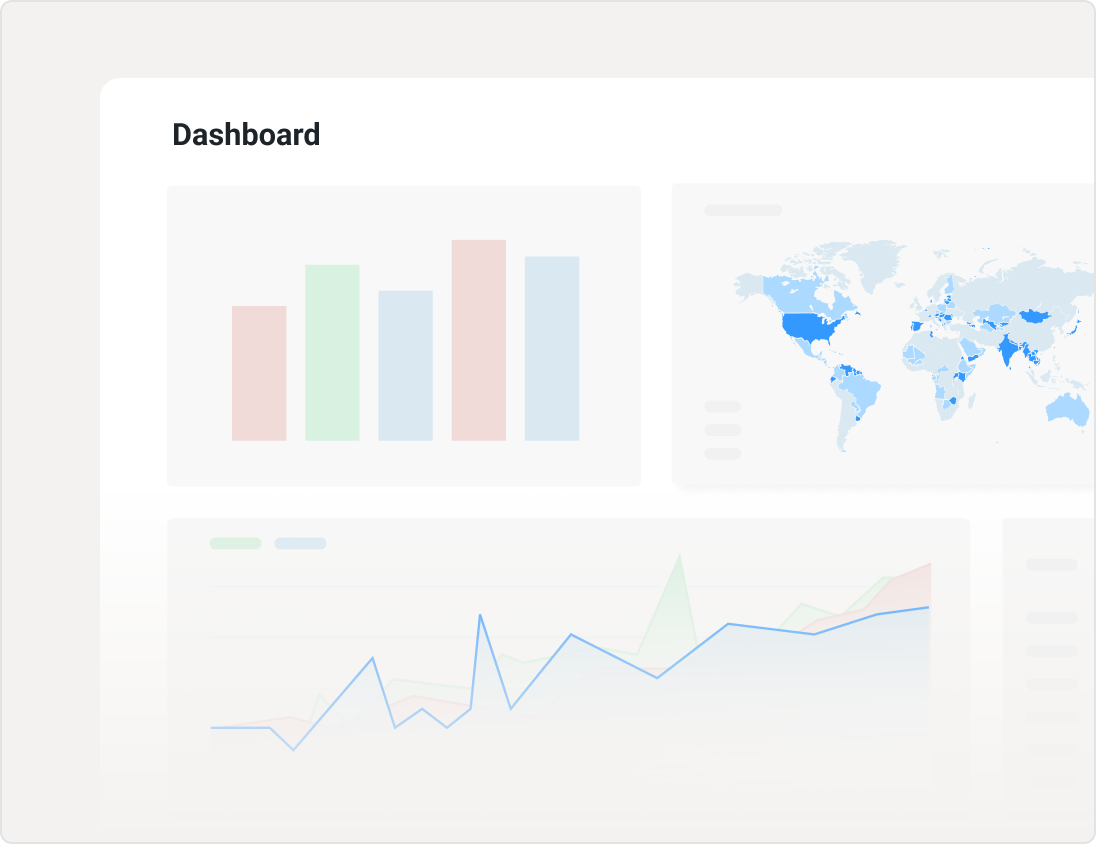
Use your preferred BI tool (Power BI, Tableau, Metabase etc.) to visualize your Apple App Store data.
Deploy Metabase with a single click from the Peliqan Market Place and use Apple App Store in Metabase.
Sync with Google Sheets for easy data analysis from any source.

Access, combine, and report on data from Apple App Store and all your SaaS apps instantly.
Gain valuable insights by bringing all your business data together in one place within minutes.
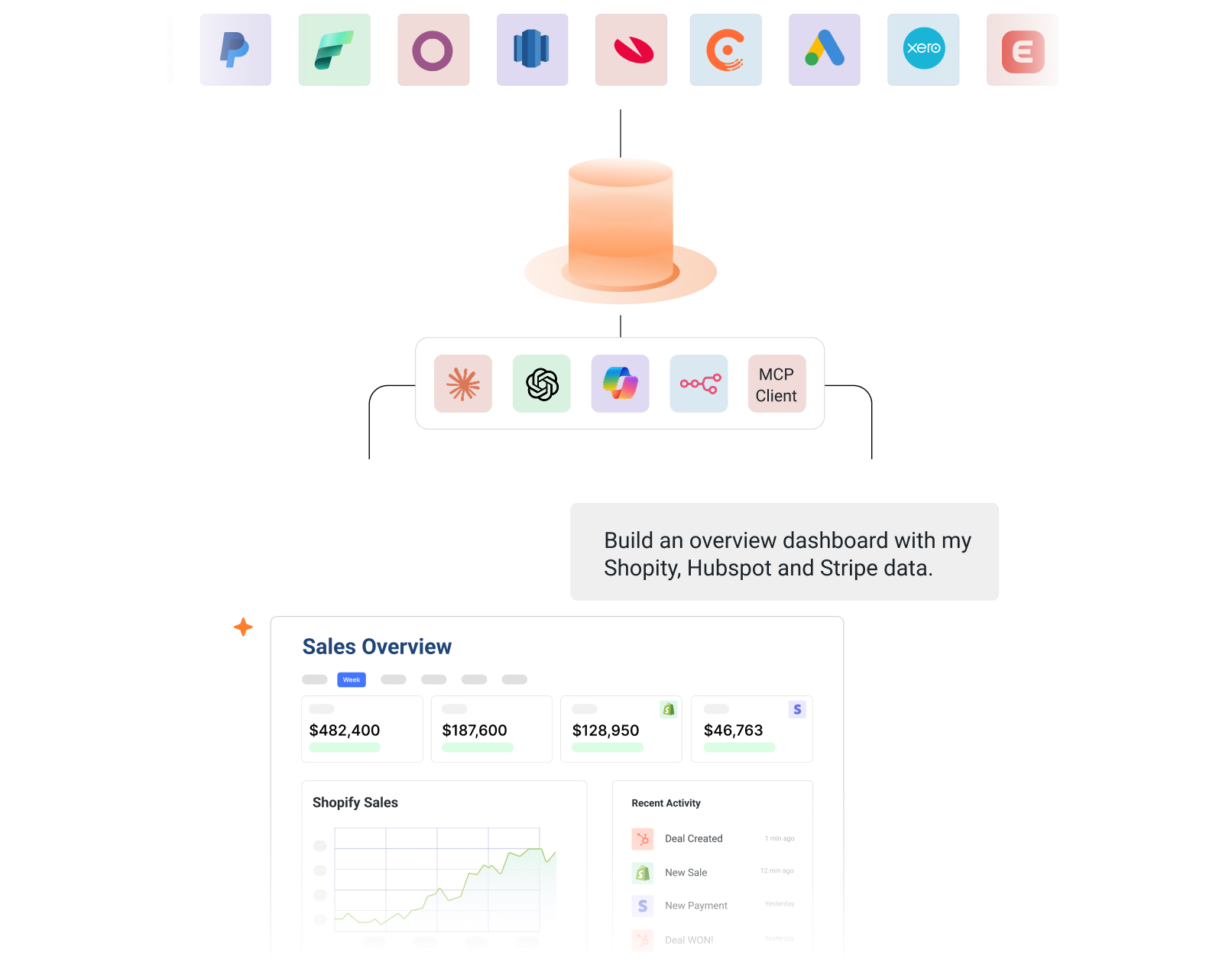
Build intelligent AI Agents on top of Apple App Store, with Peliqan’s AI data foundation: Apple App Store MCP Server, Apple App Store in n8n AI Agents & Make, “Text to SQL” on Apple App Store data, Apple App Store RAG with out-of-the-box embeddings (vectors) and Apple App Store Graph RAG.

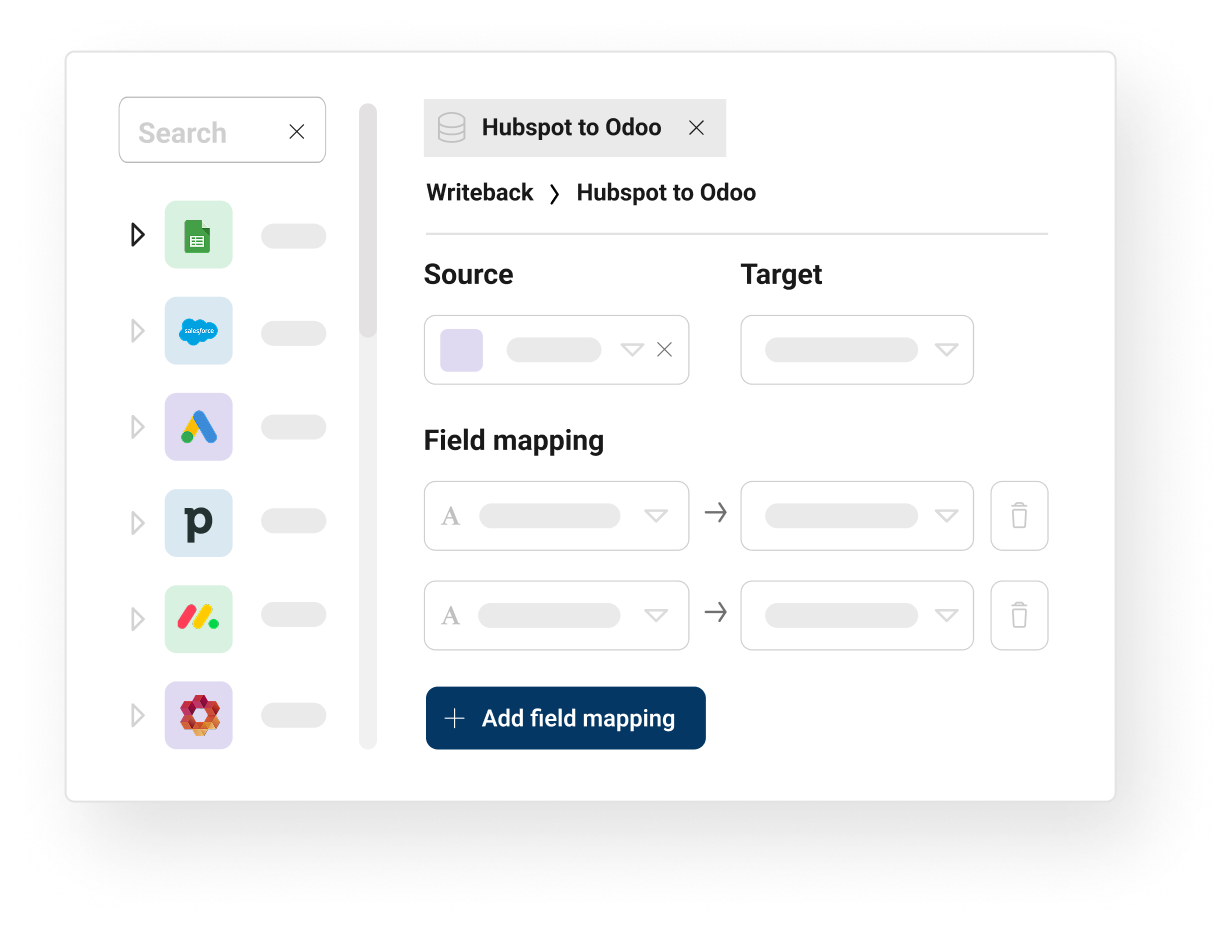
Export data from multiple SaaS applications and databases into Apple App Store. Set up automated data syncs to keep your business applications in sync. Use Reverse ETL to sync Apple App Store data to any business application.
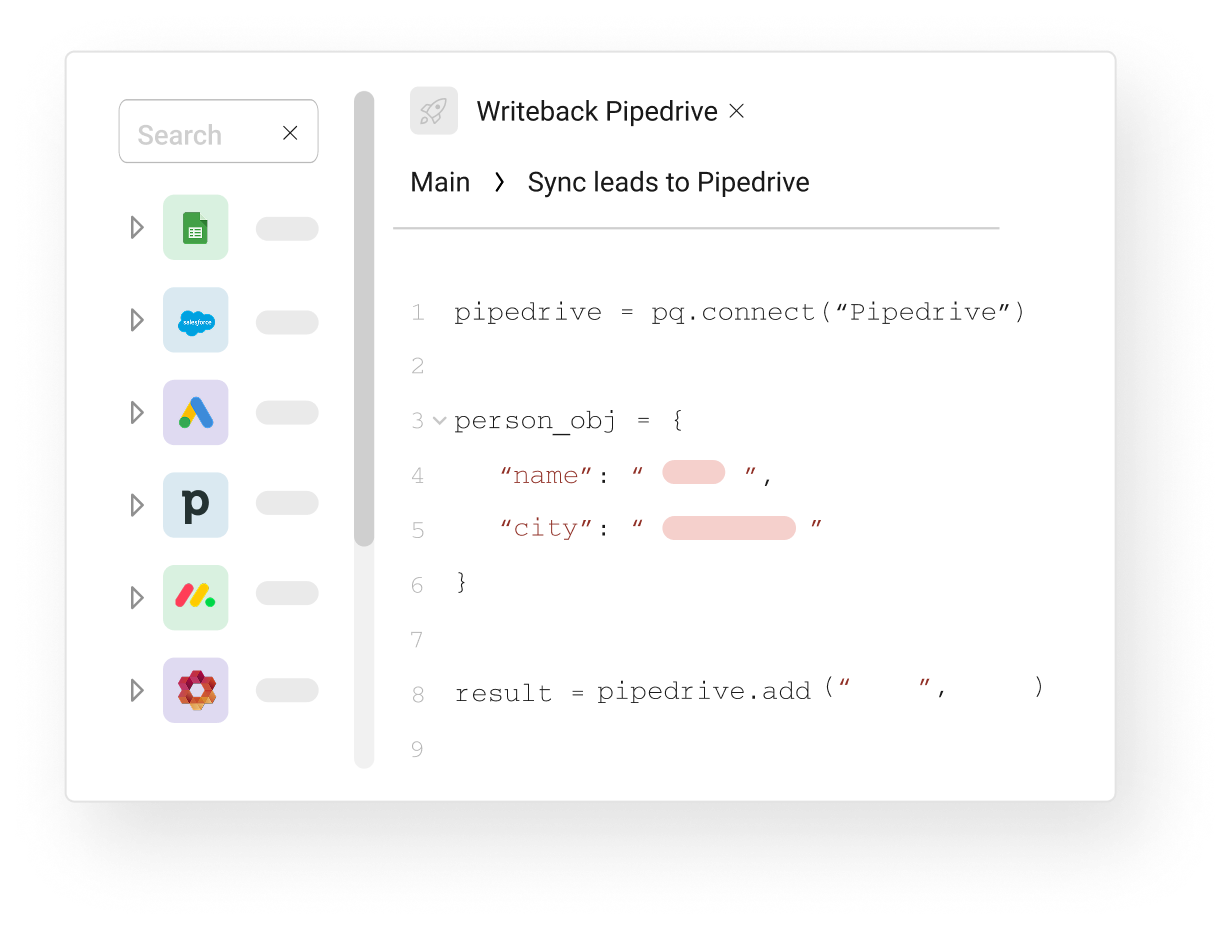
Developers can write, test, execute and schedule low-code Python scripts to work with their data. Implement reverse ETL with 3 lines of code. Run ML models, build interactive UIs, publish APIs.
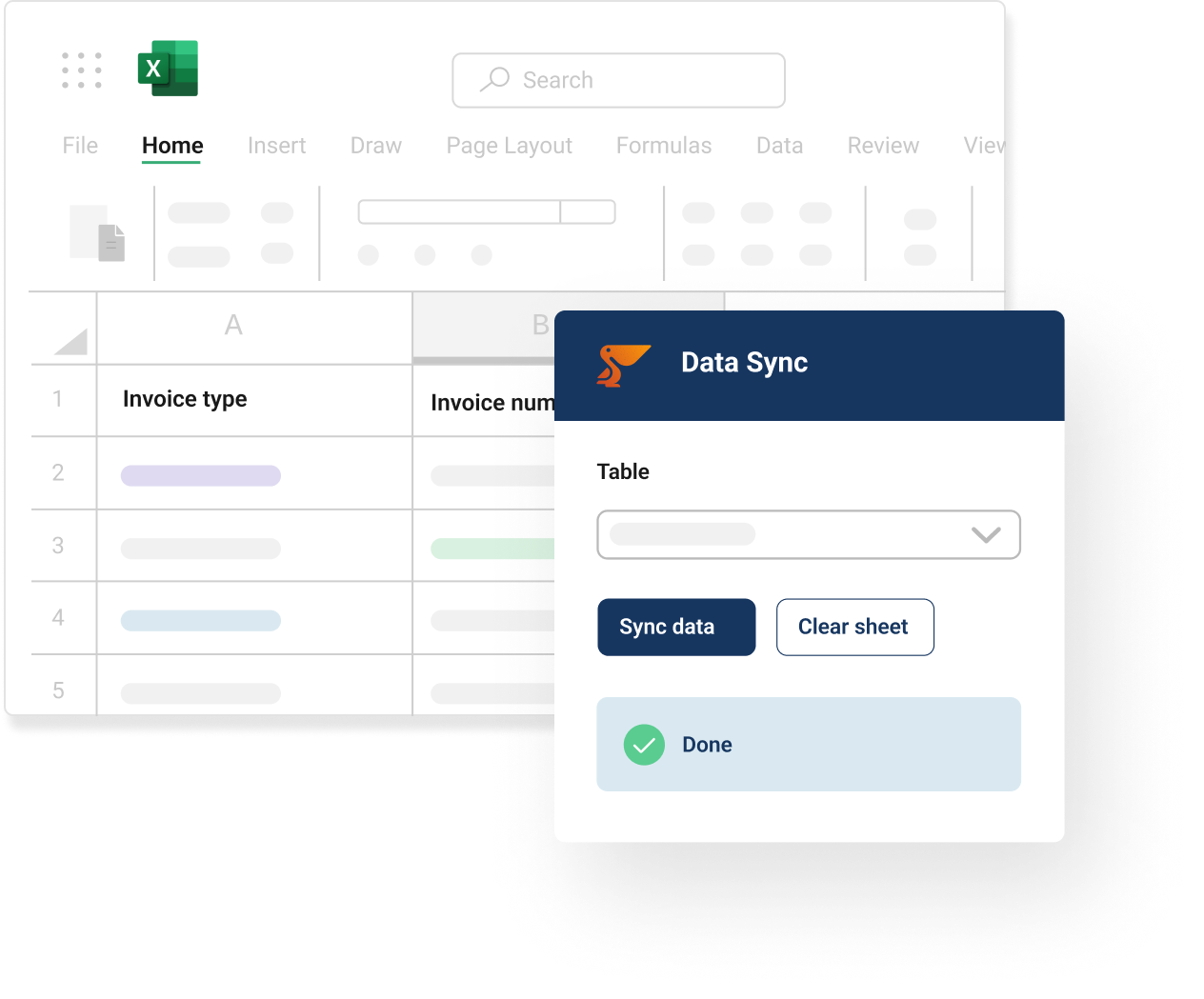
CFOs, CEOs and other business users can work with Peliqan data in Excel thanks to the Peliqan Excel add-in. Easily switch between data sources and work with your data in real-time in Excel.


Get opportunities by stage from Salesforce data.

Get closed deals by owner from Salesforce data.

Get the number of leads by source from Salesforce data.

Calculate churn by dividing lost customers by total customers.

Calculate the total revenue for each payment method used.

Count the number of cases for each status.

Calculate the average amount for each invoice.

Count the total number of opportunities for each campaign.

Calculate the total refund amount for each refund reason.
Get opportunities by stage from Salesforce data.
Get closed deals by owner from Salesforce data.
Get the number of leads by source from Salesforce data.
Calculate churn by dividing lost customers by total customers.
Calculate the total revenue for each payment method used.
Count the number of cases for each status.
Calculate the average amount for each invoice.
Count the total number of opportunities for each campaign.
Calculate the total refund amount for each refund reason.
Get opportunities by stage from Salesforce data.

Analyze your Salesforce data with SQL or in a spreadsheet.

Enable business users with controlled self-service data access to Salesforce.

Work with your Salesforce data in a spreadsheet that is always up-to-date.

Create charts and visualize your Salesforce data in dashboards.

Create views for “human in the loop” processes when working with Salesforce data.

Build custom reports from Salesforce in HTML, PDF…

Reconcile your Salesforce data with other sources.

Apply machine learning models on your Salesforce data with low-code python.

Build internal apps to make data from Salesforce interactive.

Replace complex user interfaces with a targeted UI for knowledge workers using Salesforce.

Implement reverse ETL flows to send data from Salesforce to any SaaS.

Get real-time access to your raw Salesforce data.

Implement data migrations to or from Salesforce using SQL and low-code Python.

Peliqan is an all-in-one data stack on top Salesforce, SaaS apps and DBs.

Get your Salesforce data in a data warehouse instantly, with a few clicks.

Use SQL on your Salesforce data to view, share and transform data.
Peliqan connects to Apple App Store through OAuth 2.0 or API key authentication in a few clicks. You authorize Peliqan from your Apple App Store account, choose which objects to sync, and the connector handles incremental updates from there. No code, no middleware, and no IT tickets to file.
Peliqan syncs all standard Apple App Store objects plus custom objects and custom fields. The connector adapts to schema changes without manual reconfiguration. Browse the full connector catalog to see related connectors and integrations.
Syncs run every 15 minutes by default on the Pro plan, with custom schedules available on higher tiers. Sync mode is incremental, so only new or changed records are pulled, which keeps API call usage low and respects Apple App Store rate limits.
Yes. Peliqan’s reverse ETL pushes data from your warehouse back into Apple App Store, useful for syncing enriched scores, customer health metrics, billing data, or product usage signals into native Apple App Store fields. Reverse ETL flows can run on a schedule, on demand, or be triggered by SQL conditions. Read the reverse ETL documentation for setup details.
Once Apple App Store data lands in your warehouse (such as Snowflake, BigQuery, Redshift, or PostgreSQL), you can run SQL queries, build dashboards in Power BI, Tableau, Metabase, or Looker, combine it with data from other sources, feed it into AI agents through MCP servers, build Text-to-SQL workflows, or activate it through reverse ETL.
Peliqan also includes a built-in spreadsheet UI for ad hoc analysis without writing SQL.
Peliqan is SOC 2 Type II certified, GDPR compliant, and ISO 27001 in progress. Apple App Store credentials are stored encrypted at rest, all data transfers happen over TLS, and EU-resident data stays in EU infrastructure on the eu.peliqan.io region.
Security, compliance, trust, privacy and availability are our highest priority. If you want more details, if you require a certificate or a copy of Peliqan’s operating procedures, contact us now.
SOC 2 Type 2 validates our security controls, ensuring your data is protected by independently audited security measures.
ISO 27001 certification ensures enterprise-grade information security, protecting your business with globally recognized standards.
GDPR compliance guarantees EU data protection compliance, keeping PII data secure within EU boundaries.