
Vibe coding gets you an interface in minutes. However, everything behind it still has to exist: a login, somewhere to keep the data, and an API that other tools can call. So this video builds one app end to end and shows what Peliqan handles for you.
About vibe coding on Peliqan
Vibe coding is becoming the normal way to build an internal app. The hard part was never the interface, though. It was the backend. Peliqan provides that layer, so the app you generate has somewhere real to live.
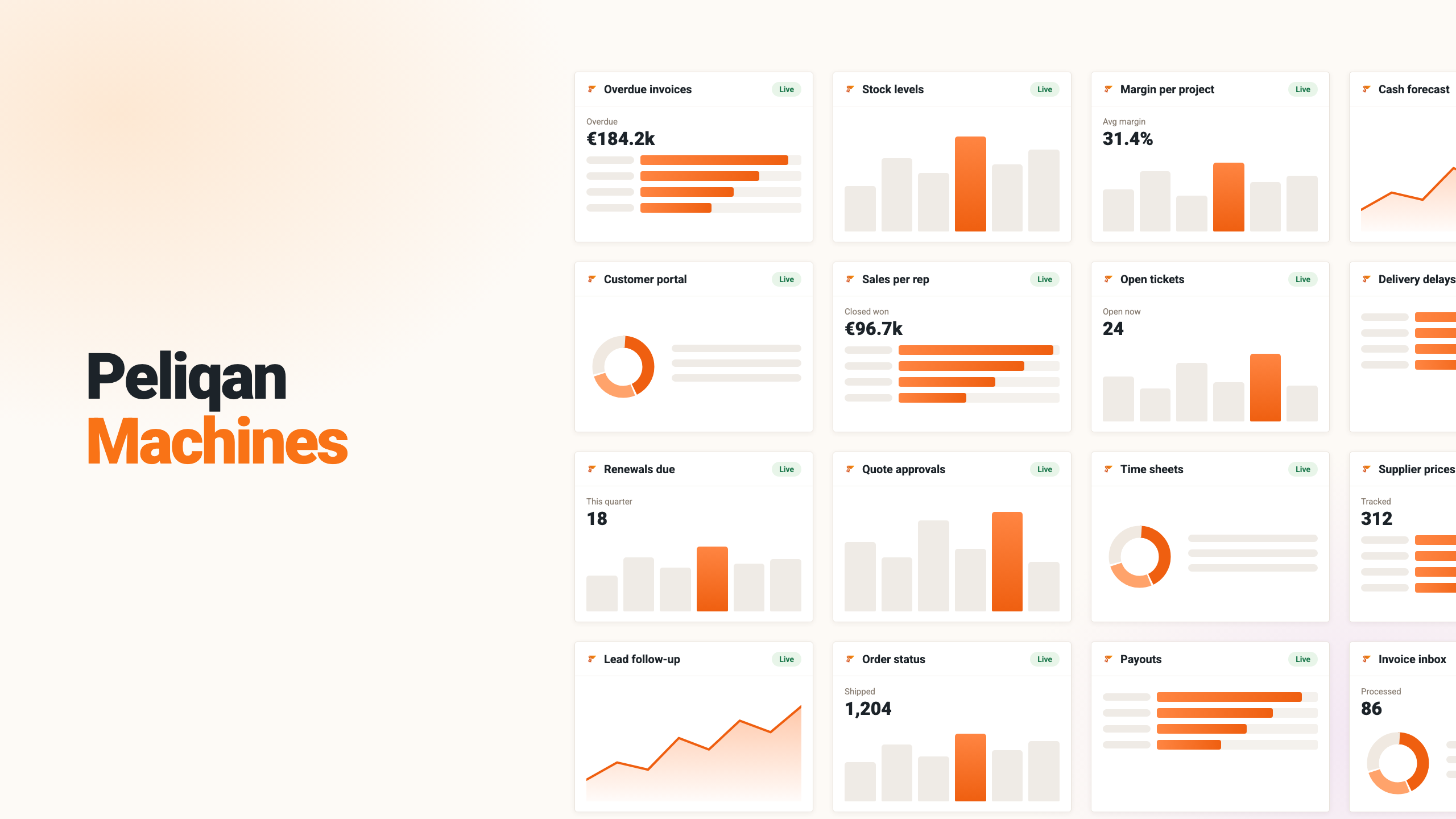
You can vibe code an app for timesheets, project management, data entry, dashboards or reports. In short, anything your team keeps doing in a spreadsheet.
A timesheet app, end to end
The example uses Peliqan as its backend. Users sign in with Google, although Microsoft or Peliqan itself work just as well. Then they pick a task, set a duration, write a note and save. Each entry goes straight into a table in Peliqan through the API, so the generated front end keeps no data of its own.
Add an MCP server so AI clients can drive your app
Teams also drive modern apps from AI clients such as Claude, ChatGPT or Copilot. With Peliqan you add an MCP server to your vibe coded app, which turns its capabilities into MCP tools. For example:
- Create a client: the assistant adds the record, and your app sees it immediately.
- Create a project or task: the assistant writes to the same structures your interface uses.
- Create an entry: a timesheet line lands without anyone opening the app.
Because MCP is an open standard, the same tools work across assistants.
Add a Claude Skill on top
A Skill goes one step further. The one in this video reads your calendar, Slack, Drive and mail. Then it uses that information to fill in your timesheets through the MCP tools. As a result, the app, the MCP server and the Skill all run on the same backend.
Every app shares one backend
All your vibe coded apps share the Peliqan backend. It controls permissions, stores the data, and reaches your other business tools through the connectors you have already set up. So when you build the second app, the login, the storage and the permissions are already there.
Ready to build this on your own data? Get started with Peliqan.